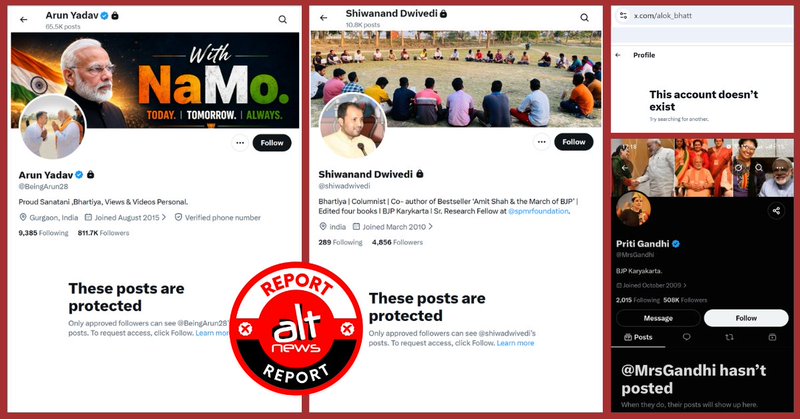

Following the BJP’s announcement on August 17 of its new social media team, it has been observed that four out of the five newly appointed members either deleted their posts or deactivated their accounts. This raises questions about the transparency and intentions of the party ahead of crucial elections.
Context of the Announcement
The Bharatiya Janata Party (BJP) has been actively engaging with voters through various social media channels, especially in an age when digital interaction is crucial for political campaigns. The announcement of a new social media team signifies the party’s intent to bolster its online presence and effectively counter opposition narratives. However, the unexpected disappearance of posts from key members has drawn immediate scrutiny from analysts and political commentators alike.
The Actions of the New Team Members
Reports indicate that convenor Deepak Mhaskey deleted at least 1,342 X posts within minutes of the announcement. Similar patterns were observed with the other co-convenors, where either all their posts were hidden or their accounts were entirely deactivated. This prompted a wave of speculation regarding the motivations behind such swift actions. Given that these team members are expected to harness social media for campaigning, their sudden withdrawal from public scrutiny raises red flags.
Public Reaction and Speculation
The response from the public has been one of confusion and criticism. Social media users quickly pointed out the discrepancies, with some interpreting these actions as an attempt to erase uncomfortable or controversial content ahead of the impending elections. Critics argue that this not only reflects poorly on the BJP’s handling of its digital presence but also poses a larger question about accountability and transparency in political communication. The necessity for a clear and consistent social media strategy has never been more pertinent as voters increasingly rely on these platforms for information.
Why This Matters
The implications of these actions extend beyond just the BJP’s social media strategy. As India approaches major elections, the usage of social media as a tool for influence and voter engagement becomes paramount. The ability of political figures to communicate effectively—and transparently—can impact voter perception significantly. The BJP, being the ruling party, faces immense pressure not just to leverage these platforms effectively, but also to uphold a standard of accountability to its constituents. The question remains whether this retreat from public engagement is a tactical error or a reflection of deeper issues within the party’s communication strategy.
Frequently Asked Questions
What happened on August 17 concerning the BJP’s social media team?
On August 17, the BJP announced its new social media team, prompting four of the five members to either delete their posts or deactivate their accounts, raising eyebrows regarding their intentions.
Why did Deepak Mhaskey delete over 1,300 posts?
Deepak Mhaskey’s rapid deletion of a significant number of posts remains unexplained. Analysts suggest it may be an effort to manage past controversies or prepare for a fresh start in a politically critical environment.
What is the significance of social media in Indian politics?
Social media plays a crucial role in shaping public opinion and voter engagement in India. It allows political parties to communicate directly with constituents and to counter misinformation actively.
What are the potential risks of the BJP’s current strategy?
The current approach of deleting posts and hiding accounts may backfire, leading to perceptions of untrustworthiness and lack of transparency, crucial elements in contemporary electoral politics.