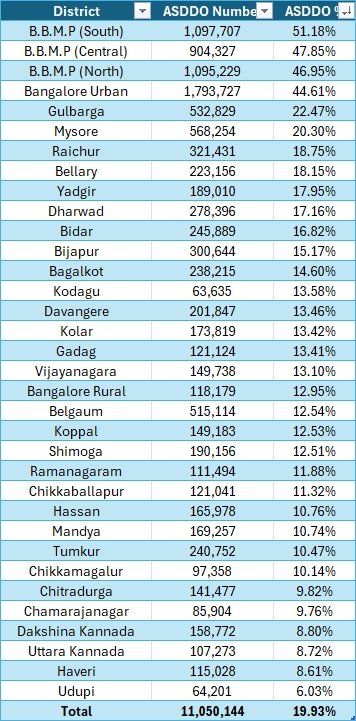

The recent removal of over 11 million voter records during the Special Summary Revision (SIR) exercise in Karnataka has sparked significant controversy. A large chunk of these deletions, approximately 62 lakh, has been categorized as “Permanently Shifted,” raising questions about the verification processes behind these decisions and the implications for voters.
Context of the Voter Record Deletion
In Karnataka, the Election Commission’s latest exercise aimed to clean the electoral rolls has come under scrutiny. More than 11 million records have been purged, with a staggering 60% of these classified under ‘Permanently Shifted’. The classification suggests that these individuals have moved and registered anew, but skepticism has arisen regarding the validity of this claim. Critics question whether any actual verification took place to confirm that these voters are indeed enrolled in new locations, or if this designation was simply an expedient label used amid time constraints.
Concerns Over the Verification Process
The fear among voters intensifies when hearing anecdotes of individuals who diligently filled out and submitted their Enumeration Forms yet still find their names listed for deletion. Many claim that local officials attribute these discrepancies to deadlines which forced rapid processing—potentially undermining the thoroughness of the verification process. This underscores a broader concern about the administrative approach to voter verification, with allegations of systemic issues rather than isolated errors.
Reports have indicated that a considerable number of voters marked as “Permanently Shifted” may, in fact, not have shifted at all. The critical question arises: what evidence was utilized to mark them as such? Without rigorous checks to ensure these voters have valid Electoral Photo Identity Cards (EPIC) at their new addresses, the claim of having moved stands on shaky ground.
The Accessibility Challenge
The complications are compounded by the lack of a user-friendly system for verifying one’s electoral status. The current ASDDO lists are available only in PDF format across multiple Google Drive links, making it difficult for many citizens—especially the elderly or those lacking digital literacy—to confirm their voting status. The absence of a centralized, searchable database is seen as a significant barrier to voter rights.
Moreover, voters face the cumbersome task of proving their eligibility to remain on the electoral rolls after having already submitted required forms. This process shifts the onus from administrative responsibility to the citizens, raising concerns about fairness and transparency in the electoral process.
Why This Matters
The implications of these deletions far exceed bureaucratic errors; they touch upon the very foundation of democracy and voter rights in India. The significant number of voters potentially disenfranchised raises alarms about electoral integrity. If the verification process lacks rigor, it could disenfranchise eligible voters, skew election results, and undermine public confidence in the electoral system. These issues are particularly pressing in a democracy where every vote counts, and ensuring that all eligible citizens can participate in elections is paramount.
It is essential for the Election Commission to address these concerns transparently, implement easier verification processes, and provide clarity regarding the practices that guide their voter deletion criteria. The call for an independent audit of the deletions emphasizes the need for accountability and integrity in managing electoral rolls.
Frequently Asked Questions
What evidence was required to mark voters as “Permanently Shifted”?
The criteria for marking voters as “Permanently Shifted” haven’t been clearly defined in public discourse, leading to confusion and skepticism about the basis for these decisions.
Was any cross-check conducted to ensure these voters had enrolled at a new address?
There are concerns that adequate verification and cross-checking may not have been thoroughly conducted, raising questions about the reliability of these deletions.
Were Block Level Officers (BLOs) working under pressure that impacted their verification duties?
Reports suggest that BLOs faced deadlines which may have affected their ability to carry out comprehensive verification, prompting procedural errors.
Why isn’t there a single searchable ASDDO database for citizens?
The lack of a centralized database for voters to verify their statuses hinders accessibility and transparency in the electoral process, something urgently needed in a democratic system.