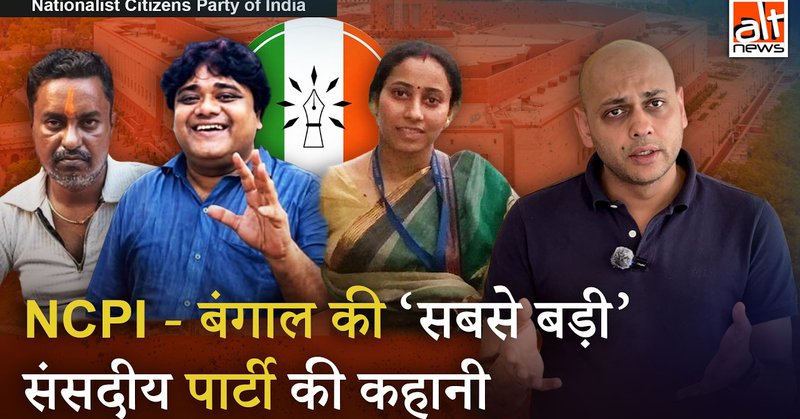

In a surprising political shift, 20 MPs from the Trinamool Congress (TMC) have defected to join the Nationalist Citizens Party of India (NCPI). This move marks a significant change in the political landscape of West Bengal, raising questions about the NCPI’s origins, leadership, and ideological foundations.
The Emergence of NCPI
The Nationalist Citizens Party of India is a relatively obscure political entity that has recently gained attention following the mass defection from TMC. Established in the backdrop of West Bengal’s dynamic political environment, the NCPI claims to represent the interests of common citizens, focusing on nationalism and development as its core principles. However, detailed information about its origins, structure, and leadership remains scant, which raises legitimate concerns about its long-term viability and objectives.
Leadership and Structure
While the specifics about the NCPI’s leadership are not extensively documented, preliminary reports suggest that it is operated by a coalition of former TMC members and local political activists. These leaders leverage their previous political experience to attract disillusioned voters and former party members. Critics argue that the influx of TMC MPs may not provide the NCPI with a stable foundation, as shifting allegiances can indicate a lack of cohesive ideology and strategic direction.
Ideological Foundations
The ideology of the NCPI appears to be rooted in a blend of nationalism and populism, aiming to resonate with citizens seeking alternatives to established parties like the TMC and BJP. The new party’s platform reportedly emphasizes economic development, local governance, and community empowerment. However, the lack of a clear ideological framework makes it challenging to assess how effectively the NCPI will differentiate itself from other regional and national parties in India, potentially leading to voter confusion.
Why This Matters
The defection of TMC MPs to the NCPI could have profound implications for West Bengal’s political dynamics. This shift not only weakens the TMC’s parliamentary presence but also indicates potential fragmentation in the state’s political landscape. As other regional parties navigate this new challenge, the NCPI’s emergence may reshape alliances, electoral strategies, and voter sentiments ahead of future elections. Understanding these shifts is crucial for Indian readers as they reflect larger trends in national politics and regional governance.
Frequently Asked Questions
What triggered the MPs’ decision to leave TMC?
Discontent with TMC’s leadership and internal issues likely influenced the MPs’ decision, alongside the promise of a fresh start with the NCPI.
What are the main goals of the Nationalist Citizens Party of India?
The NCPI aims to focus on nationalism, development, and local governance to appeal to citizens disillusioned by traditional party politics.
How does this affect the TMC’s power in West Bengal?
The defection of 20 MPs significantly reduces the TMC’s strength in parliament, challenging its authority and electoral prospects.
Are there any alliances expected to form due to this shift?
Given the political landscape’s fluidity, potential alliances among regional parties could emerge as they respond to the rise of the NCPI and TMC’s weakened position.