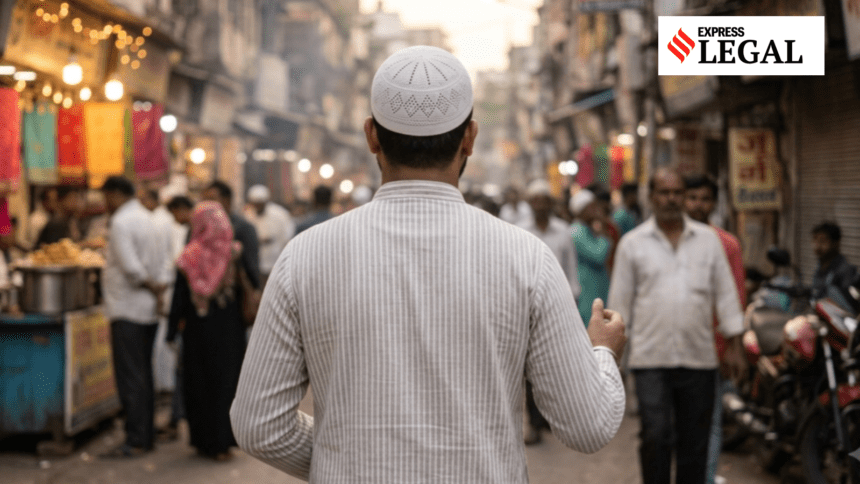

The Madras High Court recently ruled that individuals converting to Islam cannot claim benefits under the Backward Class (BC) category in Tamil Nadu. This decision has raised significant discussions about religious conversion, social hierarchy, and the implications of discrimination in state reservation policies, challenging the narrative of social equality promoted by both Islam and the Indian Constitution.
Court Ruling and Its Implications
A bench comprising Justices G R Swaminathan and P B Balaji declared a Tamil Nadu government order granting reservation to converts as unconstitutional. The court firmly stated, “Once we find that the said GO is illegal, it is our bounden judicial duty to declare it to be so.” The ruling emphasized that a convert to Islam is simply identified as a Muslim, devoid of any backward class status. This decision follows a petition by a Hindu man who converted to Islam and sought a community certificate as a “Muslim Lebbai,” which was denied at the tahsildar level.
The petitioner argued that converting from a forward community to Islam should not affect one’s entitlement to reservation benefits. However, the court contested this assertion, indicating it would cause a complex debate regarding the legitimacy of such claims against constitutional provisions meant to uplift specific socially and educationally backward classes.
Constitutional and Social Context
The Madras High Court’s ruling also draws upon the broader principles established by the Indian Constitution, which allows the state to make special provisions for backward communities. While acknowledging this mandate, the court highlighted that reservation cannot be extended based solely on religion. It underscored the fact that only specific sects within Islam, such as the Ansar, Deccani, and Labbais, have been categorized as Backward Class Muslims, a distinction clearly made by the state government.
This ruling reflects ongoing tensions surrounding social stratification within various religious communities in India. The court pointed out that certain groups, like the Dawoodi Bohras, are considered socially advanced. By emphasizing existing hierarchies within Islam, it challenges the very notions of egalitarianism that conversion is expected to embody.
Quoting the Prophet: The Quranic Perspective
<p.In a notable turn, the justices quoted the Prophet Muhammad, asserting that all humanity is equal, drawing attention to the contradiction inherent in categorizing certain sects of Muslims as backward. This perspective aligns with the Islamic principle of unity and equality, making the court's ruling particularly poignant against the backdrop of ongoing discrimination narratives. The court highlighted that promoting hierarchies within Islam contradicts its core values of brotherhood and social equality.
The judges stated, “It is disingenuous to claim that there is hierarchy in Islam also,” suggesting that the creation of such categories undermines the fundamental tenets of the religion. They noted that historical stratifications within Islamic communities mirror the caste system prevalent in Hinduism, posing a critical examination of how social and historical contexts can impact religious beliefs and practices.
Why It Matters
This ruling by the Madras High Court has broader implications for socio-religious dynamics in India. It scrutinizes the intersection of religion, identity, and social justice, particularly regarding how social hierarchies can influence governmental policies and individual rights. The commitment to uphold the ideals of equality and justice under Indian law may clash with existing societal norms and practices that perpetuate discrimination—whether based on caste, religion, or community affiliation.
Moreover, this legal precedent may inspire further discourse around the systemic exclusion and social treatment of Indian Muslim communities, particularly concerning governmental reservations. It demonstrates a critical need for ongoing dialogue and reform to dismantle entrenched discriminative practices while ensuring equal rights for all citizens, irrespective of their religious or community backgrounds.
Frequently Asked Questions
What did the Madras High Court rule regarding converts to Islam?
The court ruled that persons converting to Islam cannot claim Backward Class status and declared a Tamil Nadu government order granting this status as unconstitutional.
Why was the application for a community certificate denied?
The tahsildar denied the application on the basis that the state has not included converts in the Backward Class list, reinforcing the court’s ruling that a convert is simply a Muslim.
What does the ruling imply about social hierarchies in Islam?
The court emphasized that categorizing certain Muslim sects as backward contradicts the egalitarian principles of Islam, which promotes equality among all individuals.
How does this ruling align with the Indian Constitution?
The ruling aligns with the Constitution’s provisions that prohibit discrimination based on religion while allowing the state to create classes for the advancement of socially and educationally backward citizens, thereby reinforcing the need for legal scrutiny in reservation policies.