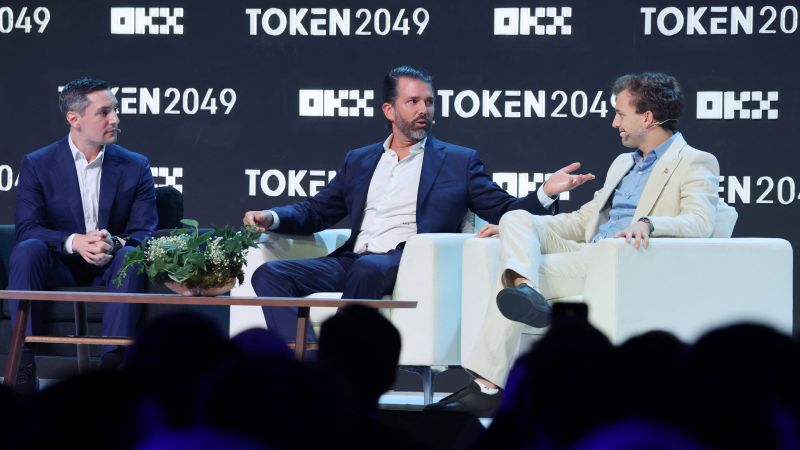

The Trump family’s cryptocurrency venture, World Liberty Financial, has received preliminary approval to become a trust bank, raising ethical concerns among critics. With this banking charter, the firm will circumvent middlemen involved in issuing its USD1 stablecoin, aiming to streamline operations amidst significant profits for the Trump family.
The Approval Controversy
Appointed under President Donald Trump, U.S. regulators have authorized World Liberty Financial to proceed with its banking ambitions. This crypto firm, established in 2024 by Trump and his sons, aims to convert its operations into a trust bank. While this decision has sparked excitement within the company, it has alarmed ethics watchdogs and various lawmakers who fear a conflict of interest given Trump’s unique position in government.
According to critics, including Richard Painter, former chief ethics lawyer under President George W. Bush, the combination of regulatory oversight and family interests presents significant risks. “It is quite precarious to have the president and his family invested heavily in one of our most important regulated industries,” he stated, emphasizing the historical implications of similar situations leading to economic disasters.
Business Implications of the Banking Charter
While World Liberty Financial cannot accept deposits or issue loans, its banking charter will allow it to sidestep necessary middlemen, thereby potentially increasing its revenue from the USD1 stablecoin—currently valued at over $4 billion in circulation. This move could reshape the landscape of cryptocurrency and banking, as it provides the Trump family direct access to crypto market dynamics without intermediary constraints.
Critics argue that this regulatory pathway could smooth the way for foreign entities to influence U.S. financial policies, paralleling the metaphorical “fox guarding the henhouse.” As protests mount from various political spheres, the implications of granting a bank charter to a family-run crypto firm, especially one closely tied to a sitting president, have ignited discussions on the ethical limits of political influence within financial institutions.
Reactions and Regulatory Developments
In the wake of these events, some Democrats have declared intentions to legislate against the endorsement of bank applications connected to any sitting U.S. president or their relatives. Democratic Senator Elizabeth Warren characterized the approval as an unprecedented act of self-dealing and vowed to introduce a bill aimed at curbing such conflicts of interest going forward.
Meanwhile, the White House maintains that all of President Trump’s financial investments are handled by independent third parties, asserting that claims of conflicts are unsubstantiated. In a statement, spokesperson Anna Kelly dismissed the criticisms as “the same, tired narrative that Democrats have pushed against President Trump for a decade.”
Why This Is Trending
Interest in this financial development is growing in India as investors and regulators alike are increasingly focusing on the intersection of cryptocurrency and traditional banking systems. With concerns about regulatory oversight, ethical governance, and family interests influencing policy, this situation resonates worldwide, particularly in countries like India where the crypto landscape is rapidly evolving. As Indian investors look for clarity and new opportunities in their markets, the Trump family’s ventures are viewed as both a cautionary tale and a competitive template.
Frequently Asked Questions
What is World Liberty Financial?
World Liberty Financial is a cryptocurrency firm launched by Trump and his sons in 2024, focusing on creating a trust bank to manage its USD1 stablecoin operations.
What does the banking charter approval entail?
The approval allows World Liberty Financial to operate as a trust bank, cutting costs by eliminating intermediaries in its transactions while generating significant revenue through its stablecoin.
What ethical concerns have been raised?
Critics worry that the combination of a sitting president being significantly invested in a bank and the potential conflicts of interest that arise could jeopardize the integrity of financial regulation in the U.S.
How is the Indian market reacting to this news?
Indian investors and regulators are closely monitoring this situation as it may set precedents for how cryptocurrency firms operate and are regulated globally, particularly in a landscape where cryptocurrencies are gaining popularity and evolving in relation to traditional finance.