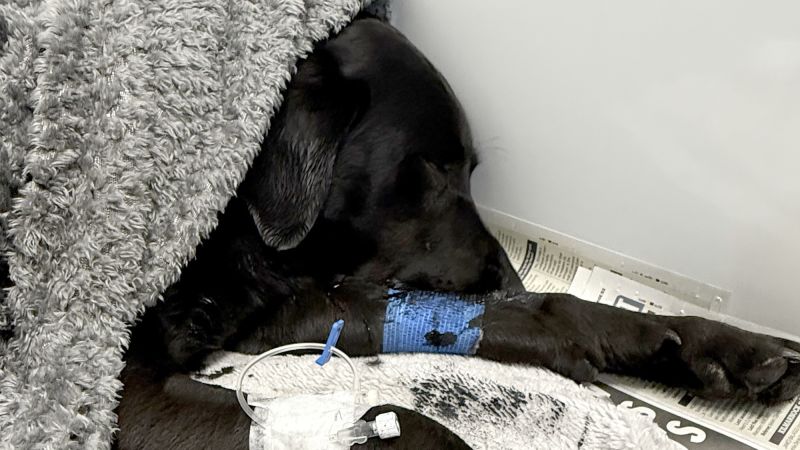

A five-year-old labrador named Tokyo required a dramatic rescue from the UK’s highest mountain after consuming cannabis during a hike. With her health deteriorating, a mountain rescue team swiftly came to her aid, and she later made a full recovery after veterinary care, shedding light on the potential dangers of dogs scavenging.
The Incident on Ben Nevis
Tokyo was on a trek up Ben Nevis in Scotland last Sunday with her owner Christina Bluhme, her son Magnus, and their other dog, Blaze. During the hike, Tokyo exhibited her usual energetic behavior until they were about an hour from the summit, where symptoms began to manifest. Bluhme noticed her dog suddenly becoming weak in her hindquarters and eventually losing consciousness.
Bluhme’s immediate reaction was concern that it could be a spinal injury, given the strenuous nature of the climb. However, as Tokyo drifted in and out of consciousness, Bluhme panicked, fearing for her dog’s life. After realizing that carrying her down the mountain was not feasible, a fellow hiker encouraged Bluhme to call emergency services for assistance.
Swift Rescue and Diagnosis
Fortunately, the Lochaber Mountain Rescue Team was nearby, having just handled another emergency. They swiftly transported Tokyo down the mountain on a stretcher. Bluhme took her to a local vet, where the staff identified that her symptoms were consistent with cannabis consumption. Notably, when her temperature was taken, a cannabis-like odor was detected.
The vet explained that Tokyo likely ingested cannabis from an edible that had been discarded along the trails or from human waste containing traces of cannabis. She received IV fluids and activated charcoal, which helped absorb the toxins, and after a night’s stay, Tokyo made a full recovery.
Lessons Learned
After the incident, Bluhme shared her experiences on social media and received overwhelming support from other pet owners who admitted to encountering similar situations. She emphasized the importance of being vigilant about what dogs may scavenge while out in public spaces.
“I learned a lesson in terms of dogs scavenging,” Bluhme explained. “I’ve never put too much importance on it, but I’m definitely going to be a little more careful about what they put their nose into in future.” This incident serves as a cautionary tale for all pet owners regarding the potential dangers of foraging.
Why This Is Trending
The news of Tokyo’s rescue has resonated widely, particularly as discussions about pet safety and food consumption become increasingly relevant. With the growing popularity of cannabis edibles in many countries, concerns about their potential effects on pets are rising. Furthermore, as urban areas in India see more stray dogs, incidents related to scavenging and ingesting harmful substances are becoming a common concern among pet owners. This story highlights the need for awareness in safeguarding our furry companions.
Frequently Asked Questions
What should I do if my dog consumes something harmful?
If you suspect your dog has ingested something harmful, it’s essential to contact your veterinarian immediately or visit an emergency animal clinic. Do not wait for symptoms to appear, as prompt action could save your pet’s life.
Are there specific foods or substances I should keep away from my dog?
Yes, some common foods harmful to dogs include chocolate, grapes, raisins, and any food containing xylitol. Additionally, with the increase of cannabis in various forms, it is crucial to keep all cannabis products out of your pet’s reach.
How can I prevent my dog from scavenging?
Training your dog to have a strong “leave it” command can be effective. Always supervise your dog during walks, especially in areas with potential hazards, and consider using a muzzle if your dog has a history of eating unsafe items.
Is it safe for dogs to consume cannabis at all?
No, it is not safe for dogs to consume cannabis. THC, a psychoactive component of cannabis, can cause serious health issues and neurotoxicity, as seen in Tokyo’s case. Always consult your veterinarian for guidance on safe treatments and food for your pet.