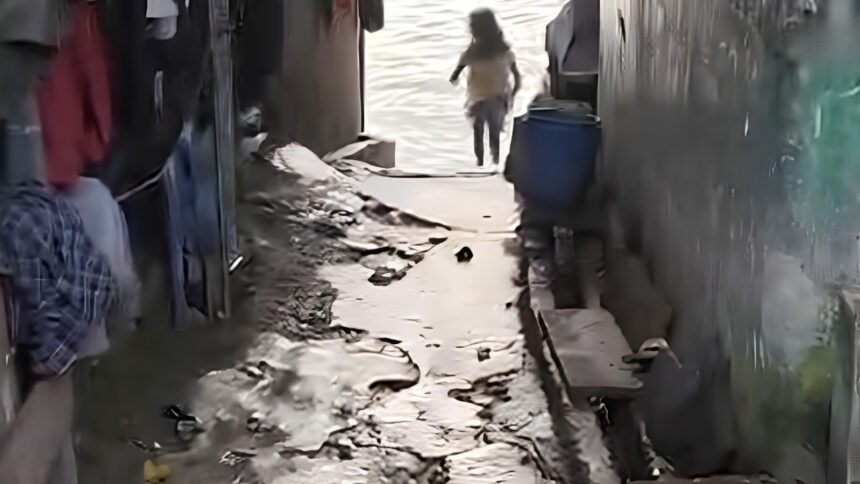

In Jyotinagar Colony, a minority-majority area in Kolkata, several hundred families have endured nearly a month without essential water supply. Residents attribute this crisis to discriminatory practices linked to Bharatiya Janata Party (BJP) MLA Ritesh Tiwari, who has openly expressed his unwillingness to serve minority communities.
Disruption of Essential Services
The crisis began when Kolkata Municipal Corporation (KMC) workers repaired the local water pipeline on July 27. However, by July 29, residents noticed the water supply had been abruptly disconnected shortly after the repairs were completed. Locals reported that while water supply continued seamlessly in nearby Hindu-majority areas, their own neighborhood, known locally as Molla Para, was left dry.
Jahanara Bibi, a concerned resident, highlighted the severe repercussions of this decision. Entire families now rely on the River Ganga for their daily water needs, risking health and safety. Children, often unsupervised, have fallen into the river while attempting to wash or bathe, with some narrowly escaping drowning incidents.
Political Undertones and Community Struggles
The local residents perceive this water crisis as an extension of systemic marginalization by the ruling BJP government. After securing his seat, MLA Ritesh Tiwari infamously stated, “I will not do any work for them in the upcoming five years,” referring to minority voters who did not support him. Such statements have intensified fears and compounded feelings of exclusion among the Muslim community.
While residents have turned to the Communist Party of India (Marxist) and local advocacy groups for assistance, their efforts have yielded limited results. The CPI(M) has attempted to arrange emergency water deliveries every few days at a cost, which remains insufficient for the population of around 5,000 people. Alamgir Biswas, a local CPI(M) representative, voiced his frustration over the lack of governmental response despite repeated complaints to municipal authorities.
The Broader Impact of Marginalization
The ongoing water crisis raises significant concerns about social justice and equity in access to basic resources. According to locals, parents have begun to withdraw their children from schools due to fears regarding safety and hygiene. “Will the government take responsibility for this?” questioned one resident, reflecting broader anxieties over governmental neglect of marginalized communities.
Moreover, the crisis has implications beyond immediate survival; it symbolizes an increased vulnerability of minorities under political leaders who openly reject inclusive governance. The alarming rise in fear, eviction threats, and systematic neglect underline a broader pattern of social exclusion affecting Muslims across India under the current political climate.
Why It Matters
The ongoing difficulties experienced by the Jyotinagar community highlight significant challenges related to social inclusion and access to resources for minorities in India. This case exemplifies how political rhetoric and actions can impact the lives of marginalized groups, hindering their ability to secure essential services like water. For advocates and policymakers, understanding these dynamics is crucial for addressing inequalities and ensuring equitable access to essential public resources, setting a precedent for social integration and justice in diverse societies.
Frequently Asked Questions
What caused the water crisis in Jyotinagar Colony?
The crisis started after KMC workers repaired a water pipeline in July 2026, leading to an unexpected disconnection of water supply for the predominantly Muslim community in the area.
How have residents coped without a water supply?
Many residents have resorted to using the River Ganga for their water needs, even at great personal risk, particularly for the children, who have faced incidents of near-drowning.
What political statements have been made regarding this issue?
BJP MLA Ritesh Tiwari has stated that he will not serve minorities who did not support him in elections, creating a hostile environment for the local Muslim community.
What actions have been taken by political parties for the residents?
The Communist Party of India (Marxist) has attempted to provide emergency water supplies, but these efforts have proven inadequate to meet the needs of the entire community.