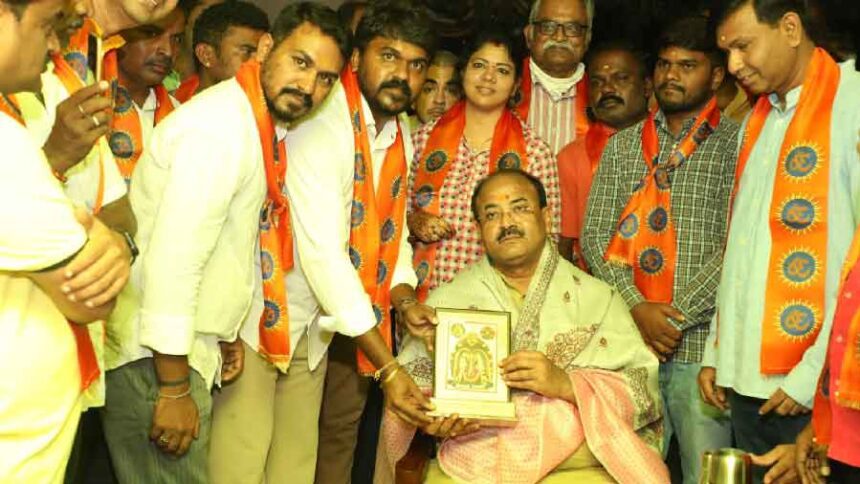

A video featuring senior BJP MLA Aravind Limbavali scolding a woman over a land encroachment issue has sparked significant controversy. The incident has garnered widespread attention, with opposition parties condemning Limbavali’s behavior and calling into question the state government’s accountability.
Incident Overview
The disturbing footage shows Limbavali, while on a visit to his assembly constituency, shouting at a woman who attempted to present her grievance concerning land encroachment in Mahadevapura. The woman approached him seeking assistance with her complaint, which was reportedly linked to allegations of illegal land occupation. Instead of addressing her concerns, Limbavali responded by berating her, labeling her as an “encroacher,” and instructing police officers present at the scene to remove her.
Political Response
The incident has drawn sharp criticism from leaders of the opposition Congress party. DK Shivakumar, the Congress state President, publicly condemned Limbavali’s actions, questioning his eligibility to serve as a legislator. Shivakumar also voiced concerns about the ability of the current BJP government to maintain its position in power following such incidents. The opposition capitalized on this event to highlight what they describe as a pattern of neglect and insensitivity by the ruling party toward the concerns of citizens.
Context of the Encounter
This incident is not isolated. It resonates with a growing narrative regarding the behavior of certain political leaders in India and their interactions with the public. Just months earlier, Limbavali’s daughter was also in the news for misbehavior toward law enforcement, further fueling the narrative of entitlement among politically connected individuals. In both instances, the actions have raised questions about accountability and respect for citizens’ rights and grievances, highlighting a disconnect between elected officials and the public they are meant to serve.
Why This Matters
The implications of this incident extend beyond the immediate context of Limbavali’s actions. It highlights a broader issue of governance and responsiveness among political leaders in India, particularly in how they engage with the public. The public’s willingness to voice concerns—often at personal risk—raises critical discussions about accessibility, transparency, and the power dynamics prevalent in Indian politics. As social media amplifies such stories, the expectation for accountability continues to grow, placing pressure on political leaders to change their approach or face serious electoral repercussions. This incident can shape public opinion in upcoming elections and remind citizens of the power they wield in a democratic society.
Frequently Asked Questions
What led to the incident involving Aravind Limbavali?
A woman approached Limbavali to discuss a land encroachment issue in Mahadevapura, seeking his assistance with her complaint. Instead of engaging with her grievances, Limbavali reacted aggressively and dismissed her concerns.
How has the opposition responded to Limbavali’s behavior?
The opposition Congress party, particularly its state President DK Shivakumar, condemned Limbavali’s actions, questioning his competency as a legislator and asserting that such behavior is indicative of the ruling BJP government’s failure to maintain accountability.
What are the broader implications of this incident for Indian politics?
This incident underscores ongoing concerns about the responsiveness of elected officials to citizen grievances and highlights a growing public demand for accountability and respect from political leaders. It raises questions about governance and the behaviors of those in power, which could influence public sentiment in future elections.
Have similar incidents occurred involving other politicians?
Yes, there have been previous instances where politicians have been publicly criticized for their conduct towards citizens. For example, Limbavali’s daughter faced backlash earlier for threatening police officers during a traffic stop, which contributes to the discussion regarding the behavior of privileged individuals in positions of power.