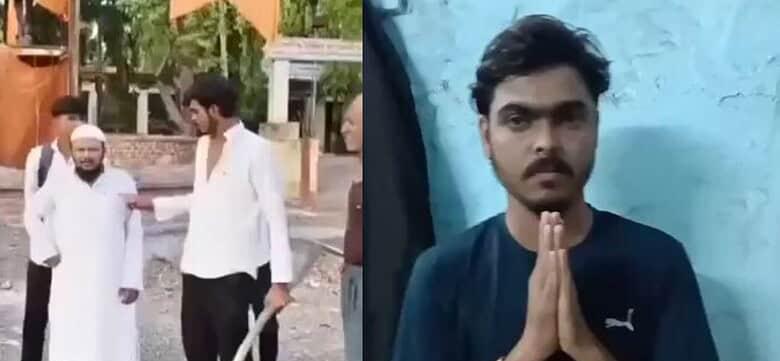

Forced Chanting: An Incident of Religious Intimidation in Maharashtra
In a troubling incident from Maharashtra’s Jalgaon district, a Muslim imam named Hafiz Qasam was allegedly coerced by a group of men to chant “Jai Shri Ram,” a slogan commonly associated with Hindu nationalism. This incident raises significant concerns about the rising tide of religious intimidation and the targeting of Muslim individuals in India, particularly under the political climate fostered by the ruling BJP and affiliated groups.
Details of the Incident
Hafiz Qasam was reportedly on his way back to Marul village after leading prayers in the nearby Parola village when he encountered four to five men who stopped him. The group forcibly compelled him to shout the religious slogan, and the event was filmed, later circulating on social media platforms. This act not only reflects an alarming instance of social exclusion but illustrates a broader pattern of intimidation faced by Muslims in contemporary India.
After the incident gained traction online, AIMIM national spokesperson Waris Pathan intervened, leading to the registration of a First Information Report (FIR). The involvement of Pathan indicates a growing awareness and advocacy among political entities addressing the rights of marginalized communities, although such interventions remain sporadic.
Broader Context of Religious Targeting
The incident involving Hafiz Qasam is not an isolated case. It feeds into a larger narrative concerning the discrimination faced by Muslims in India, particularly as reported cases of vigilante actions have increased over the past few years. Muslim clerics, educators, and community leaders have often come under attack, pressurized to recite slogans or adhere to practices aligning with dominant religious sentiments.
This pattern is indicative of a societal climate where intolerance towards minority faiths is becoming normalized. In this context, the actions of local vigilantes are sometimes tacitly endorsed or overlooked by governmental authorities, raising questions about the effectiveness of law enforcement in protecting minority rights. Various reports have noted similar patterns across the country, further complicating the nexus of politics and communal relations in India.
Responses and Apologies
In light of public outrage following the incident, one of the accused issued an apology for allegedly hurting the sentiments of the Muslim community. Such apologies, while seemingly a step towards accountability, often feel superficial and raise questions about genuine remorse or a commitment to future non-discrimination. This aspect is crucial as it reflects the ongoing tensions between religious communities in India and the necessity for genuine dialogue to promote understanding and coexistence.
The public reaction to the incident also underscores how incidents of this nature can mobilize community sentiments, calling for a restoration of communal harmony and exceeding mere verbal apologies. While legal action has been initiated, the societal changes needed to prevent future occurrences remain elusive.
Why It Matters
This incident not only highlights the immediate challenges faced by Muslim communities in India but also sheds light on the larger implications for social cohesion and secular values in a diverse society. Understanding such incidents is vital for stakeholders, including policymakers, civil society organizations, and citizens, particularly for those in the software development and AI industries. Algorithms and technologies that seek to understand social dynamics must grapple with the nuanced experiences of marginalized communities to create solutions addressing biases. Any progress toward a more inclusive society hinges on acknowledging and addressing these fundamental injustices.
Frequently Asked Questions
What prompted the imam to be forced to chant “Jai Shri Ram”?
The imam, Hafiz Qasam, was reportedly stopped by a group of men on his way home after leading prayers and was coerced into chanting the slogan, a common expression of Hindu nationalism.
What actions have been taken following the incident?
A First Information Report (FIR) was registered after AIMIM spokesperson Waris Pathan intervened, bringing the matter to the attention of local police officials.
Is this incident part of a larger trend of discrimination in India?
Yes, this incident reflects a growing pattern of intimidation and targeting of Muslim individuals in India, particularly against religious leaders and educators, often by vigilante groups.
How has the community reacted to the incident?
The incident has drawn public outrage, with community members calling for greater accountability and action to ensure the protection of minority rights and to promote communal harmony.