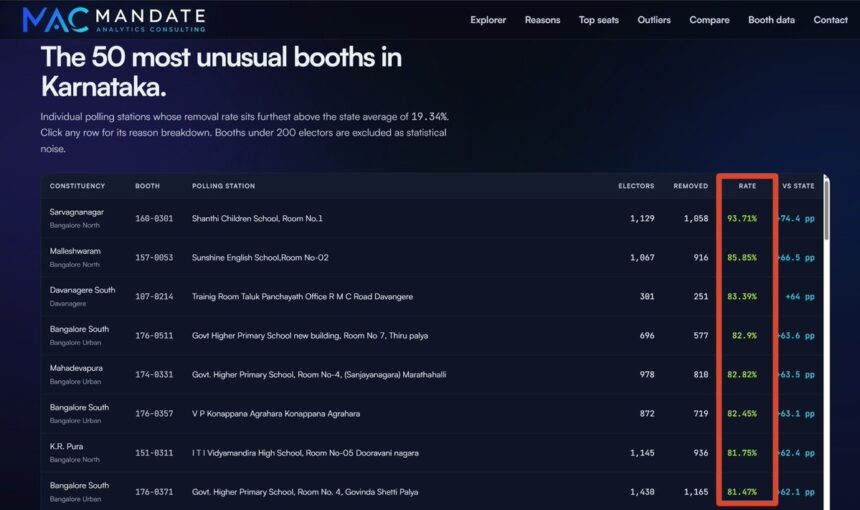

Recent observations from the ASDDO list in Karnataka reveal a concerning trend: an astonishing 93.71% of voters were deleted from the electoral roll at a single booth in Bengaluru, specifically at Shanthi Children School in the Sarvagnanagar constituency. Out of 1,129 listed electors, 1,058 were removed, primarily due to the recorded reason of having ‘shifted.’
Context of the ASDDO List
The ASDDO list, which stands for the Additional Special Summary Draft Electoral Roll, is an essential component of the electoral process in India. It is released periodically to update the electoral rolls based on changes like relocations and the inclusion of new eligible voters. In the recent Karnataka update, the removal of a substantial number of voters from a single booth has sparked concerns regarding the accuracy and fairness of the electoral process.
The Anomalous Removal Rate
At the booth in question, the statistics paint a startling picture: 93.71% of the registered voters were struck off the list. This figure raises questions about the circumstances surrounding their removals. With 1,058 individuals categorized as having ‘shifted,’ it begs the inquiry: are these figures indicative of actual movements, or are they symptomatic of broader issues within the electoral management system?
Moreover, such a high rate of deletions in a localized area suggests potential negligence or inefficiency in keeping electoral records up to date. It can also indicate lapses in the adherence to protocol, which should ideally involve cross-verification before deleting voters.
Electoral Integrity at Stake
This incident is not merely a number on paper; it represents real individuals who may be disenfranchised from participating in the electoral process. Given that the next elections are always looming, it’s crucial for electoral watchdogs and political parties to scrutinize such anomalies closely. Transparency in the electoral roll management process is vital for democracy.
The legitimacy of elections significantly relies on the integrity of the voter list. A booth where hundreds of voters disappear raises alarms about possible systemic issues within electoral preparations in Karnataka and overall electoral integrity in India.
Why This Matters
The deletion of voters from the electoral roll poses a direct threat to democratic values in India. The disenfranchisement of even a small number of voters can have huge implications, potentially swaying election results in favor of certain political parties or candidates. In a democracy where every vote counts, the credibility of the electoral process hinges on ensuring that all eligible voters have a chance to participate.
If such discrepancies continue to persist unchecked, they risk breeding distrust in democratic institutions. This mistrust could lead to voter apathy, undermining the principle of an informed and engaged electorate. For Indian readers, this incident calls for vigilance in monitoring how electoral processes are managed, prompting discussions on reforms and improvements necessary for safeguarding the democratic ethos.
Frequently Asked Questions
What does the ASDDO list represent?
The ASDDO list, or Additional Special Summary Draft Electoral Roll, is a periodic update to the electoral rolls in India to reflect changes such as new registrations and the removal of voters who have moved or are no longer eligible.
Why were so many voters removed from this specific booth?
The reported removal of 1,058 voters from the Shanthi Children School booth in Bengaluru is attributed to reasons labeled as ‘shifted,’ raising concerns about either actual relocations or possible errors in record-keeping.
What impact could this deletion have on upcoming elections?
The loss of such a significant number of voters from a single booth could affect turnout and election results, creating opportunities for electoral manipulation and diminishing public trust in the democratic process.
What should be done to address this issue?
There is a need for thorough investigations into the electoral roll maintenance practices, including audits and transparency measures, to ensure that electoral lists accurately reflect eligible voters and maintain public confidence in the electoral system.