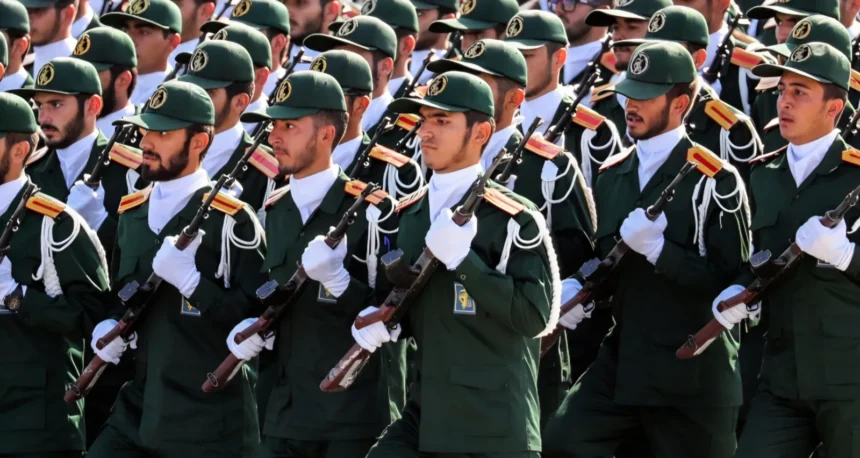

Iran’s IRGC Claims Responsibility for Missile Strikes on US Military Installations
In a significant escalation of tensions in the Gulf region, Iran’s Islamic Revolution Guards Corps (IRGC) has asserted its involvement in a coordinated missile and drone attack targeting multiple US military facilities. The IRGC characterized these strikes as a direct response to recent American military operations against Iranian positions, marking a potential heightening of hostilities between the two nations.
Details of the Operation
The IRGC announced that the operation took place between 2:00 a.m. and 3:00 a.m. local time on Sunday. During this timeframe, ballistic missiles and drones hit eight US military installations, notably including the Ali Al Salem Air Base in Kuwait and the headquarters of the US Fifth Fleet in Bahrain. According to the IRGC’s statement, this military action was not only a reprisal for perceived aggressions by the US but also a demonstration of Iran’s capabilities in aerial warfare.
In a further claim, the IRGC indicated that US military actions on the same day targeted five Iranian coastal positions, suggesting an ongoing cycle of aggression. They framed their responsive measures as necessary steps to counteract what they termed “recent US military aggression” against Iran.
Political and Strategic Context
The IRGC’s statements also contained warnings regarding navigation through the strategically crucial Strait of Hormuz, indicating Iran’s role in regulating transit under the Islamabad Memorandum of Understanding (MoU). They cautioned that non-compliance with these regulations would trigger stricter enforcement actions. This statement underscores Iran’s commitment to maintaining control over critical maritime routes, a point of contention in US-Iran relations.
Notably, the IRGC employed aggressive rhetoric, threatening that any future military operations against Iran, regardless of context, would provoke a “crushing response.” This framing suggests that the IRGC is prepared to escalate military actions if it perceives continued hostility from US forces.
International Reactions and Implications
As of now, the claims made by the IRGC remain unverified by independent sources, and there has been no immediate response from US authorities, nor from the governments of Kuwait and Bahrain. This silence may indicate a strategic pause as these governments assess the implications of the IRGC’s declarations. The situation puts both regional allies and the broader international community on alert regarding the potential for an expanded military conflict in the Gulf.
If tensions continue to escalate without diplomatic resolution, there could be significant impacts on oil prices, global trade routes, and international diplomatic relations, particularly within the context of US-Iran dynamics.
Why It Matters
The recent developments reflect ongoing complexities in Middle Eastern geopolitics, particularly in relation to US military presence in the region. For the AI industry and developers, understanding such geopolitical tensions is crucial for assessing risks related to data center operations, global supply chains, and market predictions. Furthermore, businesses must navigate the implications of economic sanctions and potential disruptions to international partnerships as they engage with affected regions.
Frequently Asked Questions
What are the IRGC’s main objectives with these missile strikes?
The IRGC aims to retaliate against perceived US military aggression and to assert Iran’s military capabilities in the region while protecting its sovereignty over strategic maritime routes.
What immediate actions have been taken by the US following the IRGC’s claims?
As of now, there has been no official response from US authorities to the IRGC’s claims, indicating a potential waiting period for assessment and strategic planning.
How does this situation affect regional stability in the Gulf?
The intensification of military actions and rhetoric could destabilize the region further, leading to potential conflicts that may affect international trade, energy supplies, and diplomatic relations.
What is the significance of the Strait of Hormuz in this context?
The Strait of Hormuz is a critical maritime chokepoint, through which a significant percentage of the world’s oil supply is transported. Control over this area is vital for both Iran and international trading nations.