Summary
Gulchehra Hoja’s journey from a beloved children’s host on Chinese state media to a prominent Uyghur journalist highlights the intersection of media, propaganda, and human rights. Her story reflects the severe consequences faced by those who challenge systemic oppression, underscoring the pressing need to amplify voices for justice in marginalized communities.
From Trusted Host to Investigative Journalist
Gulchehra Hoja became a recognizable figure in China as a host of a popular children’s program on Xinjiang Television, gaining the trust of her audience. However, her perspective shifted dramatically around 2000 when she realized that her role was being exploited by the Chinese government as a propaganda tool to further its agenda of cultural assimilation among the Uyghur population. A growing awareness of her complicity in this policy led her to question her career in state media.
After experiencing the contrasting freedom of uncensored media during a trip to Europe, she turned to Radio Free Asia (RFA), where she and her colleagues were instrumental in exposing the mass detention camps in Xinjiang. This transformative period marked her commitment to independent journalism that prioritized truth and accountability over state-sanctioned narratives.
The Personal Cost of Advocacy
Hoja’s decision to become an independent journalist had dire repercussions for her family in Xinjiang. In September 2017, her brother was arrested by Chinese authorities, an act she directly linked to her emerging role as a journalist. This major event quickly escalated, culminating in the detention of 25 relatives just a few months later. Faced with such grave personal stakes, Hoja wrestled with a profound dilemma: should she abandon her work for the sake of her family?
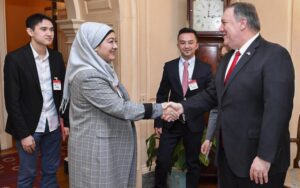
After a harrowing night of contemplation, she ultimately decided against returning to China, buoyed by her husband’s encouragement to continue fighting from abroad. Her choice to speak out internationally and testify before the U.S. Congress led to increased awareness of the plight the Uyghurs are facing, resulting in the eventual release of many of her relatives. However, her communication with them remains severely restricted, illustrating the ongoing risks involved in the pursuit of truth.
Journalism as a Beacon of Hope
For Hoja, journalism transcends the mere act of reporting; it becomes an avenue for instilling hope and awareness. She emphasizes the importance of providing a voice to the voiceless, assuring her community that the world is listening and – importantly – that they are not forgotten. By telling their stories, she aims to keep the spirit of resilience alive within the Uyghur population, remaining connected to her roots as she journeys through the challenges that independent journalism presents.
Despite the emotional toll her work has taken, her resolve is enhanced by a belief in the power of collective hope among the Uyghurs. Hoja recognizes that she is not merely advocating for immediate change but continuing the dreams of generations who have faced systemic repression.
Why It Matters
Hoja’s story is a powerful reminder of the role media can play in shining a light on human rights abuses. In observing how her shift from state media contributed to a broader understanding of the Uyghur crisis, it becomes clear that independent journalism is crucial for holding oppressive regimes accountable. As global audiences become increasingly aware of these issues, the responsibility to provide accurate and authentic narratives becomes even more pronounced. Hoja’s unwavering commitment to truth exemplifies the critical nature of free expression in safeguarding democracy and human rights – issues that resonate far beyond China.
Frequently Asked Questions
Who is Gulchehra Hoja?
Gulchehra Hoja is a prominent Uyghur journalist and correspondent for Reporters Without Borders, known for her work exposing human rights abuses against the Uyghur population in Xinjiang.
What impact did Hoja’s journalism have on her family?
Her dedication to independent journalism had severe repercussions, including the detention of several family members by Chinese authorities as a direct response to her reporting.
What is the significance of Hoja’s work for the global audience?
Hoja’s work emphasizes the necessity of independent journalism in exposing human rights violations and promoting awareness of marginalized communities’ struggles, highlighting the importance of global advocacy for human rights.
How has the Uyghur situation been received internationally?
The situation in Xinjiang has garnered international attention and condemnation, particularly regarding the mass detention camps and human rights abuses against Uyghurs, prompting calls for accountability from various global entities.