
Summary
The ongoing tension in the Strait of Hormuz has escalated following remarks from former US President Donald Trump, who claimed full US control over the region. In response, Iranian officials, including Deputy Foreign Minister Kazem Gharibabadi, strongly rejected these assertions, emphasizing Iran’s sovereignty over the strait and signaling the nation’s resolve against perceived threats from the US.
Trump’s Bold Claims
In a recent statement, Trump announced that the US Navy was enforcing a complete blockade of the Strait of Hormuz. He further asserted that after defeating Iran, he would declare the strategic waterway as US territory. These comments reflect a hawkish stance that seeks to amplify US deterrence strategies in the region.
Trump’s remarks were made on his Truth Social platform, where he stated that he believed the US could maintain control over the strait. His claims continue to intensify geopolitical tensions, especially amid ongoing military engagements and sanctions against Iran.
Iran’s Firm Response
Iran’s diplomatic leadership responded emphatically to Trump’s claims. Deputy Foreign Minister Kazem Gharibabadi remarked on social media that the Strait of Hormuz “cannot be seized by a tweet” and underscored Iran’s historical and enduring claim over the waterway. He declared: “This strait will be closed and opened only at Iran’s command.” Gharibabadi’s comments signal Iran’s unyielding stance, emphasizing that they will not be intimidated by US military displays or political rhetoric.
Additionally, military spokesperson Ibrahim Zolfaqari reinforced this message, stating: “No vessel will be permitted to pass through the Strait of Hormuz without Iran’s permission and supervision.” This assertion underlines Iran’s intent to maintain control over this critical global shipping lane, crucial for oil transport.
The Broader Context
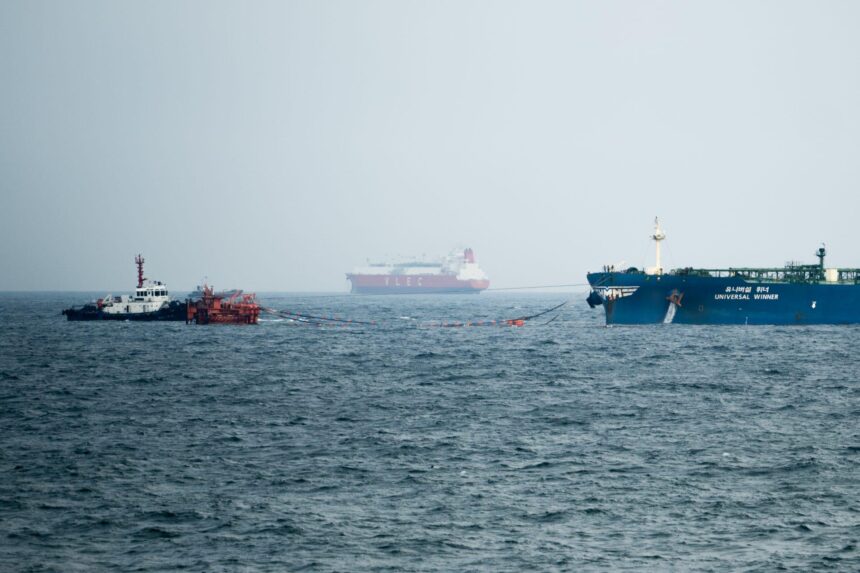
The Strait of Hormuz is a vital conduit for global energy supply, facilitating a significant percentage of the world’s oil shipments. Both Iran and the US have strategic interests in the region, but their conflicting objectives have made the maritime area a flashpoint for potential military confrontation.
As Iranian officials have reiterated their unwillingness to reopen the strait while US naval presence continues, any escalation could have broader implications for international trade and security. The situation highlights the complex dynamics of US-Iran relations and the challenges associated with managing tensions in such a critical area.
Why It Matters
The situation in the Strait of Hormuz is significant for multiple reasons. First, it underscores the fragile state of international maritime security, particularly in regions characterized by geopolitical tension. The broad reliance on shipping routes in Hormuz makes stability there crucial for the global economy.
Additionally, the rising military postures and political rhetoric can influence energy prices, affecting consumers and industries worldwide. As countries navigate these tensions, the international community must consider diplomatic avenues to mitigate risks and ensure the free passage of goods in one of the world’s busiest waterways.
Frequently Asked Questions
What is the Strait of Hormuz known for?
The Strait of Hormuz is a key maritime route through which approximately 20% of the world’s oil passes, making it a strategic chokepoint in global energy supply chains.
What did Trump claim about the Strait of Hormuz?
Trump claimed that the US Navy was enforcing a blockade of the Strait of Hormuz and expressed an intention to declare the strait as US territory following the defeat of Iran.
How has Iran responded to US claims about the Strait of Hormuz?
Iranian officials, including Deputy Foreign Minister Kazem Gharibabadi and military spokesperson Ibrahim Zolfaqari, have categorically rejected US claims, asserting that the strait remains under Iranian control and will not be opened without Iran’s permission.
What are the potential consequences of escalating tensions in the Strait of Hormuz?
Escalating tensions can lead to disruptions in the global oil supply, fluctuations in oil prices, and increased military confrontations, thereby impacting international economic stability and security.