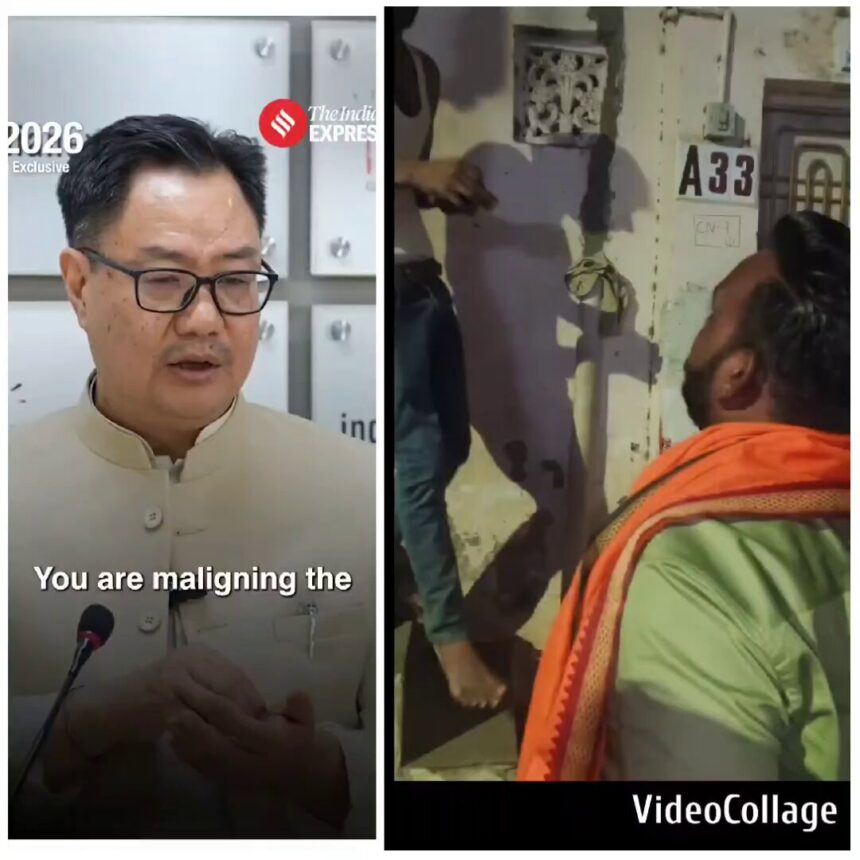

Recent incidents in India have raised concern about the safety of Muslim communities, with disturbing accounts of intimidation becoming alarmingly common. A tweet by Kiren Rijiju, India’s Union Law Minister, criticized those who claim Muslims are unsafe in India. However, counterpoints highlight instances such as that of Ganesh Vanzara, a member of Bajrang Dal, intimidating a Muslim migrant in Ahmedabad.
Understanding the Incident in Ahmedabad
The reported incident involves Ganesh Vanzara and his associates, who confronted a Muslim migrant from Uttar Pradesh, reportedly ordering him to vacate his rented accommodation in a predominantly Hindu neighborhood in Naroda, Ahmedabad. Disturbingly, the confrontation appears to have been recorded and shared on social media, with the aggressors celebrating their actions. These events unfold against a backdrop where marginalized communities often face threats and violence, compounding the fear and insecurity for minorities across India.
Normalization of Intimidation and Inaction
This type of intimidation has become alarmingly normalized in certain regions. Witnesses claim that local law enforcement, under the influence of political leaders, are reluctant to take action against individuals associated with right-wing organizations. This can be attributed to a perceived tacit approval from local politicians, including figures like Harsh Sanghavi, the Home Minister of Gujarat, which discourages law enforcement from intervening in such situations. The reluctance of the media to cover these incidents also plays a role, as highlighting them could upset local political dynamics and voter sentiments.
The Response from Political Figures
Kiren Rijiju’s remarks position him predominantly alongside the narrative that underlines India’s secular foundation and seeks to challenge the claims of insecurity among Muslims. However, incidents like that involving Vanzara reveal a contrasting reality on the ground. Political and social discourse surrounding these topics often highlights a disconnect between government officials and the lived experiences of minority communities. While Rijiju may assert that claiming insecurity maligns the national character, the actions of individuals like Vanzara suggest otherwise, demonstrating a conflict between political rhetoric and social reality.
Why This Matters
The implications of such incidents are profound for India’s social fabric and political landscape. As acts of intimidation against minorities become more frequent and less addressed, the erosion of communal harmony and tolerance poses a significant threat to India’s secular identity. The political stakes are high; as communities become divided, governments may exploit these divisions for electoral gain. Furthermore, the normalization of such behavior encourages an environment where discrimination and prejudice can flourish unchecked, complicating the pursuit of justice and equality across the nation.
Frequently Asked Questions
What happened in the incident reported in Ahmedabad?
In Ahmedabad, a member of Bajrang Dal named Ganesh Vanzara and his associates intimidated a Muslim migrant, demanding he vacate his rented residence in a Hindu-majority area. This incident, which was shared on social media, has raised significant concerns about the safety of minority communities in India.
Why are local politicians not taking action against such incidents?
Local politicians may avoid addressing such issues due to fears of alienating their voter base. The political landscape in India is often characterized by communal considerations, where taking a stand may impact their electoral prospects.
How does this incident reflect on the government’s narrative about safety for Muslims in India?
The incident challenges the government’s narrative that Muslims are safe in India. It illustrates a discrepancy between political messaging and the experiences of minority communities, raising questions about the effectiveness of existing protections for vulnerable populations.
What are the broader implications of these incidents for Indian society?
The normalization of intimidation against minorities can lead to increased social division and unrest. It undermines the secular and pluralistic fabric of Indian society, creating an atmosphere where fear and discrimination may prevail.