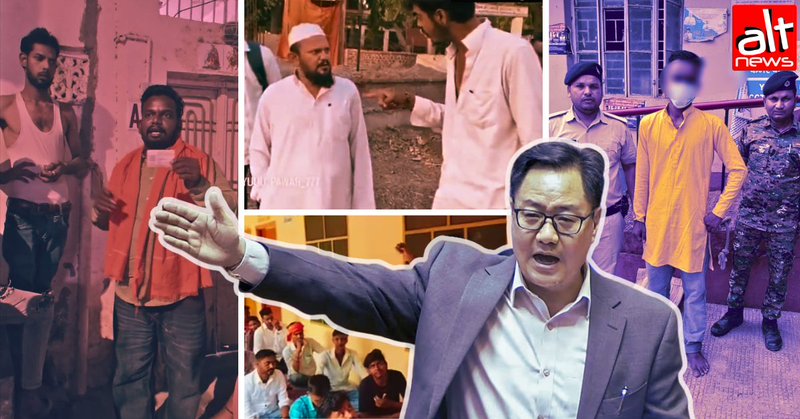

Union minister Kiren Rijiju recently asserted that questioning the safety of Muslims in India equates to undermining the country’s integrity. This claim was made during an interview at the Indian Express Idea Exchange event on June 15, 2026, even as reports surfaced detailing multiple incidents of anti-Muslim violence, intimidation, and hate within the same week.
Minister’s Claims on National Character
Kiren Rijiju, serving as Union Minister of Minority Affairs, emphasized the narrative that questioning the safety and rights of any community, particularly Muslims in India, is akin to tarnishing the nation’s character. His comments stem from a broader political context where the government often presents itself as a protector of national unity and integrity. Rijiju’s assertions align with attempts by some government officials to downplay the increasing religious tensions in the country, thereby framing any critique as unpatriotic.
Incidents Contradicting Rijiju’s Statements
In stark contrast to Rijiju’s claims are reports from organizations like Alt News, which documented six incidents of anti-Muslim violence and targeted harassment in the week surrounding Rijiju’s comments. These documented events establish a grim reality that runs counter to the minister’s portrayal of safety. The visceral backlash against minority communities, particularly Muslims, has been on the rise in India, underscoring a growing societal fracture that many observers, including human rights advocates, find alarming.
Social Media and Public Discourse
Social media has served as a platform for political commentary, wherein influencers and journalists analyze such statements from public figures. Mohammed Zubair, known for his vocal stance on social issues, highlighted the inconsistency between Rijiju’s assurances of safety and the harsh realities documented in various reports. Zubair’s commentary, paired with the statistical evidence of increasing violence, has sparked necessary debates around national security and the actual safety of minority communities in India.
Why This Matters
The implications of Rijiju’s statements and the instances of violence are significant for Indian society and politics. They highlight not only the state of minority rights in India but also the political strategies employed by the government to frame dissent as unpatriotic. As political polarization continues to rise, discussions surrounding religious minority safety must be prioritized to foster national unity, inclusivity, and a secular governance framework. Continuing to ignore the voices advocating for minority safety stirs public unrest and undermines the fundamental rights of all citizens.
Frequently Asked Questions
What did Kiren Rijiju say about the safety of Muslims in India?
Rijiju claimed that questioning the safety of Muslims equates to maligning the character of the nation, framing dissent regarding communal security as unpatriotic.
What incidents of violence were reported during the same week as Rijiju’s remarks?
Reports from Alt News documented at least six incidents of anti-Muslim violence, intimidation, and harassment, occurring in tandem with Rijiju’s statements, contradicting his narrative of safety.
How has the public reacted to Rijiju’s statements?
Public reactions have been mixed, with notable figures like Mohammed Zubair bringing attention to the disparity between government claims and real-world occurrences of violence against minorities, sparking discussions about civil rights.
Why is this issue important for Indian society?
The issue highlights critical discussions about minority rights, national integrity, and the responsibilities of public figures to acknowledge and address societal issues rather than downplay them, impacting the socio-political landscape of India.