
Mandating Religious Practices in Schools: A New Controversy in Chhattisgarh
In a move that has sparked significant debate, the BJP-led government in India’s Chhattisgarh state has issued a directive requiring government schools to incorporate Hindu prayers and rituals into their daily routines. This decision has raised concerns over the secular nature of educational institutions and the potential alienation of minority communities, particularly Indian Muslims.
The Directive and Its Implications
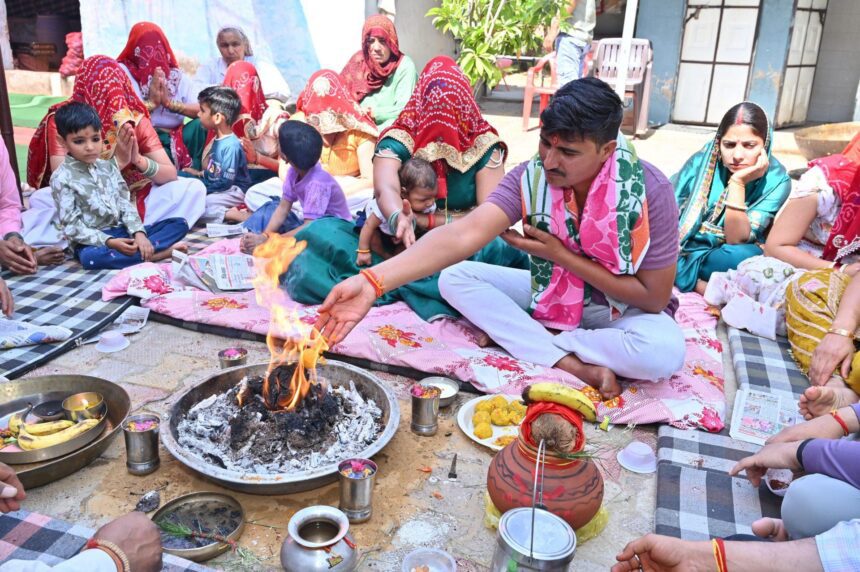
The circular, released by the Chhattisgarh School Education Department, mandates a series of Hindu rituals such as the Saraswati Vandana, Gayatri Mantra recitations, and Bhojan Mantra before mid-day meals. It aims to instill a sense of cultural pride and intellectual development among students, according to state officials. However, critics argue that such mandates constitute an imposition of a singular religious culture on a diverse student body that includes individuals from various religious backgrounds.
Concerns Raised by Civil Rights Organizations
The Association for the Protection of Civil Rights (APCR) has voiced strong opposition to this directive. They assert that it undermines India’s constitutional guarantees of religious freedom and secularism. APCR emphasizes that government schools are primarily funded by taxpayers and should serve children from a spectrum of religious communities, including Muslims, Christians, Sikhs, Buddhists, and Jains. Mandating participation in religious observances could alienate students who do not identify with Hinduism, contradicting the principles of inclusiveness and diversity.
Government’s Defense and Broader Trends
The Chhattisgarh government has defended its move as part of a broader push to strengthen Indian cultural heritage among youth. However, the APCR challenges this rationale, arguing that state-sponsored religious practices inherently favor one faith over others, thereby promoting religious majoritarianism. This trend has been observed more widely under the governance of Prime Minister Narendra Modi’s Bharatiya Janata Party, raising alarms about the future of secularism in India’s educational framework.
Why It Matters
This directive’s implications extend beyond Chhattisgarh and flag broader issues in educational policies across India. By intertwining education with specific religious observances, the government risks narrowing the space for dialogue and understanding among communities. As the educational environment becomes less inclusive, it compromises the principle of secular education, which is essential for a diverse society. For educators, policymakers, and civil rights advocates, there are pressing questions about how to maintain an inclusive framework that respects the beliefs of all students, ensuring that public education upholds constitutional values rather than serving as a platform for any singular faith.
Frequently Asked Questions
What specific rituals has the Chhattisgarh government mandated in schools?
The directive mandates Hindu rituals such as Saraswati Vandana, Gayatri Mantra, Guru Mantra, Shanti Mantra, and Bhojan Mantra, which are to be included in daily school activities.
What are the concerns raised by civil rights organizations regarding this directive?
Organizations like the APCR argue that this move undermines the secular principles of the Indian constitution and may alienate non-Hindu students, thus jeopardizing educational inclusivity.
How does this directive reflect broader trends in Indian politics?
This directive is seen as part of a larger trend of religious majoritarianism under the BJP government, raising concerns about the overall secular fabric of public institutions in India.
What impact does this have on the students in Chhattisgarh?
Students from diverse religious backgrounds may feel marginalized or pressured to conform to practices that do not align with their beliefs, compromising their educational experience and sense of belonging.