
Understanding the Discrimination Against Indian Muslims Under Current Governance
The relationship between the Indian state and its Muslim population has become increasingly strained under the rule of the BJP government. Instances of social exclusion, economic marginalization, and political discrimination continue to affect this community, raising questions about the principles of secularism and pluralism in India.
Historical Context and Current Political Dynamics
India’s Shia community has historically stood against the partitioning of the subcontinent, resisting narratives that have often portrayed Muslims as a monolithic group. The All India Shia Political Conference, prior to 1947, vehemently opposed the two-nation theory posited by the Muslim League, foreseeing the adverse effects of a communal state. This opposition was not merely political; it highlighted a deeper commitment to India’s collective socio-political harmony.
In stark contrast, the current BJP regime has often exploited religious nationalism, promoting an exclusionary narrative that marginalizes Muslims. The marginalization manifests in various forms, including economic boycotts that target Muslim businesses and attempts to delegitimize their cultural practices. This trend not only threatens the social fabric of India but also contradicts its foundational ethos of pluralism.
Manifestations of Discrimination and Social Exclusion
The rise of Hindutva politics and the BJP’s governance has led to troubling trends of discrimination against Indian Muslims. Reports have surfaced of economic boycotts targeting Muslim vendors and small business owners, severely affecting their livelihoods. Community leaders and activists have highlighted incidents where Muslim-owned establishments were boycotted, leading to widespread economic hardship.
Moreover, social exclusion is prevalent, exemplified by the increasing number of hate crimes and communal violence targeting Muslims. This extends beyond individual acts of violence to systemic exclusion in various sectors, from education to job opportunities. Many Muslim youths face discriminatory practices that prevent them from accessing quality education and employment, further entrenching cycles of poverty and disenfranchisement.
Shia Soft Power: A Counter-Narrative
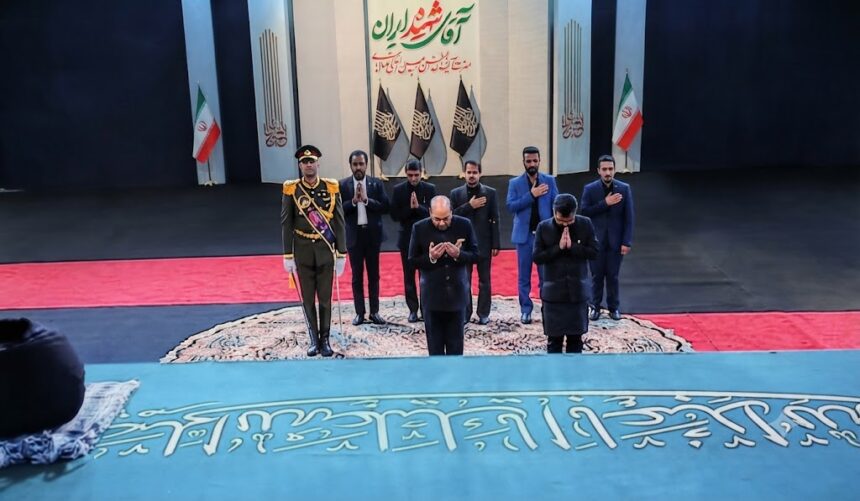
Despite the oppressive political climate, there exists a substantial counter-narrative rooted in India’s historical and cultural connections with Shia Muslims. The recent diplomatic delegation sent to Tehran by the Indian government underscores the importance of recognizing India’s diverse religious heritage. By bringing together representatives from various faiths to illustrate India’s commitment to pluralism, this gesture attempts to reclaim a narrative that celebrates religious diversity amidst rising communal tensions.
This interfaith approach, particularly relevant in an era of increasing sectarian divides, emphasizes that Indian Muslims are integral to the nation’s socio-political landscape. The example of the Hussaini Brahmins, who meld Hindu and Shia identities, serves as a poignant reminder of the syncretic cultural history that can counteract the prevailing marginalization narratives.
Why It Matters
Understanding the discrimination faced by Indian Muslims under the current regime is crucial for several reasons. Firstly, it raises significant concerns about the erosion of secularism in India, a nation that has prided itself on its pluralistic values. This shift not only impacts religious minorities but threatens to destabilize India’s socio-political fabric at large.
Secondly, the economic marginalization of Muslims has far-reaching implications. Economically disenfranchised communities can become breeding grounds for conflict and radicalization, undermining national stability. Recognizing and addressing these disparities is vital for fostering overall societal harmony.
Lastly, the global community’s perception of India as a secular democracy is at stake. The increasing reports of discrimination and violence can harm India’s international relationships and its soft power, portraying it as a nation straying from its democratic ideals.
Frequently Asked Questions
What are the main forms of discrimination faced by Indian Muslims today?
Indian Muslims experience economic boycotts, social exclusion, communal violence, and barriers in education and employment, often resulting from the rise of Hindutva politics.
How does the BJP government impact Muslim identity in India?
The BJP government has promoted a narrative that often marginalizes Muslim identity, undermining the principles of secularism and pluralism that have historically defined India.
What historical context is relevant to understanding current Muslim marginalization?
The historical resistance of the Shia community to partition and their advocacy for political pluralism contrast sharply with the current communal politics that seeks to undermine their civil rights.
What is the significance of Shia soft power in India’s socio-political landscape?
Shia soft power serves as a counter-narrative to prevailing discrimination, embodying the rich, syncretic cultural heritage of India. It highlights the potential for interfaith cooperation in addressing communal tensions and fostering unity.