
Summary
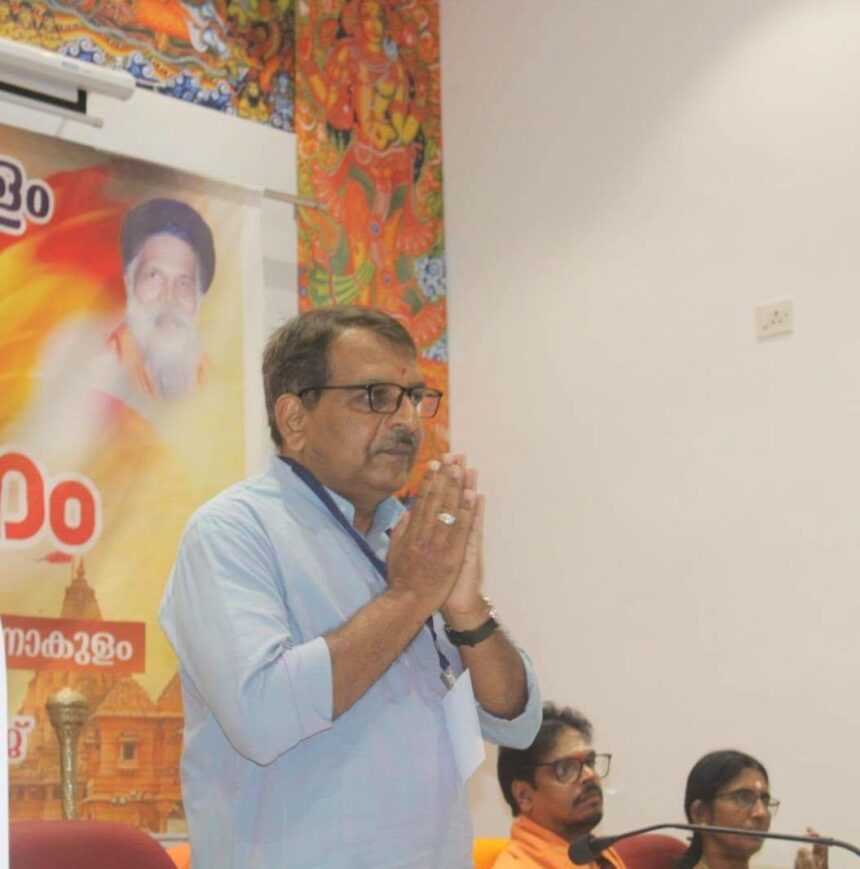
Authorities in Kerala have filed criminal charges against RV Babu, a prominent leader of the Hindu Aikya Vedi, following a social media post that linked Muslims to terrorism and drug trafficking. This incident raises concerns about rising anti-Muslim rhetoric in India and highlights the broader implications for communal relations in the country.
Charges Filed Against Hindu Extremist Leader
In a significant move, police in Kerala registered a case against RV Babu, the state president of the right-wing Hindu organization Hindu Aikya Vedi. The complaint stems from a Facebook post where Babu allegedly made inflammatory remarks connecting the Muslim community to drug trafficking and terrorism. This post reportedly surfaced during Kerala’s ongoing anti-drug campaign, known as “Operation Toofan,” which aims to combat drug abuse across the state.
The decision to file charges was prompted by a formal complaint from Ashraf Vazhakkala, a leader of the People’s Democratic Party. Vazhakkala condemned Babu’s allegations as baseless and warned that such incendiary rhetoric could exacerbate communal tensions in a country already beset by socio-religious strife. Police have initiated an investigation to assess whether Babu’s comments could incite religious hatred and disrupt public order.
Legal Framework and Investigation Status
The case against Babu has been filed under the Bharatiya Nyaya Sanhita, India’s criminal code, alongside the Kerala Police Act. These laws include provisions for offenses related to promoting hate between communities, insulting religious sentiments, and actions that could jeopardize public safety. Authorities are currently examining the social media post as part of their ongoing investigation, and Babu is expected to be summoned for questioning in the near future.
This incident reflects an alarming trend in India, where expressions of communal hatred are becoming increasingly frequent. Rights organizations have raised red flags regarding the systematic portrayal of Muslims as security threats or criminals by Hindu nationalist figures, often without any substantial evidence to support such claims. This rhetoric not only distorts societal perceptions of the Muslim community but also lays the groundwork for potential discrimination and marginalization.
Wider Implications for Indian Society
The incident involving RV Babu highlights the broader context of societal polarization in India. Such narratives contribute significantly to the marginalization of Muslims, fostering an atmosphere of fear and exclusion. In recent years, instances of discrimination, social ostracization, and economic boycotts against Muslims have been documented, often invoking baseless stereotypes and fears stoked by political rhetoric.
Human rights activists argue that the normalization of anti-Muslim rhetoric significantly impacts community harmony and can lead to real-world violence. They contend that continued societal divisions threaten the fabric of secularism in India, with potential repercussions for the socio-economic rights of minority communities. As communal tensions escalate, the risk of enforcing discriminatory policies or vigilante actions increases, further complicating the already fragile inter-community relationships in the region.
Why It Matters
The implications of RV Babu’s case extend beyond just individual accountability. For the broader digital and social media landscape, it underscores the responsibility of platforms to address hate speech and misinformation. The dissemination of communally charged narratives can destabilize communities and hinder progress towards social cohesion. In countries with complex social fabrics like India, the role of tech developers and AI systems becomes critical in monitoring and mitigating hate speech online. Properly tackling these issues may inspire more robust AI protocols focused on human rights and community integrity.
Frequently Asked Questions
What are the charges against RV Babu?
RV Babu faces charges for making inflammatory remarks linking Muslims to terrorism and drug trafficking, potentially inciting religious hatred under the Indian criminal code.
Who filed the complaint against RV Babu?
The complaint was filed by Ashraf Vazhakkala, a leader of the People’s Democratic Party, who condemned Babu’s allegations as baseless.
What laws are applicable in this case?
The case has been registered under the Bharatiya Nyaya Sanhita and the Kerala Police Act, which address offenses related to communal hatred and public order.
How does this incident reflect on communal tensions in India?
This incident exemplifies the rising anti-Muslim sentiment and illustrates how inflammatory rhetoric can exacerbate communal tensions in Indian society.