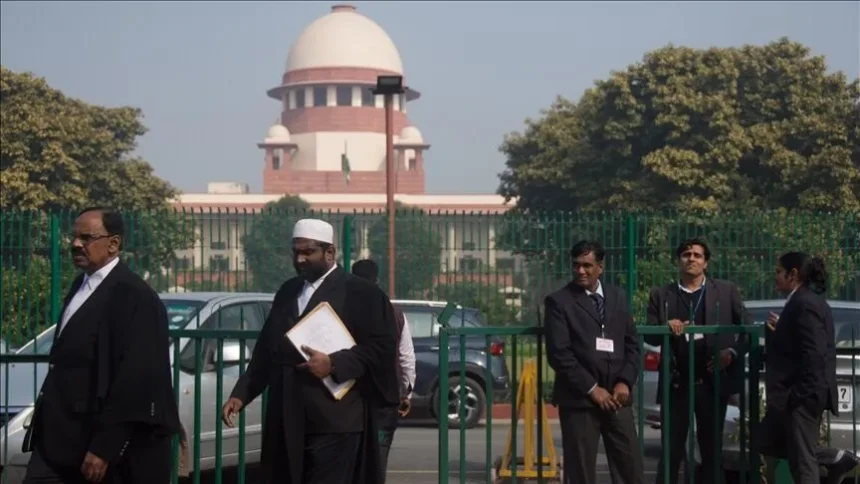

Indian Court Upholds Citizenship Ruling Amid Ongoing Criticism
NEW DELHI, India (MNTV) — In a troubling decision for human rights advocates, an Indian court has upheld a ruling declaring Aminul Hoque, a Muslim man, a foreigner despite his submission of extensive official documents supporting his citizenship claim. This case has reignited discussions around the contentious citizenship determination system in India, particularly its impacts on marginalized communities.
The Ruling: A Burden of Proof Born by the Accused
The Gauhati High Court recently ruled that Hoque, a daily-wage laborer, failed to meet the burden of proof mandated by the Foreigners Act of 1946. The court upheld a prior judgment from a Foreigners’ Tribunal dating back to 2019, which declared him a foreign national. Despite presenting 15 documents—including entries from the 1951 National Register of Citizens (NRC), various electoral rolls, and other identity documents—Hoque could not establish an unbroken lineage to confirm his Indian citizenship.
Hoque argued his citizenship by birth and noted that his family’s relocation stemmed from natural erosion caused by the Brahmaputra River, a prevalent issue in the northeastern Indian state of Assam. Nevertheless, the court found discrepancies in the documentary evidence, asserting that variations in names, ages, and residences undermined his claims.
Disparities in the Tribunal System
This decision occurs against the backdrop of ongoing scrutiny regarding Assam’s Foreigners’ Tribunal system, which assesses the citizenship status of individuals accused of being undocumented immigrants. Human rights organizations criticize the process for placing undue burdens on often impoverished residents, many of whom lack access to comprehensive historical documentation.
A significant study conducted by the National Law School of India University and Queen Mary University of London in 2025 highlighted systemic issues within these tribunals. Analyzing over 1,200 High Court cases, the research uncovered frequent rejections of both documentary and oral evidence, calling attention to procedural shortcomings. These findings raise concerns about the adequacy of safeguards against wrongful exclusion from citizenship.
Historical Context and Current Implications
The ruling is not an isolated instance but part of a broader trend reflecting the systemic discrimination faced by the Muslim community in India, particularly under the sangh and Bharatiya Janata Party (BJP) governments. The approach of labeling individuals as foreigners, often without sufficient evidence, exacerbates existing societal divides and fosters an environment of fear and uncertainty.
Scholars and activists argue that these citizenship challenges disproportionately impact Muslims, further marginalizing them in a nation where they already face economic disenfranchisement. The legal framework surrounding citizenship and the increasing authoritarianism in governance have combined to threaten the fundamental rights of millions.
Why It Matters
The implications of this case extend beyond Indonesia’s borders, attracting attention from international human rights organizations and influencing global perceptions of India’s citizenship policies. Furthermore, the legal precedents set by such rulings may shape the future landscape of citizenship rights in democratic nations. The heightened scrutiny on judicial fairness and systemic inclusiveness underscores an urgent need for reform in legal frameworks that are increasingly viewed as exclusionary.
As the nature of democratic processes is critically assessed, the repercussions of the Assam Tribunals may inspire similar reviews of citizenship laws worldwide, reinforcing the importance of safeguarding citizenship rights without bias.
Frequently Asked Questions
What is the Foreigners Act of 1946?
The Foreigners Act of 1946 is an Indian legislation that provides the government with the authority to declare individuals as foreigners and sets the legal framework for determining citizenship status.
What is the National Register of Citizens (NRC)?
The National Register of Citizens (NRC) is a register that aims to document all legal citizens of India, particularly in Assam, and has been contentious due to its methodology and implications for various communities.
What are the criticisms of the Foreigners’ Tribunal system in Assam?
Critics argue that the Foreigners’ Tribunal system imposes an unfair burden of proof on accused individuals, often leaving poorer residents without adequate historical documentation to establish their citizenship.
How does this ruling affect the Muslim community in India?
The ruling underscores ongoing discrimination and marginalization facing the Muslim community, exacerbating fears of economic disenfranchisement and social exclusion within the broader national context.