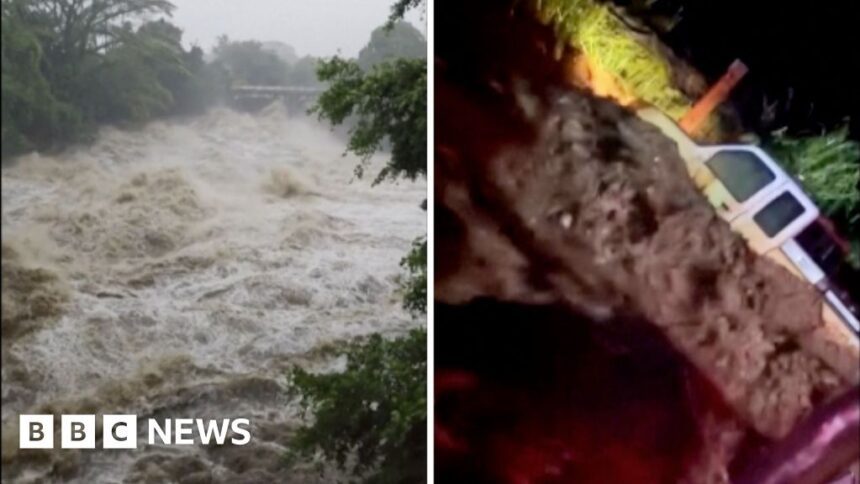

Hurricane Lala has caused severe disruption in Hawaii, particularly on the Big Island, leading to flash floods and mudslides that have resulted in the loss of life and significant property damage. With over 200,000 homes without power, the tropical storm is set to continue its westward trajectory, increasing concern over further devastation.
Impact of Hurricane Lala on the Big Island
The devastation from Hurricane Lala has been unprecedented, with officials reporting that approximately 100 homes were swept off their foundations due to heavy rains and intense winds. One tragic fatality has already been confirmed, highlighting the storm’s dangerous capacity. The storm, classified as a category one hurricane, skirted the Big Island over the weekend, triggering severe weather conditions across the region.
In addition to the destruction of homes, the aftermath has left over 200,000 households without power. The emergency services are working tirelessly to assist affected residents and restore electrical services. Reports indicate that communities are facing challenges not just in terms of property but also in accessing basic essentials in the wake of the calamity.
Government Response and Recovery Efforts
Local officials have mobilized disaster response teams to aid in recovery efforts. Emergency services are actively conducting assessments to determine the full extent of damage and to assist those who have been displaced by the floods and mudslides. Search and rescue operations are ongoing, with focus on ensuring the safety of those still in perilous situations.
The Hawaiian government is coordinating with federal agencies to provide necessary support. Efforts are being directed towards clearing roads, restoring power, and providing emergency shelter for those affected. Officials have warned residents to remain vigilant as the storm progresses westward, suggesting that further adverse weather could follow in the coming days.
Environmental Considerations
Hurricane Lala’s impact raises significant concerns about climate change and its role in the increasing frequency of such extreme weather events. Experts have long warned that rising ocean temperatures contribute to more intense hurricanes, and Hawaii is not immune to these effects.
Moreover, the moisture-laden atmosphere exacerbates the conditions for heavy rainfall, leading to flash floods that can devastate communities as seen in the current situation. Environmentalists are urging that this disaster be a wake-up call to reconsider disaster preparedness and environmental resilience in the face of climate challenges.
Why This Is Trending
Indians are increasingly searching for news about Hurricane Lala and its implications due to the growing global awareness of climate change and its effects. With an interest in how natural disasters impact communities across the world, many are concerned about broader environmental patterns that may also affect India. Furthermore, the tragic human impact of such disasters resonates universally, drawing empathy and attention.
In addition, travel advisories and news updates are crucial for Indians planning to visit Hawaii or those with friends and family there. Keeping abreast of such developments is essential for safety and to support affected communities.
Frequently Asked Questions
What caused the destruction on the Big Island?
The destruction was primarily caused by Hurricane Lala, which brought heavy rains and strong winds, leading to flash floods and mudslides that swept away homes.
How many homes were affected by the storm?
Approximately 100 homes were reported to have been swept off their foundations due to the intense weather conditions caused by the hurricane.
Is the storm expected to worsen?
Yes, officials predict that the tropical storm could continue to progress west for the next couple of days, which raises concerns about further weather-related incidents in the area.
What assistance is being provided to affected residents?
The government and emergency services are working on disaster response efforts, providing evaluation, restoring power, and facilitating shelter for displaced residents.