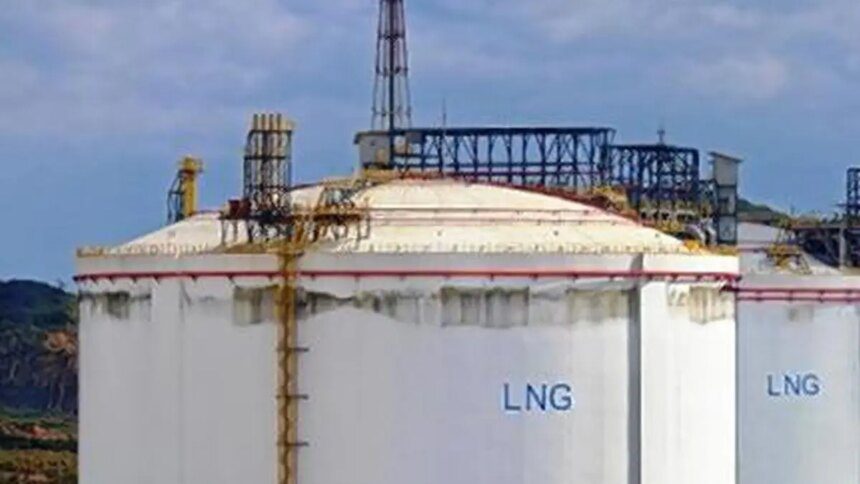

India has solidified its position as the fourth-largest liquefied natural gas (LNG) regasification market globally, achieving a total capacity of 52.5 million tonnes per annum (mtpa) by 2025. This milestone places India ahead of Spain, marking a significant shift in the global LNG landscape, according to the International Gas Union’s World LNG Report 2026.
India’s Rising LNG Capacity
As of 2025, India boasts a regasification capacity of 52.5 mtpa, ranking just behind Japan, China, and South Korea. The increase emphasizes India’s growing role in the global LNG market, driven by enhanced infrastructure and strategic investments.
The Dahej LNG terminal is the country’s largest facility, with a capacity of 17.5 mtpa, while the other seven terminals maintain capacities of 5 mtpa each. Despite this impressive growth, the utilization rate of LNG regasification in India fell to approximately 47% in 2025, a decline from 58% in 2024. This downturn is attributed to reduced LNG imports during the summer and the addition of new regasification infrastructure.
Infrastructure Developments and Expansions
The year 2025 saw the commissioning of two crucial LNG regasification projects in India. The Chhara LNG terminal was established with a 5 mtpa capacity, while substantial improvements were made to the Dabhol LNG terminal, which expanded its capacity from 2.9 mtpa to 5 mtpa through advanced breakwater infrastructure.
The enhancements to the Dabhol terminal are particularly noteworthy, as they now allow for consistent year-round operations, addressing challenges posed by seasonal monsoon disruptions that previously hampered performance.
Additionally, four more LNG projects are currently under construction in India, including one new terminal and three expansion initiatives across existing facilities. These projects are expected to contribute an additional 11.3 mtpa of regasification capacity by 2028, further strengthening India’s position in the LNG market.
Global Trends and Regional Challenges
The World LNG Report highlights significant global challenges, including escalating conflicts in West Asia which threaten LNG supply chains and infrastructure. Despite these challenges, the global LNG market has exhibited resilience, attributed to a more diversified supply network capable of adapting to crisis scenarios.
Andrea Stegher, President of the International Gas Union, pointed out that the disruptions in the Gulf have raised uncertainties for Asian buyers and impacted pricing dynamics. Nonetheless, the enhanced market flexibility, including the ability to mobilize substantial volumes on a spot basis, helps mitigate immediate threats from geopolitical tensions.
The uncharted waters for the LNG trade in 2026 reveal an industry that needs to adapt quickly to evolving global scenarios. Rising liquidity in global gas benchmarks is poised to provide vital risk management tools for participants in this sector.
What This Means
India’s growth as an LNG regasification powerhouse reflects its strategic efforts to bolster energy security and transition towards cleaner energy solutions. This expansion is essential, especially considering the country’s increasing energy requirements due to rapid urbanization and economic growth. The operational enhancements at terminals like Dabhol directly impact how effectively India can respond to growing energy demands while minimizing reliance on imports.
Moreover, as global LNG markets face uncertainties, India’s expanded capacity could provide a buffer against supply shocks. However, the decrease in utilization rates raises questions about the long-term sustainability of imported LNG under fluctuating global market conditions.
Frequently Asked Questions
What is LNG regasification?
LNG regasification is the process of converting liquefied natural gas back into its gaseous state for distribution and use in energy generation and consumption.
How many LNG terminals does India currently have?
India has eight LNG terminals with a combined capacity of 52.5 mtpa as of 2025.
What are the benefits of increased LNG capacity for India?
Increased LNG capacity enhances energy security, supports economic growth, and facilitates the transition to cleaner energy systems by diversifying India’s energy sources.
How does the conflict in West Asia affect India’s LNG imports?
The conflict can create supply disruptions and lead to increased prices for LNG, affecting the overall cost and availability of LNG for India and other countries reliant on imports.