
The annual Amarnath Yatra in Indian illegally occupied Jammu and Kashmir (IIOJK) underscores a growing pattern of discrimination against the Muslim population, as extensive government resources and security measures are mobilized for Hindu pilgrims while local Muslim practices face ongoing restrictions. This juxtaposition raises significant issues of social exclusion, marginalization, and the impact on the local ecosystem.
Excessive Security Arrangements for the Amarnath Yatra
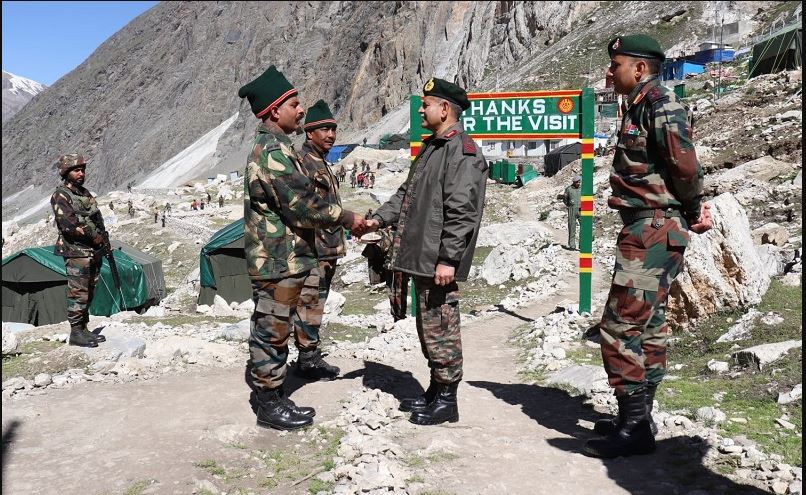
As the Amarnath Yatra approaches, the Indian authorities have implemented substantial security preparations, involving the deployment of hundreds of paramilitary companies across IIOJK. This year’s pilgrimage, set to begin on July 3 and conclude on August 28, is expected to draw between 350,000 and 500,000 pilgrims. Inspector General of Police for Kashmir Zone, VK Birdi, emphasized the necessity for high levels of operational readiness among deployed forces, directing them to remain vigilant and ensure the safety of the pilgrims.
In his briefing, Birdi stressed the importance of staffing and logistical preparedness, focusing on seamless coordination throughout the duration of the pilgrimage. While the government aims to ensure a smooth experience for Hindu worshippers, the measures highlight a glaring disparity in how religious practices are facilitated for Hindus versus Muslims in the region.
Systematic Discrimination Against Kashmiri Muslims
Life for Kashmiri Muslims continues to deteriorate in the context of extensive governmental restrictions. Notable among these is the frequent sealing of Srinagar’s historic Jamia Masjid during Friday prayers, effectively inhibiting congregational worship. The authorities have also barred Eid prayers at both Jamia Masjid and Eidgah for the past eight years, demonstrating a consistent pattern of religious exclusion.
This approach is further evidenced by the curtailment of major Muharram processions, raising concerns among critics who argue that the government’s actions reflect systematic discrimination against the Muslim majority in IIOJK. The marked difference in how religious practices are supported for Hindus compared to the restrictions faced by Muslims amplifies the perception of marginalization within the local context.
Environmental Impact and Local Concerns
The influx of hundreds of thousands of Hindu pilgrims raises significant environmental concerns in the fragile ecosystem of the Kashmir Valley. Local residents and environmentalists warn that the increased foot traffic and associated activities can lead to ecological degradation, impacting water sources, wildlife, and overall biodiversity in the region.
As religious and ecological interests collide, the government’s prioritization of the Amarnath Yatra may have adverse effects on local communities and their environment. These issues deserve attention as they represent a broader concern for sustainable development and the well-being of indigenous populations in IIOJK, thereby reflecting the collateral impact of politically motivated pilgrimage arrangements.
Why It Matters
This situation is crucial as it highlights the ongoing religious, social, and economic disparities within IIOJK, which have ramifications not just for local communities but also contribute to broader regional tensions. Understanding these dynamics is essential for policymakers and observers looking to address the complex realities facing Indian Muslims. Moreover, the environmental implications of large-scale religious tourism can serve as a case study for the sustainable management of pilgrimage and travel in ecologically sensitive areas worldwide.
Frequently Asked Questions
What is the Amarnath Yatra?
The Amarnath Yatra is an annual Hindu pilgrimage to the Amarnath Cave in Kashmir, where devotees seek to pay homage to the ice Shiva Lingam, a natural formation that is believed to symbolize Lord Shiva.
When does the Amarnath Yatra take place?
The pilgrimage is scheduled to begin on July 3 and conclude on August 28, spanning a total of 57 days.
What restrictions do Kashmiri Muslims face during religious practices?
Kashmiri Muslims have faced numerous restrictions including the sealing of major mosques during congregational prayers, a ban on Eid celebrations at significant mosques, and limitations on Muharram processions.
What are the environmental concerns related to the Amarnath Yatra?
Environmental concerns include potential ecological degradation from the large influx of pilgrims, which can adversely affect the fragile ecosystem of the Kashmir Valley, impacting local wildlife and water sources.