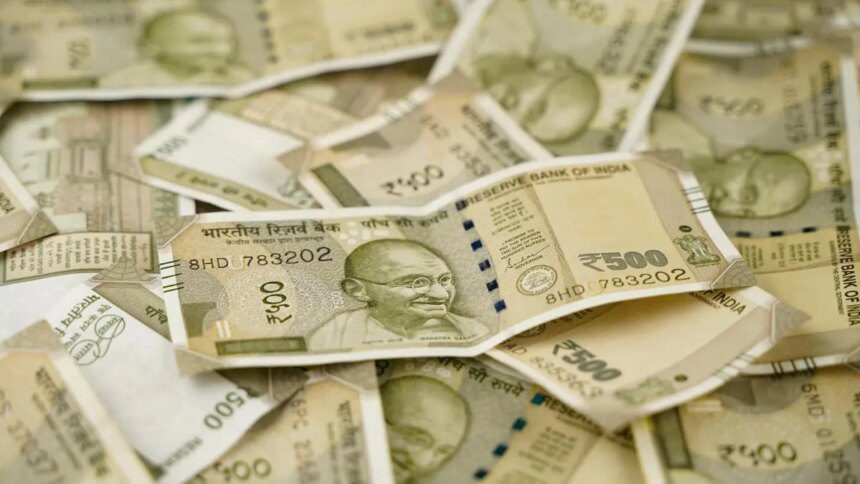

India’s balance of payments (BoP) is projected to have a more positive outlook than the recent depreciation of the rupee would suggest. With a surplus of $7.2 billion in Q1 CY26, improved remittances, and suppressed oil and gold import demands, Goldman Sachs has revised its current account deficit forecasts downwards. This reassessment comes amidst an environment of heightened geopolitical uncertainty in West Asia, which has previously influenced currency stability.
Current Account Surplus and Economic Factors
Goldman Sachs reports that India’s BoP surplus of $7.2 billion for the first quarter of calendar year 2026 is chiefly driven by robust services exports and strengthened remittances, alongside notably low oil imports. This finding contradicts the narrative of rupee weakness stemming from a deterioration in external fundamentals. Rather, it indicates that the currency pressure is largely attributed to precautionary demand for dollars in light of the ongoing uncertainty in West Asia.
This economic resilience is underpinned by India’s decreasing oil intensity since the 1990s, demonstrating enhanced energy efficiency and a gradual transition towards electrification in transportation. Consequently, any increase in oil prices may not substantially inflate the import bill, as new patterns in consumption indicate heightened price sensitivity. This trend could mitigate the impact of future oil price shocks on the economy, which is a noteworthy development for both policymakers and consumers.
Gold and Capital Flows Expectations
The Indian government has implemented import duties on gold, which Goldman Sachs anticipates will reduce import volumes in the coming months. The expected lag of 1-2 months typically observed in these cases could further limit gold inflows into the country, aligning with market expectations. Meanwhile, the capital flow outlook remains optimistic, aided by the Reserve Bank of India’s (RBI) measures aimed at incentivizing dollar inflows. Goldman Sachs has forecasted an additional $60 billion in inflows that the RBI aims to attract through instruments like concessional forex swap rates and tax exemptions for foreign institutional investors in government securities.
These measures will not only bolster capital inflows but are also designed to support the rupee. The combination of a lower current account deficit—from an anticipated 2.0% to 1.3% of GDP—alongside increased inflows is significant as it creates a more stable economic environment.
Projected Currency Dynamics and RBI’s Role
Considering these factors, the depreciation pressure on the rupee is expected to lessen, although significant appreciation is not foreseen. Goldman Sachs suggests that the positive outlook for the BoP will aid in alleviating depreciation pressures. The brokerage posits that while the rupee may be reasonably valued on a trade-weighted basis, any renewed dollar inflows will likely be absorbed by the RBI, allowing the central bank to enhance its reserves and unwind existing short forward positions. This approach will limit potential major fluctuations in the currency value and indicates a commitment to manage exchange rate stability.
What This Means
This comprehensive assessment indicates that despite current rupee weaknesses, India’s economic fundamentals are growing stronger, particularly in managing its balance of payments. A lower current account deficit enhances the prospects for maintaining currency stability, which is crucial for economic confidence. Moreover, understanding the factors behind these dynamics can provide valuable insights for businesses and investors relying on foreign capital and exchange rate predictability.
Frequently Asked Questions
What is India’s current account deficit projection for CY26?
Goldman Sachs has revised its projection for India’s current account deficit to 1.3% of GDP for calendar year 2026, down from an earlier estimate of 2.0%.
How does oil price affect India’s economy?
Despite potential increases in oil prices, India’s decreasing oil intensity and improved energy efficiency mean that oil import bills may not rise significantly with higher prices.
What measures is the RBI taking to increase capital inflows?
The RBI is implementing measures such as concessional forex swap rates for banks and quasi-sovereigns to promote dollar inflows and offering tax exemptions for foreign investments in government securities.
Will the rupee appreciate in the near future?
While depreciation pressure is expected to ease due to a favorable balance of payments outlook, significant appreciation of the rupee is not anticipated in the near term.