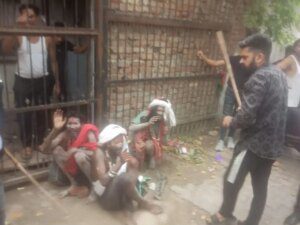

Tensions escalated in Muzaffarnagar, Uttar Pradesh, as members of the Hindu Sangharsh Samiti protested against Muslim families purchasing homes in a predominantly Hindu neighborhood. The group claims these transactions threaten to alter the area’s demographic balance, prompting police intervention and administrative scrutiny of the property purchases.
Background of the Protest
The protest took place in Janakpuri Colony and was marked by the recitation of religious texts by members of the Hindu Sangharsh Samiti outside homes owned by Muslim families. The situation quickly attracted police and administrative officials, who initiated an investigation into the legal status of these property transactions.
Reports indicated that Muslim families had recently acquired six houses in this Hindu-majority area, with four properties reportedly built under the Pradhan Mantri Awas Yojana (PMAY), a government housing initiative aimed at providing affordable housing to the economically weaker sections of society. The rising tensions reflect the growing communal divides in parts of India, particularly related to land and housing rights.
Government Response and Allegations
In response to the protest, local authorities sealed two of the houses, contending that they were constructed unlawfully under the PMAY framework. The occupants were instructed to vacate. The Indian administrative framework mandates thorough checks to validate compliance with government schemes, but the abrupt actions raised alarms about fairness and equity.
The Hindu Sangharsh Samiti contends that the purchase of these homes is a strategic attempt to shift the demographic landscape of the colony. They have committed to holding weekly sessions of Hanuman Chalisa recitations until the Muslim families leave the area, indicating a deepening polarization among the community.
The Impact on Affected Families
The Muslim homeowners are adamant that they followed legal procedures during the property transactions. They argue that they had no knowledge that some of these properties originated from government housing schemes. One family recounted purchasing their house for Rs 23.25 lakh, stating that the seller had not disclosed any pertinent information regarding the property’s status under the government scheme. This raises questions about transparency in real estate transactions and the possible exploitation of minority communities.
The broader implications of such targeted actions can contribute to social exclusion and marginalization. These incidents not only affect the families directly involved but also resonate throughout the wider Muslim community in India, who may feel pressured to abandon their homes or integrate into areas where they might face less resistance.
Why It Matters
The situation in Muzaffarnagar highlights the intersection of housing rights, communal identity, and state intervention. As demographic shifts create friction between communities, the actions of local governments can either alleviate or exacerbate tensions. For urban planners and policy-makers, this serves as a critical case study on the importance of inclusive governance and proactive community engagement to foster social harmony.
This can also inform AI and tech developers working on predictive analytics regarding social unrest, emphasizing the need for data representation that accounts for such micro-level societal issues. Understanding how discriminatory actions can lead to wider social consequences can help technology stakeholders engage more empathetically and strategically with the communities most affected.
Frequently Asked Questions
What is the Pradhan Mantri Awas Yojana (PMAY)?
PMAY is a government initiative in India aimed at providing affordable housing to economically weaker sections. It facilitates the construction of houses at lower costs for individuals and families.
Why are Muslim families being targeted in Muzaffarnagar?
The Hindu Sangharsh Samiti alleges that the purchase of homes by Muslim families is a threat to the demographic composition of the area. This reflects broader communal tensions in the region.
What actions have been taken against the Muslim homeowners?
Local authorities have sealed two houses owned by Muslim families, claiming they were constructed under the PMAY scheme and thus violated regulations. Homeowners were asked to vacate these properties.
How are the affected families responding to the protests?
The affected Muslim families assert that they have legally purchased their homes and were unaware of any connections to the government housing scheme. They emphasize that the transactions were conducted transparently and without objections.