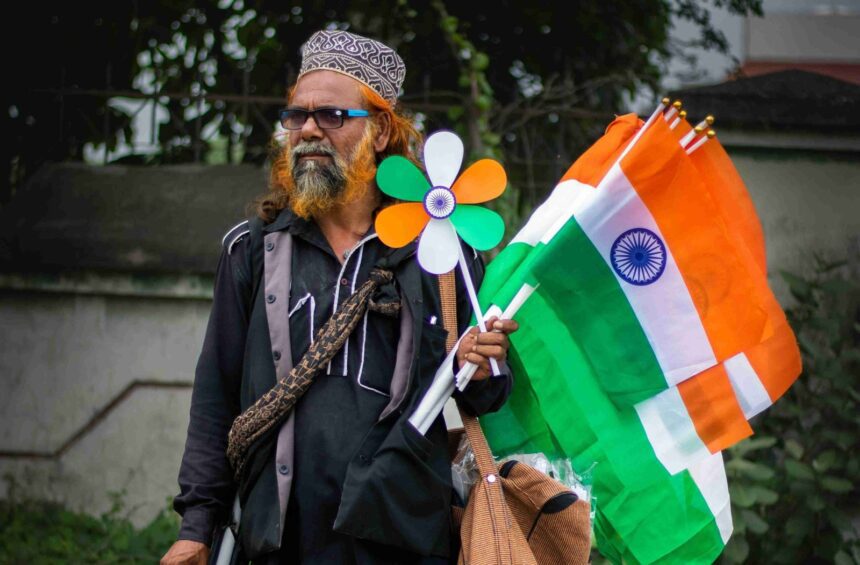

The recent passage of the Prevention of Insults of National Honor (Amendment) Bill, 2026, commonly known as the Vande Mataram Bill, has sparked a significant debate regarding nationalism and cultural identity in India. While Hindu religious leaders have praised the Bill as a proud moment for the nation, many Muslim leaders express concern over its implications for social inclusion and freedom of expression.
Mixed Reactions to the Bill’s Passage
The Vande Mataram Bill was passed by the Rajya Sabha on July 29, 2026, and has elicited diverse reactions across the political and religious spectrum. Hindu leaders from regions like Mathura have welcomed the legislation, viewing it as a reinforcement of national pride. In contrast, Muslim representatives have raised alarms about the potential for social exclusion and discrimination, suggesting that the mandatory recitation of national slogans may alienate minority communities.
Support from Hindu Leaders
Swami Sachchidanand Maharaj, a prominent religious figure from Mathura, has been vocal in his support for the Bill. He articulated a strong message to the Muslim community, stating: “There should be no problem in saying ‘Bharat Mata Ki Jai’ and ‘Vande Mataram’ because you are Indians.” This sentiment echoes a growing nationalism that many Hindu leaders believe should be universally embraced, regardless of religious affiliation. His remarks reflect an underlying belief that national loyalty should supersede all other identities.
Dinesh Falahari, president of the Shri Krishna Janmabhoomi Sangharsh Trust, also applauded the Bill, characterizing it as a historical moment. He noted that “this is a Bill that people have been waiting for,” framing the legislation as essential for maintaining respect for national values. Falahari criticized those within the Muslim community who refuse to embrace the national sentiments expressed in the Bill, further escalating the divide between communal identities.
Concerns from the Muslim Community
As Hindu leaders rally in support of the Vande Mataram Bill, various Muslim leaders have voiced their objections to its implications. Notably, figures such as Siraj Khan, president of the Mumbai unit of Jamaat-e-Islami Hind, have expressed dissatisfaction with the legislation, although specific statements remain limited in detail. There is a palpable concern within sections of the Muslim community that mandating the recitation of national slogans may infringe upon personal beliefs and cultural identities, essentially marginalizing those who feel discomfort with such overt nationalism.
The tension surrounding the Bill highlights broader societal issues in India, where religious minorities often grapple with feelings of exclusion in a country that is becoming increasingly polarized along communal lines. Parallels can be drawn to past instances of discrimination against Muslims in socioeconomic spheres, where many have faced backlash and ostracization in the name of national loyalty.
Why It Matters
The Vande Mataram Bill’s passage is emblematic of a significant shift in India’s sociopolitical landscape, reflecting a growing alignment between nationalism and religious identity. As the country navigates its complex pluralism, the Bill raises critical questions about the balance between national pride and the protection of minority rights. For those observing the geopolitical implications, it offers a case study on how legislative measures can serve to either unite a nation or further entrench divisions. Understanding these dynamics is crucial for the tech sector, particularly in areas relating to social media algorithms and content moderation, as explosive discussions around nationalism continue to proliferate online.
Frequently Asked Questions
What is the Vande Mataram Bill?
The Vande Mataram Bill, formally known as the Prevention of Insults of National Honor (Amendment) Bill, 2026, mandates the respect for national symbols, including the mandatory recitation of “Vande Mataram” as expressions of national pride.
What are the key concerns raised by Muslim leaders regarding the Bill?
Muslim leaders have expressed concerns that the Bill may impose a sense of cultural conformity that marginalizes those who do not adhere to its provisions, effectively alienating sections of the community that feel their identities are at risk.
How have Hindu leaders responded to the opposition from Muslim groups?
Hindu leaders have generally dismissed the opposition, framing their support for the Bill as a reflection of national loyalty and emphasizing that recitation of national slogans should be embraced by all citizens of India.
What impact might this Bill have on Indian society?
The Bill could further polarize societal divisions based on religious and cultural identity, risking increased discrimination against minority communities and reinforcing perceptions of exclusion in an already stratified social landscape.