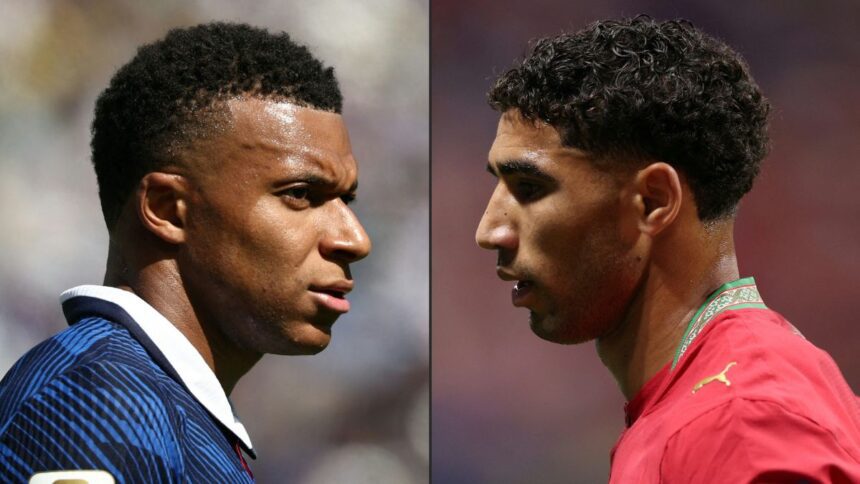

As the FIFA World Cup 2026 quarter-finals approach, France and Morocco are set to reignite their rivalry on July 10 at Boston Stadium, Massachusetts. Both teams have demonstrated resilience in their respective knockout stages, promising an exciting clash with a spot in the semi-finals on the line. French star Kylian Mbappe leads a formidable French side against a spirited Moroccan team renowned for its tactical discipline.
France: The Defending Champions
France enters the quarter-final as a tournament favorite, having showcased remarkable talent and depth throughout the competition. After securing victories against Sweden and Paraguay, they boast a robust defensive record while relying heavily on the offensive capabilities of their captain, Kylian Mbappe. The team has previously won the World Cup in 2018 and finished as runners-up in 2022. Their performance this year continues to reflect a blend of experience and youthful exuberance, making them a significant threat to any opponent.
France’s journey in this World Cup has been characterized by strategic play and innovative tactics. Coach Didier Deschamps has managed to maintain a formidable squad that is not only deep in skill but also rich in experience. Players like Antoine Griezmann and emerging talents have contributed to their success, combining defensive tenacity with an explosive attacking style.
Morocco: The Dark Horses
Morocco has emerged as one of the standout teams of the tournament, capturing global attention with their impressive performances. The Atlas Lions built significant momentum by eliminating the Netherlands via a penalty shootout, followed by a convincing victory over Canada. Their disciplined defensive structure and swift counter-attacks have proven effective, particularly against higher-ranked rivals.
However, Morocco faces a challenge as they will miss key player Ismail Saibari, whose absence could reshape their tactical approach. Despite this setback, the team’s resolve remains strong, and they are keen to upset the odds once again. The fixture against France brings back memories of their encounter in the 2022 semi-finals, where Morocco, despite their brave effort, was knocked out by the eventual champions.
The Significance of This Match
This quarter-final match holds crucial implications for both teams. For France, it is a chance to reinforce their status as a powerhouse in world football, adding another milestone to their illustrious history. Their dominance in the tournament thus far has set high expectations, and they aim to showcase their skill on a global stage once more.
For Morocco, a victory would not only mark a historic achievement but also inspire countless football enthusiasts in Africa and the Arab world. Their performance in this World Cup has already been a testament to growth and potential in African football, underlining that they can compete on an elite level. The outcome of this match could shape the future trajectory of football development in Morocco and beyond.
What This Means
For Indian football fans, this match is more than just another quarter-final. It represents the growing diversity in football, showcasing teams like Morocco that challenge traditional hierarchies. It also highlights the evolution of global football, as teams from various nations make their mark on the world stage. Additionally, this match can inspire Indian youngsters as they follow the tournament closely, stirring interest in football development at grassroots levels in India. The potential for collaboration and friendly matches between Indian and Moroccan players in the future could develop as a result of such rivalries.
Frequently Asked Questions
When is the France vs Morocco quarter-final match?
The match is scheduled for July 10, 2026.
Where will the match be held?
The match will take place at Boston Stadium in Massachusetts, USA.
What are France’s previous World Cup achievements?
France won the World Cup in 1998 and 2018 and finished as runners-up in 2006 and 2022.
Has Morocco ever reached this stage of the World Cup before?
No, Morocco has not reached the quarter-finals in previous World Cups, making this an historic achievement for them.