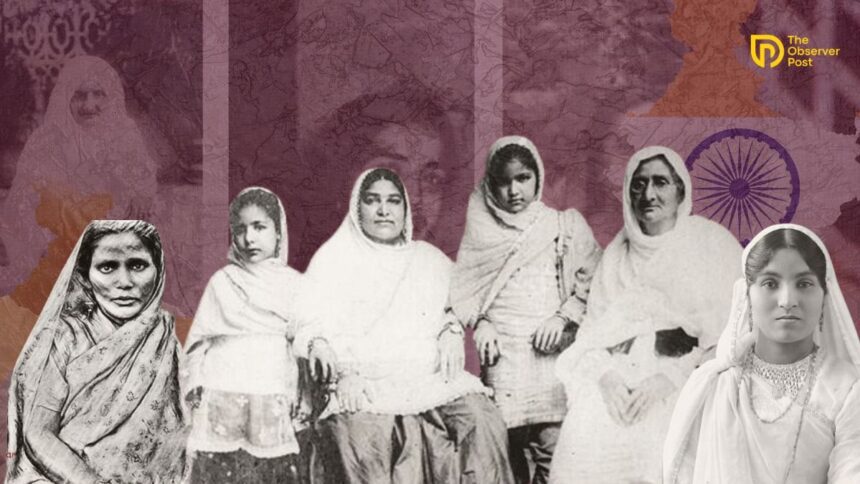

Throughout India’s history, Muslim women have played crucial yet often overlooked roles in the nation’s freedom struggle, exhibiting leadership and resilience despite social and political barriers. From Begum Hazrat Mahal’s refusal to surrender to Bi Amma’s mobilization efforts, the narratives of these women highlight the diverse contributions of marginalized communities in shaping India’s independence movement.
Underrepresented Narratives of Muslim Women in India’s Freedom Struggle
The story of India’s freedom movement is frequently dominated by the accounts of renowned male leaders. However, the contributions of women—especially Muslim women—have often remained on the periphery of the widely accepted historical narrative. Figures such as Begum Hazrat Mahal, Asghari Begum, and Bi Amma have been pivotal in the resistance against colonial rule, yet their sacrifices and leadership remain largely unrecognized.
The participation of Muslim women spanned from the 1857 uprising through to the Khilafat and Non-Cooperation movements, with many exhibiting bravery beyond their expected societal roles. Although many of these women, such as Moondar and Begum Azizan, took up arms or directly engaged in combat, others like Bi Amma worked to mobilize communities and fund political activities. The stories of these women collectively underscore the multifaceted nature of the movement and challenge the conventional wisdom regarding participation based on gender and religion.
Key Figures in the Resistance
Begum Hazrat Mahal stands as a symbolic figure of resistance during the 1857 uprising. Choosing not to flee, she led the charge in Awadh, declaring her son the ruler and taking up the mantle of regent. Her military strategies and active mobilization efforts significantly disrupted British control, although ultimately she faced exile in Nepal.
Asghari Begum also exemplified courage, contributing to the armed resistance in Thana Bhawan. Her efforts to train women in weaponry and fight against British forces showcase her commitment and leadership during a time when female participation in such activities was uncommon. The brutal circumstances of her capture and execution only mark her as a martyr of the independence struggle.
Meanwhile, Bi Amma played a crucial role by galvanizing the support of Muslim women through the Khilafat movement. In a time when political activism was often considered inappropriate for women, she broke societal norms by hosting gatherings and supporting men like her sons, politicians involved in the nationalist cause. She, along with others like Amjadi Begum, made vital organizational contributions that strengthened the larger independence movement.
The Struggle for Recognition
The historical narrative surrounding India’s independence has often marginalized the contributions of less-famous women. Many names remain forgotten, such as Habiba and Nazneen, who fought valiantly yet have not been memorialized in the conventional retellings of history. The absence of comprehensive historical documentation contributes to this marginalization, with colonial records frequently categorizing women primarily as threats to British authority rather than acknowledging their pivotal roles in the independence movement.
Moreover, the social contexts from which these women emerged are equally significant. Many hailed from communities that traditionally occupied essential cultural positions, like Begum Azizan, a tawaif who actively engaged in the rebellion. These stories, though sparse and fragmented, serve to highlight the complexity and multiplicity of women’s experiences and contributions and contradict the oversimplified narratives often found in historical texts.
Why It Matters
The narratives surrounding Muslim women’s involvement in India’s freedom struggle are crucial in fostering a more inclusive understanding of the country’s history. Their stories enrich an often dualistic view of nationalism and resistance, providing a richer tapestry of social and political life in India. Recognizing and remembering the contributions of these women also serves as a reminder of the essential roles various groups have played in democratic movements globally, offering lessons in resilience and community organization that resonate even today.
Frequently Asked Questions
What roles did Muslim women play in India’s independence movement?
Muslim women participated in various capacities, including as military leaders, political organizers, fundraisers, and community mobilizers, from the 1857 uprising to the Khilafat movement.
Who was Begum Hazrat Mahal?
Begum Hazrat Mahal was a prominent leader during the 1857 uprising who led the resistance in Awadh and declared her son the ruler while mobilizing troops against British forces.
Why are these women’s stories often overlooked?
Their contributions have been marginalized in historical narratives that tend to focus on prominent male leaders, and the colonial records often depicted these women merely as threats to British authority rather than recognizing their leadership and activism.
How does recognizing these women impact our understanding of history?
Recognizing the roles of Muslim women in the freedom struggle provides a more inclusive narrative that acknowledges the diverse contributions to India’s independence, enriching our overall understanding of the social and political dynamics of the time.