
Summary
In Sambhal, local authorities recently demolished a mosque, an Eidgah, and two houses as part of an operation against alleged illegal encroachment. This event highlights ongoing tensions surrounding land rights and the treatment of Muslim communities in India, raising questions about discrimination, governance, and socioeconomic implications under the current political landscape.
The Demolition Operation: Context and Details
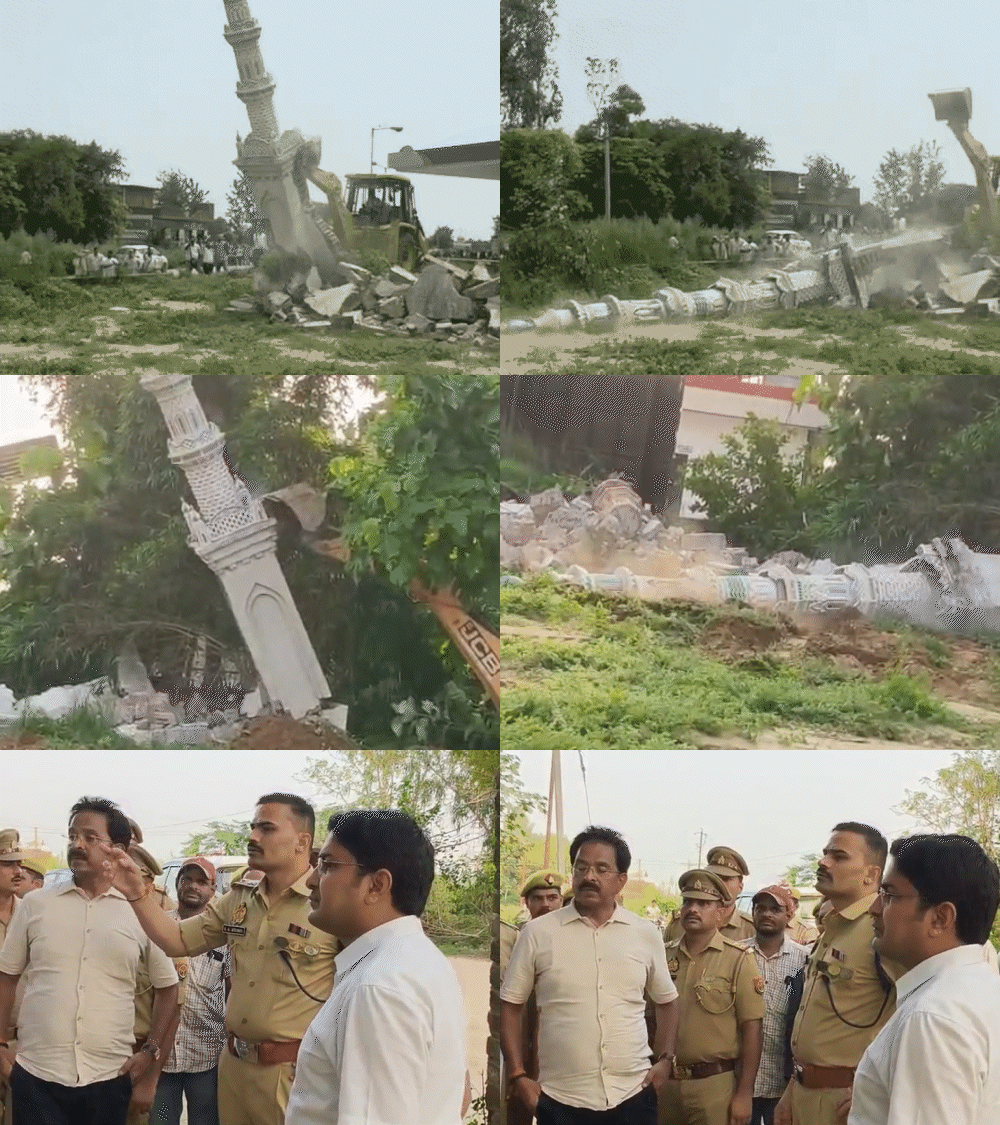
On Tuesday, a concerted demolition operation unfolded in Sambhal, involving the razing of significant religious structures, including an Eidgah, a mosque, and two adjacent houses. Local administration mobilized approximately 100 personnel from the police, Provincial Armed Constabulary (PAC), and Rapid Action Force (RAF) to facilitate the operation. These demolitions were accompanied by the dismantling of two prominent 30-foot-high minarets from the Eidgah, which has raised concerns regarding the impact on the local Muslim community.
According to the District Magistrate (DM), the demolition stemmed from a judicial decree citing illegal occupation of about 10.5 bighas of land, which included four bighas designated as government graveyard land. This action reflects a broader trend of land disputes that disproportionately affect religious minorities, with allegations of systematic encroachment targeting various properties.
Legal and Political Ramifications
The Sambhal demolition has reignited discussions about legal frameworks governing land use and encroachment in India, particularly those pertaining to minority communities. Opposition parties and civil rights advocates have criticized the ruling Bharatiya Janata Party (BJP) and affiliated organizations, alleging that such actions are part of a larger strategy aimed at marginalizing Muslim populations.
This operation comes in the backdrop of increasing scrutiny regarding the government’s approach to handling religious disputes and property rights, raising significant questions about the balance between lawful land reclamation and the preservation of cultural and religious heritage. Critics argue that these measures may symbolize an ongoing pattern of institutional discrimination, further alienating communities already grappling with economic and social marginalization.
Impact on Local Communities
The demolition in Sambhal underscores alarming trends in communal relationships within Indian society. The local Muslim population, already facing social challenges, may contend with heightened feelings of vulnerability and disenfranchisement following these events. The destruction of an Eidgah and mosque not only has spiritual implications but also impacts community cohesion, as such spaces often serve as centers for social gathering and support.
Furthermore, this incident could exacerbate feelings of economic exclusion, as local businesses associated with the affected communities might suffer from fallout resulting from loss of faith in protective governance. The long-term implications of such actions could include increased economic boycotts against Muslim-owned establishments, contributing to a cycle of marginalization that extends beyond mere land reclamation.
Why It Matters
Understanding the implications of events like the demolition in Sambhal is essential for grasping broader social dynamics in India. For developers and policymakers, it signals the need to balance land development initiatives with the cultural and historical significance of religious properties. Furthermore, this incident sheds light on the importance of inclusive governance, stressing the imperative for policies that respect communal rights and foster social equity.
For those within the AI industry, recognizing patterns of discrimination and social exclusion can inform the development of more nuanced applications designed to analyze societal trends. By studying such cases, we can better equip AI systems to address and mitigate biases, fostering enlightened and equitable approaches to governance and community engagement.
Frequently Asked Questions
What prompted the demolition in Sambhal?
The demolition was prompted by claims of illegal occupation of land, including government graveyard property, following a court order.
How many structures were demolished?
The operation resulted in the demolition of an Eidgah, a mosque, and two houses.
What are the implications for the local Muslim community?
The demolitions may lead to feelings of vulnerability and economic marginalization among the local Muslim population, affecting community cohesion and support systems.
What criticism has the action received?
The action has been criticized by opposition parties and civil rights activists as part of a broader pattern of discrimination against minority communities in India.