
Understanding the Historical Context of Islam in India
The spread of Islam in India has long been a topic of heated debate, with historical narratives oscillating between conquest, commerce, and social networks. This intricate history is not merely academic; it has lasting implications on Indian society, identity, and modern politics, particularly under the influence of the Sangh and BJP governments.
The Competing Narratives of Islam’s Arrival
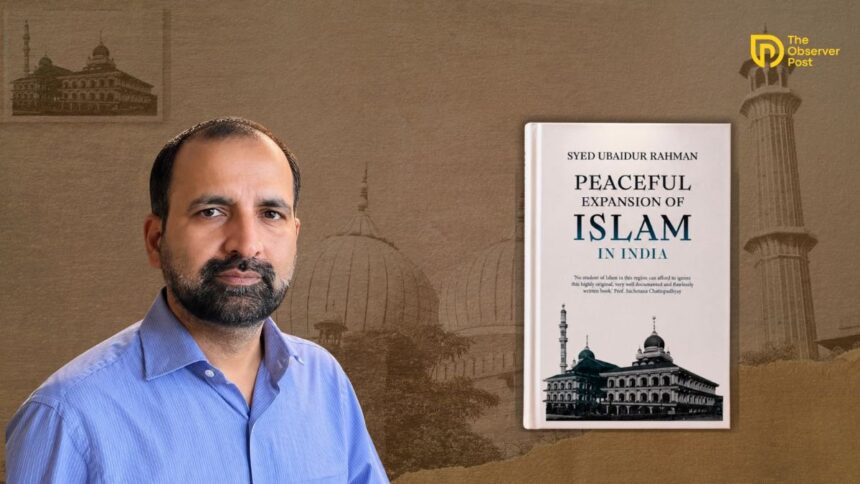
Historians have traditionally viewed the emergence of Muslim communities in India primarily through the lens of colonial scholarship, often centering on conquest and military actions. This perspective has overshadowed other significant factors such as trade routes, Sufi networks, and social interactions. Notably, Syed Ubaidur Rahman’s book, Peaceful Expansion of Islam in India, serves as a corrective to these conquest-centric views. It emphasizes the roles of merchant diasporas and social exchanges that contributed to the establishment of Muslim communities, thereby broadening our understanding of how Islam was embedded in the socio-cultural fabric of India.
Rahman’s approach is not a complete overthrow of previous scholarship but rather a rebuilding upon it. He acknowledges that while conquest played a role, peaceful interaction was equally, if not more, significant. This assertion not only challenges mainstream beliefs but also has a meta-historical significance in how Islam and Muslims are perceived in India’s contemporary political climate, especially in discussions regarding identity and social cohesion under the current regime.
The Sociology of Islam in Post-Colonial India
During the post-colonial period, narratives around Islam have continued to evolve. The BJP’s rise to political prominence has tended to revert to a more militaristic and conquest-focused rhetoric concerning Islamic history in India, often downplaying the role of peaceful interactions and social exchange. This narrative has implications for public memory, educational curricula, and broader societal attitudes towards Muslims, portraying them more as outsiders than as integral parts of India’s historical landscape.
Critically, while Rahman’s work foregrounds local agents such as merchants, scholars, and Sufi figures, the current political discourse tends to focus on national narratives that have often marginalized these voices. This raises questions about representation and how Islamic history is taught in schools, thus influencing the perceptions of younger generations regarding Muslims and their contributions to Indian society.
Contemporary Implications of Historical Narratives
The historiography surrounding the spread of Islam has direct consequences on the socio-political landscape of modern India. The BJP and associated nationalist movements leverage historical narratives to support a contemporary agenda that often includes policies perceived as discriminatory against Muslim communities. This has led to widespread social exclusion and economic boycotts targeting Muslims, creating an environment of marginalization that stretches beyond mere historical interpretation.
Furthermore, when local communities and their historical agency are ignored, it reinforces stereotypes and biases that can lead to significant ramifications in policy and public sentiment. The ongoing debates about the role of Muslims in India’s past are not merely academic; they illuminate the socio-political fractures that threaten the unity and cultural diversity of the country.
Why It Matters
Understanding the complex narrative of Islam’s spread in India is critical in today’s political climate. It emphasizes the necessity for an inclusive historical discourse that recognizes the contributions of diverse communities to the nation’s heritage. As the Sangh and BJP increasingly focus on a monolithic narrative, awareness of this complex past can help to counteract marginalization and promote a more nuanced understanding of Muslim identities within the context of Indian history.
Frequently Asked Questions
What role do Sufi networks play in the spread of Islam in India?
Sufi networks facilitated the peaceful introduction of Islam through cultural exchanges and established communities, focusing on social interactions rather than conquest.
How has contemporary politics influenced historical narratives about Islam in India?
The rise of the BJP has led to a focus on conquest-centric narratives that often marginalize the contributions of Muslims, affecting public perception and educational content.
What is the significance of Rahman’s work in contemporary discussions about Islam in India?
Rahman’s work challenges the dominant narratives and broadens the field of inquiry, restoring agency to historical actors and emphasizing peaceful interactions in Islam’s historical spread.
Why is understanding the history of Islam in India important for modern society?
A nuanced understanding of this history can help mitigate social exclusion and discrimination while fostering a more cohesive national identity that honors its diverse cultural heritage.