
Summary
The principal of Delhi University’s Lakshmibai College sparked controversy by applying cow dung to classroom walls as a heat mitigation strategy. While she claims this is part of a research initiative, many faculty members have criticized the move, asserting that it distracts from pressing infrastructure issues that need addressing.
Context of the Incident
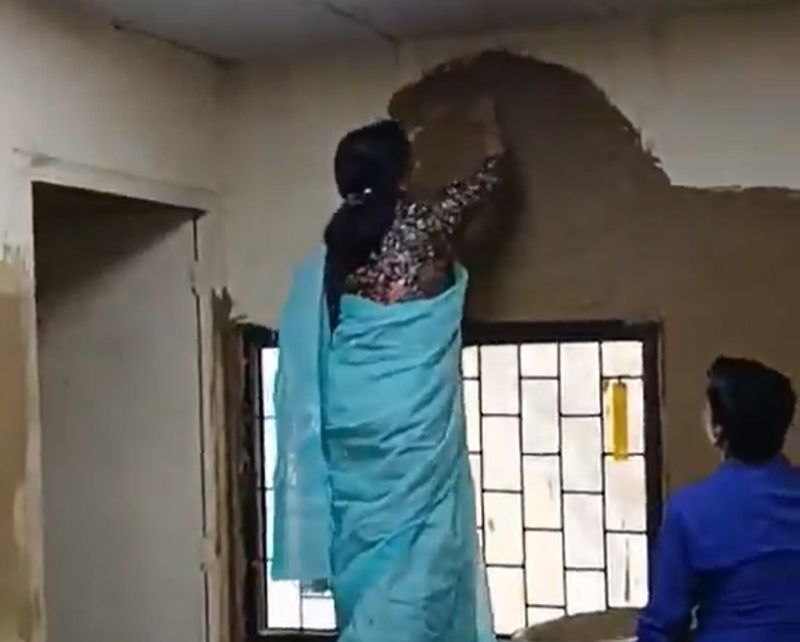
On April 14, 2025, a video surfaced showing Principal Pratyush Vatsala applying cow dung to the walls of a classroom, which she referred to as a “desi solution” to heat-related complaints. This action was part of her efforts to make teaching conditions more comfortable during the sweltering summer months.
Vatsala shared her initiative in a faculty WhatsApp group, stating, “Desi methods are being adopted to address complaints about the heat in C Block. Those who have classes here will soon receive these rooms in a new form.” Her claim of using traditional Indian knowledge for climate control was tied to a research proposal titled “Study of Heat Stress Control by Using Traditional Indian Knowledge.”
Criticism from Faculty
The unconventional method did not sit well with several faculty members. Neelam, an associate professor and member of the academic council, voiced her dissent, emphasizing that the college must prioritize basic infrastructure improvements. She stated, “How can one start making changes to classrooms without passing it in the Council? Just because a classroom is old doesn’t mean its infrastructure and maintenance can be ignored. The facilities in our college need urgent attention.”
Critics argue that rather than resorting to traditional remedies, the administration should focus on fundamental infrastructural upgrades. The backlash primarily stems from the belief that there are more effective, science-backed solutions that could enhance comfort in classrooms than the application of cow dung.
Debate Over Traditional Knowledge
This incident highlights a broader dialogue in Indian academia regarding the intersection of traditional knowledge and modern scientific approaches. While proponents of traditional methods are passionate about integrating indigenous knowledge into contemporary practices, skeptics worry that such actions may not be practical for serious academic environments such as universities.
Using cow dung as an insulative material might have historical significance, but critics highlight that the academic community should focus on reliable, evidence-based methodologies to tackle modern challenges, such as climate control in educational institutions.
Why This Matters
This incident reflects a growing tension within Indian educational institutions regarding how to balance traditional practices with the need for modern facilities. The use of cow dung might resonate well with certain cultural sentiments, but it raises questions about the prioritization of infrastructural and educational needs.
Moreover, the criticism from faculty members illustrates a call for accountability and a commitment to educational standards, urging administrators to approach infrastructure and maintenance with the seriousness they require. This discussion is particularly important in a country where educational facilities often suffer from neglect amid administrative red tape.
Frequently Asked Questions
What prompted the principal to use cow dung?
Principal Pratyush Vatsala aimed to address complaints about heat in classrooms using what she termed a “desi solution,” which is tied to a research proposal focused on traditional knowledge methods for heat stress control.
How have faculty members responded to this initiative?
Many faculty members have criticized the move, arguing that the focus should be placed on addressing urgent infrastructure issues rather than unconventional methods like applying cow dung to classroom walls.
What are the potential benefits and drawbacks of using traditional methods for heat control?
Proponents see value in integrating traditional practices as culturally significant solutions, while opponents point out that such methods may lack scientific validation and efficacy, particularly in a modern academic context.
What implications does this have for future infrastructure projects in the college?
The reaction from faculty suggests a need for more thorough discussions and approvals for infrastructural changes, highlighting the importance of balancing innovation with responsibility in educational settings.