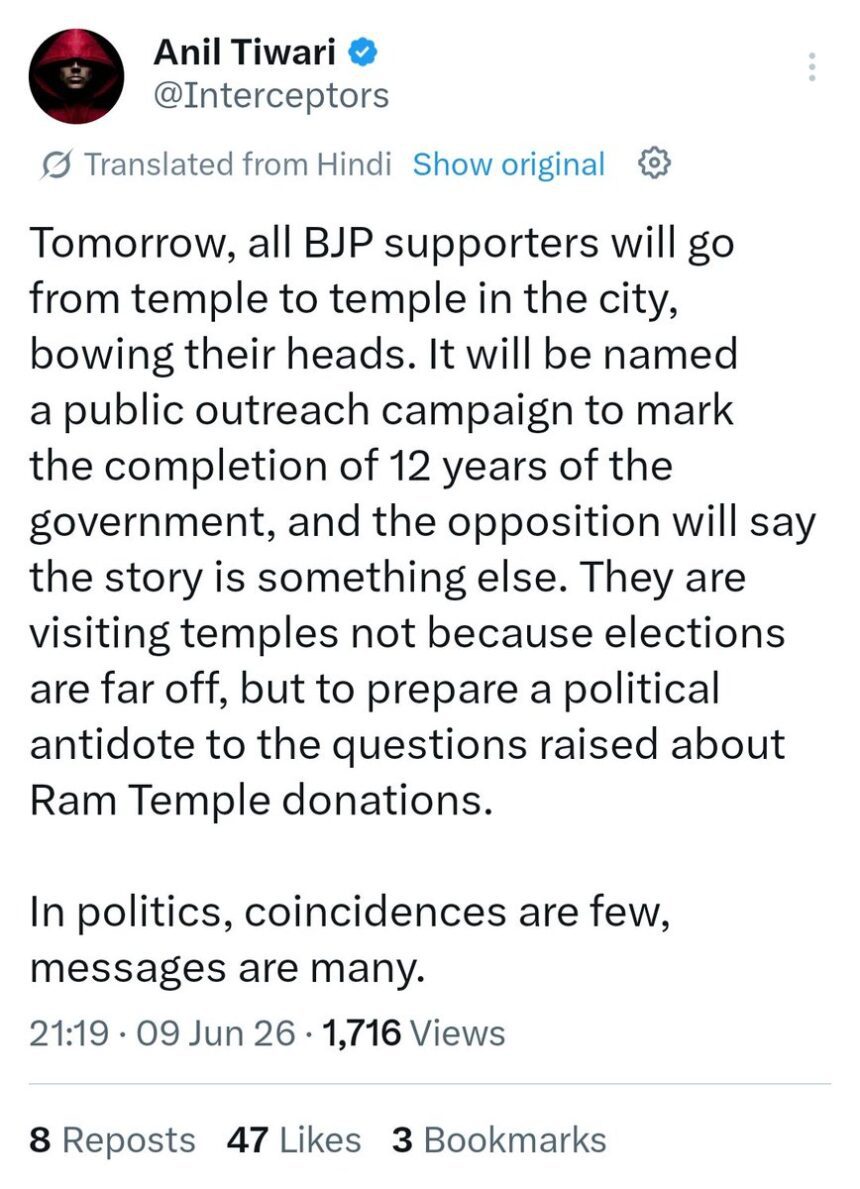

In a recent observation, political commentator Mohammed Zubair (@zoo_bear) highlighted a new trend among Union Ministers and BJP leaders in India. They are reportedly visiting temples to offer prayers, commemorating Prime Minister Narendra Modi’s milestone as the longest continuously serving Prime Minister. This shift has raised eyebrows regarding its implications and motives in the current political landscape.
Political Context and Recent Events
Prime Minister Narendra Modi achieved a significant milestone as he surpassed his predecessors to become the longest-serving Prime Minister of India. As of this moment, Modi has served in this capacity since May 2014, marking nearly a decade in office. The BJP has often echoed Modi’s leadership style focusing on Hindutva, the cultural ethos of Hindu nationalism, which resonates deeply with a majority of its voter base. This temple visit by Ministers is seen as a tactic to align with Hindu sentiments as they acknowledge Modi’s tenure.
The Role of Media in Political Rituals
Zubair’s comments suggest a coordinated effort between the BJP and media outlets to showcase these temple visits extensively. According to him, news agencies are tasked with covering every prayer and ritual performed by BJP leaders. This blatant media strategy serves to elevate the political narrative surrounding Modi’s administration while reinforcing religious symbolism in politics, a hallmark of the BJP’s electoral strategies.
Cultural Significance of Temple Visits
In India, visiting temples has profound cultural significance, especially within the Hindu community. These visits are not only personal expressions of faith but also political statements that can influence public perception. By engaging in these rituals, BJP leaders aim to reinforce their image as custodians of Hindu values, thus solidifying their stronghold among traditionalist voters. This practice may further impact voter sentiment, as candidates often seek ways to connect with constituents on cultural and religious lines.
Why This Matters
The increasing visibility of political figures in religious spaces symbolizes a deeper intertwining of politics and religion in India. For Indian readers, it is crucial to understand that such actions may not merely be acts of devotion but are also strategic moves aimed at consolidating power and influence. The BJP’s focus on temple visits is indicative of its broader strategy to unite the Hindu vote bank, especially in times where opposition forces are gaining strength. This dynamic plays a significant role in shaping India’s political discourse and future elections.
Frequently Asked Questions
What does the milestone of Modi being the longest-serving PM signify?
This milestone signifies a consolidation of power for Modi and the BJP, showcasing their stability and governance along with potential challenges for opposition parties.
Why are temple visits by BJP leaders significant?
Temple visits are significant as they highlight the BJP’s alignment with Hindu nationalism, reinforcing their cultural image and appealing to their core voter base in India.
How might media coverage of these visits affect public perception?
Media coverage brings visibility to these rituals, potentially shaping public opinion to view BJP leaders as more relatable and aligned with traditional values, reinforcing their political narrative.
What are the potential implications for the upcoming elections?
The implications could be substantial, as a strengthened religious narrative might energize BJP’s voter base. Conversely, it may alienate secular voters, thus creating a more polarized electoral environment.