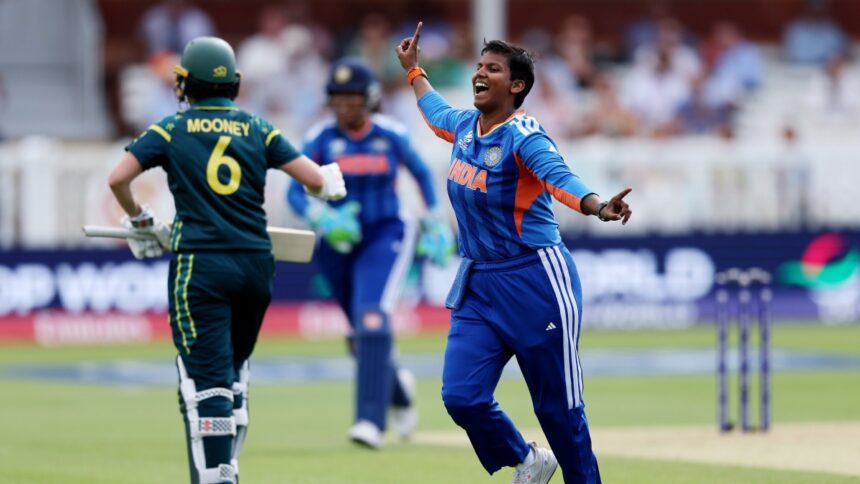

In a thrilling and historic T20 World Cup clash against Australia on June 28, Deepti Sharma achieved a landmark feat by becoming the highest wicket-taker in international women’s cricket. Despite her individual success, India’s aspirations for the semifinals came to an abrupt end as they fell short, losing by six wickets and facing elimination from the tournament.
Deepti Sharma: A New Record Holder
Deepti Sharma’s remarkable journey reached a pinnacle during this match at Lord’s, where she claimed her 356th international wicket, surpassing the legendary Jhulan Goswami’s record of 355. The wicket came in the second innings, with Beth Mooney becoming the milestone victim. Deepti’s achievement is a testament to her consistent performance and skill over her career, which has seen her grow into one of the leading all-rounders in women’s cricket.
This victory in individual accolades, however, comes after a challenging series of matches. Deepti had previously gone wicketless in her last two outings, against Bangladesh and South Africa, where she had mixed results. Yet, her ability to bounce back and achieve this milestone during such a crucial match adds another layer to her character as a sportsperson.
The Match Overview: India vs. Australia
Despite the jubilation surrounding Deepti’s record, the match itself was a harsh reality check for the Indian women’s cricket team. Chasing a daunting target of 170 runs, they needed a victory to keep their semifinal hopes alive but ultimately stumbled under pressure. After Deepti’s key wicket and another from Shree Charani, who dismissed Phoebe Litchfield, India held the upper hand briefly.
However, the Australian duo of Ashleigh Gardner and Ellyse Perry forged a formidable partnership, scoring 100 runs for the fourth wicket and turning the tide. Their performance demonstrated Australia’s resilience and experience in high-pressure situations—qualities that have helped them dominate women’s cricket for years.
Repercussions of the Loss
This defeat not only marks a disappointing exit for Team India from the T20 World Cup but also represents a missed opportunity to make a deeper impact in the tournament. Having recorded back-to-back group-stage exits, questions will inevitably arise regarding team strategy, leadership, and the path forward for women’s cricket in India. The expectations from fans are growing as they desire greater consistency and competitive performances in global events.
The clash also highlights the ongoing challenges Indian players face against established teams like Australia, known for their strong cricketing infrastructure and success in women’s cricket. As the Indian team’s focus shifts towards upcoming tournaments, this match serves as a pivotal learning experience.
What This Means
For Indian cricket enthusiasts, Deepti Sharma’s achievement is a bright spot in an otherwise disappointing campaign. It serves as an inspiration to aspiring cricketers, particularly women in sports, showcasing that excellence is attainable with hard work and dedication. However, the loss underscores the necessity for systemic improvements within the Indian cricket framework. Continuous development programs, innovative strategies, and enhanced training facilities are essential for the women’s team to build on their individual successes and improve their overall performance on the world stage. The upcoming domestic and international fixtures will be critical in shaping the future of women’s cricket in India.
Frequently Asked Questions
Who is the highest wicket-taker in women’s international cricket?
As of now, Deepti Sharma holds the record for the highest wickets in women’s international cricket with 356 wickets.
How did India perform in the T20 World Cup?
India’s women faced elimination after losing to Australia in their must-win match, finishing the group stage without advancing to the semifinals for the second consecutive time.
What were the key moments in the match against Australia?
Key moments included Deepti Sharma’s record-breaking wicket of Beth Mooney and the formidable partnership between Ashleigh Gardner and Ellyse Perry that helped Australia chase down India’s target.
What can be done to improve Indian women’s cricket?
Improvements can come from enhanced training facilities, strategic planning for matches and tournaments, and focused development programs for young female cricketers across the country.