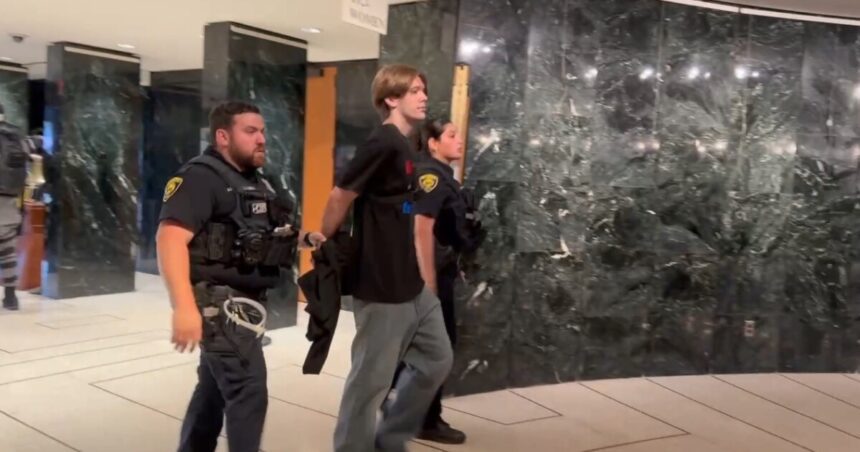

Recent protests in Dearborn, Michigan, sparked by the controversial visit of anti-Muslim activist Jake Lang, resulted in 22 arrests, highlighting ongoing social tensions surrounding religious intolerance. Community leaders are advocating for dialogue and understanding, calling for a peaceful response to hate while emphasizing the need for mutual respect and cohesion within diverse communities.
Background of the Protests
The protests occurred on a Tuesday at a local mosque and during a Dearborn City Council meeting. Jake Lang, known for his far-right views, confronted the community by tearing pages from the Quran, an act that incited considerable outrage. The police reported that the arrests were related to non-violent crimes, primarily for disturbing the peace and other alleged violations, with some demonstrators coming from metro Detroit and various places in the country. Mayor Abdullah Hammoud stated that the event evolved into a display of peace, countering the intentions of those promoting Islamophobia.
Community Reactions and Dialogue Initiatives
In response to the protests, Dearborn residents and leaders are calling for open conversations to bridge cultural divides. Resident Milo Salamey expressed a desire for everyone to meet and communicate with individuals from the Arab American community, asserting the importance of human connection. Similarly, Houda Berri-Harajli, Executive Director of the Arab American Civil Rights League, remarked on the community’s choice to confront hate with peace, arguing that Lang’s visit ultimately produced little more than threats. She implored understanding by highlighting the shared American values that the Arab American community embodies, such as contributing to society through work, taxes, and family care.
Misconceptions and Facing Fears
Mayor Hammoud recounted a positive interaction with a veteran who initially arrived with preconceived notions about the community. After a warm welcome and engaging experiences, the individual reportedly left with a more informed perspective on Dearborn. Hammoud emphasized the potential for transformations through personal connections, indicating that such encounters can dismantle barriers forged by misunderstanding. This reflects a broader call for empathy and mutual respect in an increasingly polarized society.
Why It Matters
The events in Dearborn underscore the significance of community engagement in combating discrimination and fostering unity. They illuminate how dialogue can reshape perceptions, particularly in contexts where cultural and religious identities are misinterpreted. This situation serves as a microcosm of broader societal challenges that face many communities today, particularly those marked by diversity. By fostering understanding, societies can work towards inclusion, thus addressing the roots of discrimination effectively. The ramifications for community dynamics can be profound, as demonstrated by the willingness of local leaders and residents to engage in constructive dialogues versus responding to hate with hatred.
Frequently Asked Questions
What triggered the protests in Dearborn?
The protests were triggered by the appearance of anti-Muslim activist Jake Lang, who engaged in provocative acts such as tearing pages from the Quran during a city council meeting.
How many arrests were made during the protests?
There were 22 arrests made during the protests, primarily for non-violent crimes such as disturbing the peace.
What was the community’s response to the protests?
The community emphasized a message of peace, with leaders and residents calling for dialogue and understanding to confront hate rather than responding with violence.
What did local leaders say about the impact of Lang’s visit?
Local leaders, including Mayor Abdullah Hammoud and Houda Berri-Harajli, remarked that Lang did not achieve his objectives, arguing that the community’s choice of peace showcased their resilience against hate and ignorance.