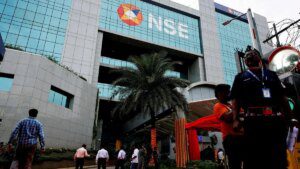
Markets continued their downward trend for a second consecutive session on Thursday, with the BSE Sensex declining by 852 points to close at 77,664, while the Nifty 50 fell 205 points to settle at 24,173. This downturn coincided with a rise in Brent crude prices, surging to $103.38 per barrel, marking its fourth straight session of gains.
The sell-off across the markets was significant. The Sensex opened lower and exhibited a brief recovery to 78,178 before dropping to a low of 77,574, ultimately closing near its daily low. The Nifty followed a similar trajectory, with an initial morning bounce that quickly lost momentum by 10:15 AM.
“Failure to sustain higher levels led to renewed selling, dragging the index down… indicating persistent weakness,” stated Hitesh Tailor, Technical Research Analyst at Choice Equity Broking.
Geopolitical tensions played a primary role in the market decline. WTI crude prices climbed above $94 per barrel for the fourth consecutive session amid stalled US-Iran diplomatic talks. Iran asserted control over the Strait of Hormuz, severely limiting international traffic. The country’s recent seizure of two container ships heightened concerns about the Strait, through which approximately 20% of the world’s oil supply passes.
Sector performance reflected the market’s overall decline, with Auto and PSU Banks both losing over 2%. Financial Services, IT, Metals, and Realty sectors also closed lower, while Pharma and Healthcare emerged as the only sectors in positive territory, gaining over 2%. On the Nifty, Dr. Reddy’s and Cipla were the top gainers, in contrast to Trent and Tech Mahindra, which faced the most significant losses.
The market breadth was distinctly negative, with 4,449 BSE stocks traded: 1,681 advances versus 2,602 declines. The Midcap 100 fell by 0.41%, and the Smallcap 100 dropped by 0.67%. The India VIX increased by 1.58% to reach 18.59.
The rupee depreciated for a fourth consecutive session, losing 32-34 paise to stabilize around 94.12 against the US dollar—its lowest level this April. The rising crude prices threaten to worsen India’s import bill outlook, particularly as foreign institutional investors (FIIs) sold off ₹2,078 crore worth of stocks, and domestic institutional investors (DIIs) also became net sellers at ₹1,048 crore. This marked the first instance of simultaneous selling from both institutional types in 54 sessions.
“Both FIIs and DIIs turning net sellers simultaneously is a meaningful signal of caution,” noted Siddhartha Khemka, Head of Research at Motilal Oswal Financial Services.
From a technical perspective, the Nifty has entered the gap zone between 24,145 and 23,907, established on April 15, which may provide near-term support. The formation of a Gravestone Doji candlestick on the daily chart indicates a bearish bias, with resistance expected in the range of 24,300-24,400.
“With crude oil crossing the $100 mark once again, it is crucial for the index to maintain its position within the 24,000–24,200 zone to preserve a positive bias,” remarked Ajit Mishra, Senior Vice President of Research at Religare Broking.
Looking ahead to Friday, a busy earnings calendar is anticipated with results from Reliance Industries, Hindustan Zinc, Shriram Finance, and L&T Finance, which may drive stock-specific movements. Until there are credible signs of de-escalation regarding the situation in Iran, pressures on crude prices, the rupee, and institutional flows are expected to persist.
Published on April 23, 2026.