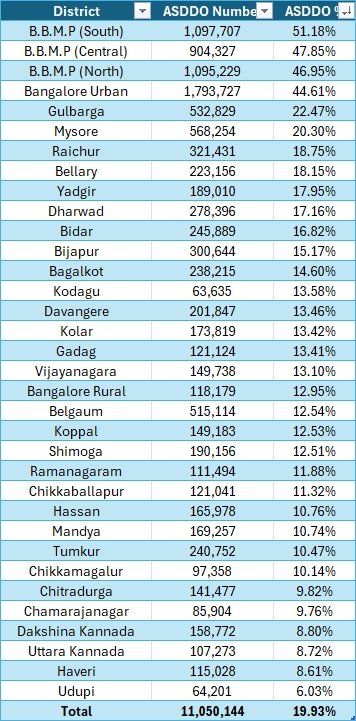

In a recent development in Karnataka, political commentator Mohammed Zubair has raised serious concerns regarding the Election Commission of India’s (ECI) handling of voter data during the Special Identity Registration (SIR) exercise. Over 11 million voter records, categorized as Absent, Shifted, Duplicate, Dead, and Others (ASDDO), have been deleted, prompting questions about the validity and fairness of this mass deletion.
Mass Deletion of Voter Records
Zubair highlights that more than 11 million voter records have been deleted in Karnataka, with approximately 62 lakh marked as “Permanently Shifted.” Notably, this figure makes up 60% of the total deletions. Deaths contribute to about 14.4% of the deletions, while the remaining 15% are categorized as “Untraceable.” This raises pressing questions about the integrity of the voter registry. For instance, did these voters actually move, or was the label of “Permanently Shifted” simply a convenient classification due to time constraints in verifying their status?
Zubair’s critique underscores a significant gap in the verification processes utilized by the Election Commission. If these voters were shifted, there should be substantiating evidence confirming their enrollment at new addresses. Without thorough checks, claims of voter shifts could merely reflect administrative shortcuts rather than actual movements.
Challenges Faced by Voters
The process of verifying one’s voting status has become increasingly complicated and burdensome for citizens. Many voters have reported that after taking appropriate steps—such as collecting Enumeration Forms from their Booth Level Officers (BLOs), filling them correctly, and submitting them either in person or online—they still find their names listed for deletion in the ASDDO list. This inconsistency raises significant concerns about the reliability of the election process.
Moreover, the only available ASDDO lists are published as PDF files distributed across multiple Google Drive links, leaving citizens without a centralized platform for easy access and verification. This creates additional barriers, especially for elderly voters or those with limited digital access, making it nearly impossible for them to confirm their electoral status efficiently.
Questionable Administration Practices
Local officials have repeatedly communicated that delays and tight timelines during the SIR exercise have led to these widespread deletions, shifting the onus from the electoral administration onto the citizens. Voters who had already submitted necessary forms are now being urged to wait for the draft electoral rolls and subsequently file claims to prove their eligibility. This requirement places an excessive burden on citizens, especially when the verification tools are inadequate.
Questions about the criteria for marking individuals as “Permanently Shifted,” the level of cross-checking done to verify these shifts, and whether BLOs were pressured to meet specific targets are also surfacing. There is a pressing need for an independent audit to ensure that the deletions were justified and not merely a result of administrative oversight.
Why This Matters
The implications of this situation extend beyond individual voter concerns. It touches upon the core tenets of democracy and governance in India. A healthy democracy relies on the integrity of its electoral processes, which are fundamentally built on accurate and accessible voter registrations. If citizens find it increasingly difficult to engage in the electoral process due to bureaucratic hurdles and opaque procedures, it threatens the very foundation of democratic participation. The Election Commission must be transparent and accountable to restore public faith in election outcomes and ensure that every eligible citizen’s voice is heard.
Frequently Asked Questions
What are the ASDDO lists?
ASDDO lists categorize voter records into five groups: Absent, Shifted, Duplicate, Dead, and Others.
What does “Permanently Shifted” mean?
The term indicates that a voter has allegedly moved to a new address and is expected to be enrolled at that new location.
How can voters verify their status?
Currently, ASDDO lists are available as PDF files across various Google Drive links without a centralized database, complicating the verification process.
What can voters do if their names are marked for deletion?
Voters are advised to await the draft electoral rolls and file claims to restore their names, although this process can be cumbersome and time-sensitive.