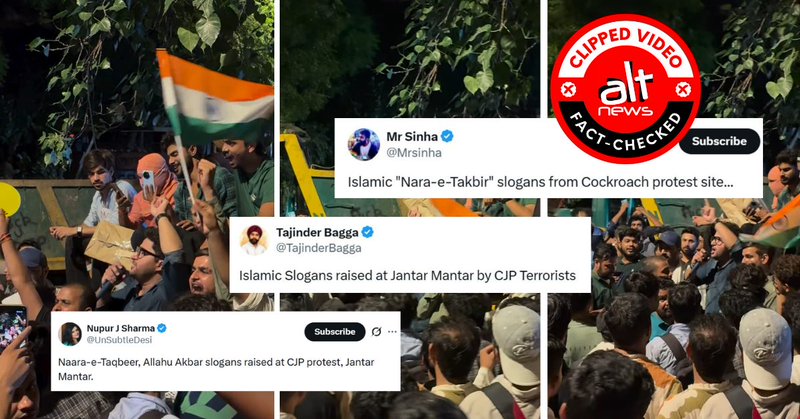

Pro-BJP social media handles have circulated a clipped video suggesting a communal agenda behind the recent protests led by the Cockroach Janta Party (CJP) in Delhi. The video features chants of “Allah Hu Akbar,” while the original context, which included counter-chants of “Jai Sri Ram,” has been edited out.
Background of the CJP Protest
On July 23, a significant protest organized by the CJP demanded the resignation of Union Education Minister Dharmendra Pradhan. This protest gathered considerable attention and was characterized by a diverse assembly of participants rallying against the government’s education policies. The CJP, known for its vocal opposition to several government decisions, utilized this opportunity to mobilize support and highlight their concerns regarding educational equity in India.
Manipulation of Media Narratives
The video that has gone viral portrays a segment of the protest where certain chants raised the pitch of religious sentiment. Pro-BJP supporters have focused on these chants to label the CJP’s actions as inherently communal, promoting division rather than unity. Critically, the chants of “Jai Sri Ram,” which were also present at the protest, were omitted from the viral clip, suggesting an attempt to manipulate the narrative and stoke communal tensions. This raises significant questions about the integrity of the information being shared in political discourse.
Impact of the Viral Video on Public Perception
The dissemination of the edited video has the potential to divert public attention from the key issues raised by the CJP regarding education and governance. By framing the protest through a communal lens, it plays into a broader narrative employed by various political factions to distract from substantive policy discussions and to engage in identity politics. Furthermore, such an approach risks exacerbating existing communal tensions within society, which is detrimental to the already fragile social fabric of India.
Why This Matters
The political significance of this incident cannot be overstated. In India’s complex political landscape, the manipulation of narratives plays a critical role in shaping public opinion. The CJP’s protests highlight the ongoing discontent around educational policy, which is pivotal for shaping the future of millions of students in India. As political factions battle for control of the discourse, recognizing the tactics deployed is essential for informed citizenship. The trending of this particular video indicates how easily narratives can be spun to serve specific agendas, often leading to a broader polarization of the electorate.
Frequently Asked Questions
What prompted the CJP-led protest in Delhi?
The CJP-led protest on July 23 was organized to demand the resignation of Union Education Minister Dharmendra Pradhan, focusing on concerns regarding educational policies and governance in India.
Why are pro-BJP handles sharing this video?
Pro-BJP handles are sharing this clipped video to suggest that the CJP’s actions promote a communal agenda, framing the protest in a manner that might create division among communities rather than showcasing unity.
What role does media manipulation play in Indian politics?
Media manipulation in Indian politics is often employed to shape narratives, distract from substantive policy discussions, and polarize the electorate, which can lead to increased tensions and misunderstanding among citizens.
How can the public discern the truth in political narratives?
To discern truth in political narratives, the public should seek multiple sources of information, fact-check claims, and consider the context in which statements and actions are presented. Engagement in critical thinking and media literacy can also empower citizens to navigate complex political landscapes.