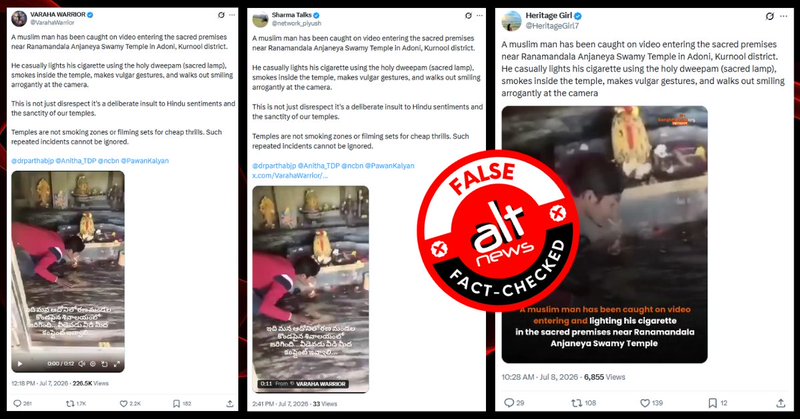

A video circulating on social media showing a young man lighting a cigarette with an oil lamp inside a temple is being misattributed to a Muslim individual. In reality, the individual involved is identified as Wadde Irranna, a member of the Hindu community. This misinformation is used to fuel communal narratives, leading to widespread misunderstanding.
Context of the Video
The video shows a young man using an oil lamp, traditionally used in Hindu temples, to light a cigarette before smoking inside the temple premises. The footage has gone viral, sparking outrage and condemnation from many who see it as disrespectful to a place of worship.
However, many social media users are falsely claiming that the man is Muslim, thereby igniting communal tensions. This video reaffirms the ongoing trend of utilizing misinformation to portray members of specific communities in a negative light, especially in sensitive contexts like religious practices.
Fact-Checking the Claims
Fact-checking organization Alt News has examined the claims surrounding this video and has determined that Wadde Irranna is indeed Hindu, not Muslim as falsely alleged. The investigation into the video’s origins and the identity of the individual reveals a concerted effort to mischaracterize the situation and mislead audiences.
Social media platforms have become battlegrounds for misinformation, especially regarding sensitive communal issues. This particular instance reflects how quickly the narrative can shift based on perceptions rather than facts, highlighting the need for individuals to be critical consumers of information online.
Impact on Community Relations
The dissemination of false information can exacerbate existing communal tensions. By mislabeling individuals based on religious identity, there is a risk of inciting violence or discrimination against a community. Such social divisions can destabilize local harmony and contribute to broader societal issues related to intolerance.
Engagement from social media users often lacks context and understanding, focusing instead on emotional reactions. In light of these tensions, it is important for community leaders and individuals to promote fact-based discussions and challenge misinformation effectively.
Why This Matters
This incident is emblematic of the rising trend in India where misinformation is deployed as a tool for political gain. The communal discord often exacerbated by social media narratives poses a significant challenge to national unity. Given the pluralistic nature of Indian society, it is crucial for citizens to remain vigilant against attempts to divide communities along religious lines.
The political ramifications of such incidents affect not only local community dynamics but also influence broader electoral politics. Politicians can leverage such narratives to polarize voters, which poses a challenge to civil discourse and the principles of democracy.
Frequently Asked Questions
What is the main claim about the video in question?
The main claim is that a young man is seen lighting a cigarette with an oil lamp inside a temple and that he is falsely identified as belonging to the Muslim community.
Who is the individual in the video?
The individual is identified as Wadde Irranna, who is actually from the Hindu community.
What are the implications of spreading false narratives?
Spreading false narratives can lead to increased communal tensions, societal division, and potential violence against targeted communities.
Why is it important to fact-check information before sharing?
Fact-checking is vital to prevent the spread of misinformation which can mislead the public, incite hatred, and disrupt social harmony.