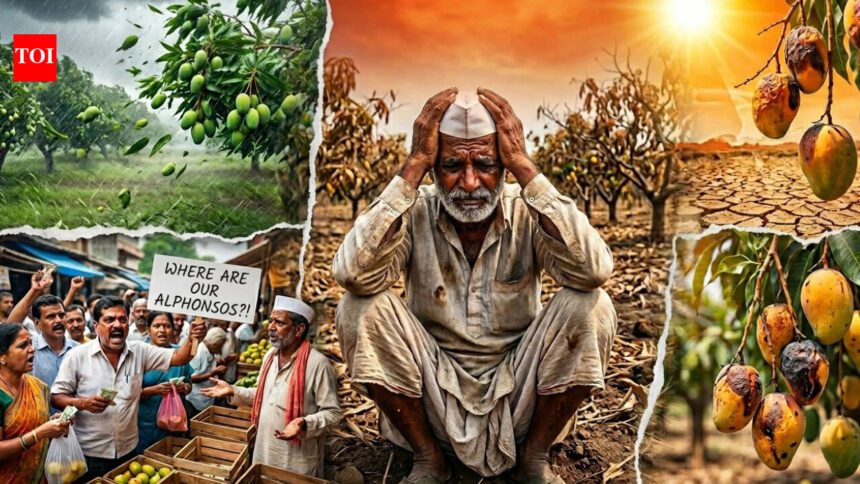

Every summer in India, the arrival of Alphonso mangoes has signaled the onset of the season. In households, these mangoes are more than a fruit; they symbolize the arrival of summer. However, this year’s season has brought unexpected challenges for Ratnagiri’s growers. Initially promising abundant flowering gave way to disheartening yields due to a combination of unseasonal cold, fungal attacks, pollution, and subsequent heatwaves. This left markets without a critical supply of one of the country’s most cherished fruits.
The situation poses two main challenges: a struggle for farmers to meet consumer demand and the risk of diluting the identity of the Ratnagiri Hapus. While Alphonso mangoes are cultivated in several regions, Ratnagiri and Devgad are designated with Geographical Indication (GI) status, recognized for their unique aroma, flavor, and texture. As genuine supplies have dwindled, lookalike mangoes from other areas are increasingly marketed under the Ratnagiri Alphonso label, leading to consumer confusion.
Mohammad Hussain Dhanshe, a farmer from Bankot, discussed the issues that began during the flowering phase. “Normally, flowering commences around October 20. But this year’s rain in November delayed that process,” he explained. He noted the critical dependency of Alphonso cultivation on stable seasonal patterns, emphasizing the need for trees to experience thirst to induce flowering. After a promising flowering stage, farmers hoped for a strong crop, but were met with fungal attacks in January that significantly impacted yields. Dhanshe, who claims to have mitigated losses through effective fungicide use, reported an overall 80-85% crop loss among many growers.
Prasad Jadhav, whose family has farmed Alphonso mangoes for generations, echoed similar sentiments about devastating weather conditions. He noted significant crop failures and dismal yields, partially due to a combination of cold weather and high pollution levels, which hindered fruit development.
The inadequate supply of Alphonso mangoes has led to pronounced price spikes in wholesale markets. Dhanshe stated, “I have never seen such rates in my life,” with prices reaching Rs 3,000 to Rs 3,800 per dozen for premium early-season fruit. This shortage has also prompted the emergence of mangoes labeled as Alphonso but sourced from other regions, particularly Karnataka. Jadhav highlighted how brokers knew they were purchasing non-Ratnagiri mangoes yet marketed them under the more valuable Ratnagiri name, leveraging consumer demand.
Prashant Powle, a GI-certified grower, reinforced the concern over the authenticity of the mango’s origin, noting that many consumers unknowingly purchase inferior substitutes when seeking the true Ratnagiri Alphonso experience. He explained the tactile cues of authenticity, emphasizing the unique aroma that lingers even after washing one’s hands.
As the season unfolds, farmers contend with the larger risk of eroding the identity of Alphonso mangoes. The Jadhav brothers emphasized that their family’s legacy in Alphonso farming has never faced a season like this. While prices have surged, farmers are investing their own resources to maintain customer loyalty. “If we don’t meet the demand, customers will not return to us,” Prasad stated, underlining the urgency to preserve consumer trust.
The implications of losing consumer faith extend to international markets, where Ratnagiri Alphonso holds a premium position. However, logistical challenges, exacerbated by geopolitical tensions, have complicated exports, leading to lower export volumes and quality degradation. Delays significantly affect the mangoes’ perishability and, in turn, create an opportunity for lower-cost varieties to gain a foothold in global markets.
Farmers attribute the current identity crisis to climate volatility, which introduced erratic weather patterns, fungal outbreaks, and sudden heat. Dhanshe noted that even slight temperature variations can adversely impact pollination and fruit quality. While some farmers leverage technology, like AI for orchard management, extensive reliance on such innovations remains unaffordable for many small producers.
Amid these challenges, many growers in Ratnagiri and Devgad view their role as custodians of a time-honored legacy. While some utilize traditional harvesting techniques, others experiment with modern farming technologies to safeguard quality. Despite these efforts, the prevailing anxiety about climate unpredictability and market infiltration by substitutes persists.
Ultimately, the pressing task for farmers is not merely to increase production but to ensure that consumers recognize the genuine Ratnagiri Hapus regardless of their location. “The problem is authenticity,” Powle remarked. If consumers continue to consume substitute mangoes labeled as Alphonso, they risk redefining their understanding of what constitutes a true Alphonso mango, which could jeopardize the fruit’s distinct identity over time.