
The Controversy Surrounding the Proposed Mosque in Mooresville
A proposed Islamic center in Mooresville, North Carolina, has ignited a heated debate within the community. Although zoning for the center is already approved for religious assembly, local opposition has emerged over concerns related to traffic, infrastructure, and broader societal issues regarding the Muslim faith. This contentious backdrop has led to significant public gatherings, as supporters and detractors alike voice their views.
A Gathering of Support
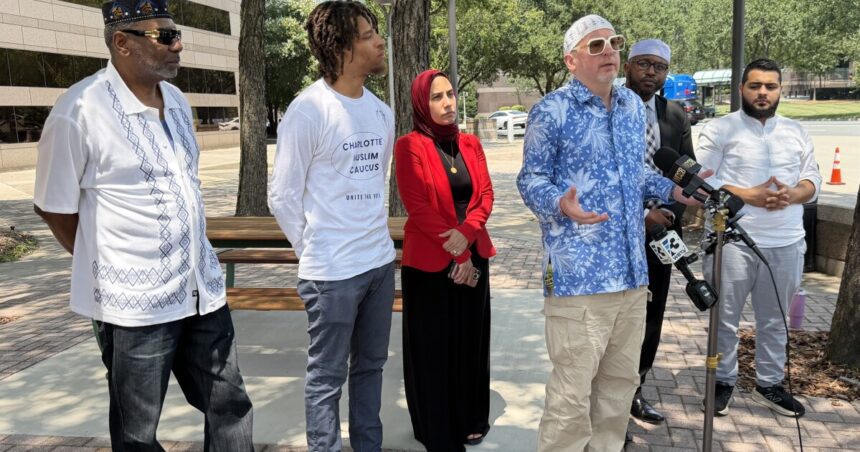
In response to the rising opposition, a group of about a dozen Muslims convened in uptown Charlotte to advocate for the Islamic Center of Lake Norman. The planned center is set to include a nearly 5,000-square-foot mosque and community center located off Brawley School Road. During a recent press conference, community leaders and Muslim representatives gathered to highlight their peaceful aims and to stress their connection to both Charlotte and Mooresville, asserting that they are integral parts of the broader community.
“As a Muslim-American, I have one message for Charlotte, Mooresville, and the surrounding communities,” stated Hadia Mubarak, a professor of religion at Queens University of Charlotte. Her sentiment echoes a common plea among minority communities: to be seen not as outsiders but as neighbors. The efforts to promote this understanding are crucial, especially in polarized environments.
Community Concerns and Opposition
Despite the zoning approvals, not all residents are on board with the planned Islamic center. A recent town meeting in Mooresville saw locals raising their voices against the project, with some concerns focusing on the expected increase in traffic and the infrastructure capacity of the area. Critics have also expressed apprehensions about what the presence of a mosque might mean for local schools and the community’s cultural fabric.
These concerns reveal a broader pattern of resistance often encountered by religious and cultural minorities, illustrating how minority group initiatives can unintentionally become flashpoints for local tensions. The dialogue surrounding the mosque serves as a microcosm for the larger debates about inclusion and acceptance across the U.S. and beyond.
The Bigger Picture: Religious Freedom and Social Inclusion
The situation in Mooresville illustrates broader issues regarding religious freedom and social inclusion in America. Zoning laws may provide a framework for legal acceptance, but social acceptance is often more complex. The pushback from local residents underscores a culture that can still be resistant to diversity, especially in areas where religious identities are often binary and polarized.
The proposed Islamic center is not just about constructing a building; it is emblematic of a wider struggle for recognition and equality in a landscape where certain groups, including Muslims, often face marginalization. Support from local leaders and community members can foster greater understanding and mitigate the proliferation of misinformation about Islam and its practices.
Why It Matters
The discussions surrounding the Islamic center in Mooresville have implications beyond local community dynamics. They speak to global issues of discrimination and the ongoing challenge of integrating diverse religious and cultural identities within more cohesive societal frameworks. Understanding these dynamics is essential for developers, policymakers, and community leaders alike, as they navigate the complexities of multi-religious and multicultural environments.
The outcome of this particular situation may influence future proposals for places of worship and communal gathering, as well as affect broader policies regarding religious land use. For those working within AI and community engagement sectors, addressing the needs and concerns of marginalized communities will be critical to fostering more inclusive technologies and solutions.
Frequently Asked Questions
What is the Islamic Center of Lake Norman?
The Islamic Center of Lake Norman is a proposed mosque and community center planned for construction in Mooresville, North Carolina, designed to support the local Muslim community.
What opposition has the project faced?
The project has faced opposition from some Mooresville residents concerned about traffic, infrastructure, and the presence of a mosque near local schools.
Are there legal approvals for the mosque’s construction?
Yes, the property is already zoned to allow for religious assembly, according to local Mooresville officials.
Why is this controversy significant?
This controversy highlights ongoing issues of religious freedom, social inclusion, and community acceptance, which are critical in today’s diverse society, affecting future policies and community planning.