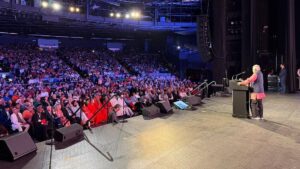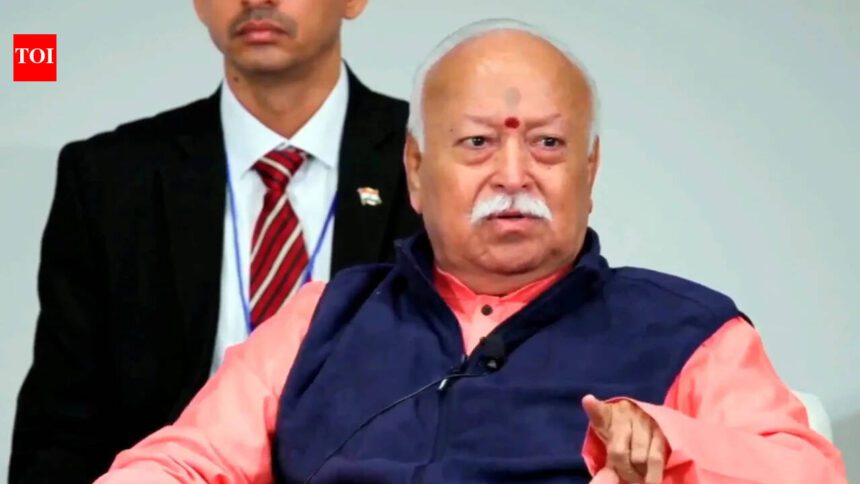

In a recent address at Madison Square Garden, RSS Chief Mohan Bhagwat emphasized Hindu inclusiveness, asserting that true Hinduism cannot exclude Muslims. His remarks came amid ongoing debates regarding the organization’s approach to political influence and social change in India, highlighting a potential shift in tone amid critiques of discrimination faced by Indian Muslims.
Bhagwat’s Vision for Inclusiveness
Mohan Bhagwat’s address, delivered at the “Universal Oneness Celebration,” was marked by a call for Hindu inclusiveness in the face of rising tensions. He stated that a Hindu who wished for India to be devoid of Muslims would not embody true Hindu values. “If any Hindu thinks that there should be no Muslim in Bharat, he will not remain Hindu,” Bhagwat emphasized, promoting the idea that different religions are valid paths to the same truth. His statements sought to counter perceptions that the RSS advocates a homogeneous society devoid of religious plurality.
The Role of Society in Political Change
Bhagwat highlighted a crucial point regarding the influence of public opinion in fostering societal change. He argued that politics has devolved into a “game of self-interest” and suggested that any meaningful change must originate from within society rather than through the pursuit of political power. “If there is public opinion, then no politician will dare to go against it,” he noted, pointing to a need for a collective societal view that embraces inclusive values. This assertion seems to advocate for a grassroots approach to counteract rising sectarian sentiments.
Dialogue and Community Service
Further stressing the importance of dialogue, Bhagwat shared instances where the RSS has aimed to engage with both Muslim and Christian communities. While acknowledging that results have been slow, he remarked on the necessity of combining dialogue with service. The RSS’s 1.3 lakh service projects, he asserted, focus on assistance without religious discrimination. This point raises questions about the organization’s commitment to fostering genuine interfaith relationships versus reinforcing its image amid accusations of social exclusion and discrimination against Muslims in India.
Why It Matters
The implications of Bhagwat’s address are multifaceted. It reflects a potential strategic pivot by the RSS amid increasing international scrutiny over the treatment of minorities in India, particularly Muslims. Inclusive rhetoric may serve to mitigate criticism from human rights organizations and bolster the organization’s image globally. For developers and users in the AI domain, these unfolding social dynamics may affect the data landscape, particularly in shaping narratives around social inclusion and community engagement in developing AI models geared towards marginalized groups.
Frequently Asked Questions
What is the RSS, and what are its main goals?
The Rashtriya Swayamsevak Sangh (RSS) is a Hindu nationalist organization in India that advocates for Hindu unity and a vision of India as a Hindu nation. Its main goals include promoting cultural pride, social service, and influencing national policies.
How does the RSS address issues related to Muslims in India?
The RSS has faced criticism for its perceived exclusionary policies towards Muslims. However, leaders like Mohan Bhagwat have emphasized dialogue and inclusiveness during recent public addresses, seeking to counter narratives of discrimination.
What controversies surround the RSS?
The RSS has been involved in several controversies, particularly regarding its alleged role in fostering a Hindu nationalist agenda that sidelines minorities. Critics argue that its policies can lead to social exclusion and discrimination against Muslims and other communities.
What impact does public opinion have on political changes in India?
Public opinion plays a significant role in Indian politics. Bhagwat’s assertion that societal views should drive political change reflects the belief that when there is a strong public consensus, political leaders are more likely to align with those sentiments, thus influencing policy and governance.