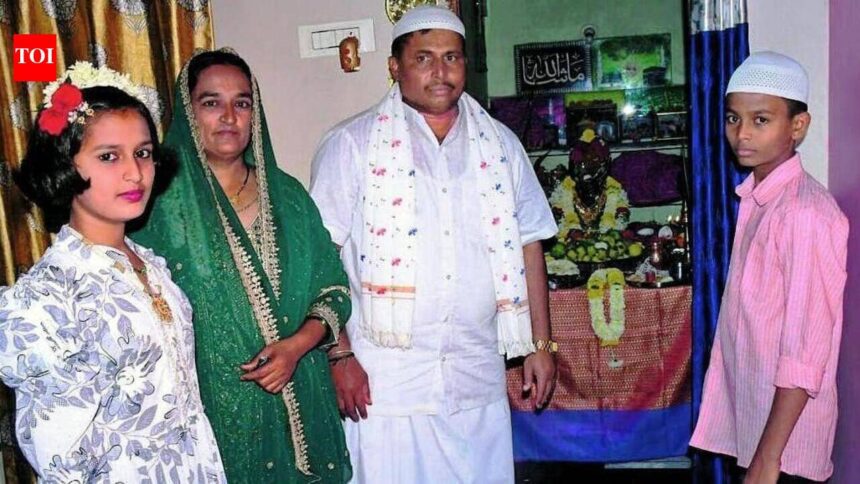

Celebrating Unity Amidst Tension
In a remarkable display of communal harmony, the Bisaralli family, a Muslim household in Alavandi village, Koppal taluk, has kept alive the Varamahalakshmi festival tradition for the past eight years. Their participation in this Hindu festival highlights a hopeful narrative of coexistence in a landscape marked by rising discrimination and exclusion of minority communities in India.
The Varamahalakshmi Festival Tradition
This year, Nazaruddin Bisaralli and his family adorned their home with vibrant mango-leaf festoons and colorful lights to celebrate the Varamahalakshmi festival. This involved installing and worshipping Goddess Lakshmi, a practice typically observed by Hindu families. The rituals conducted were traditional and reflective of the significance of the festival for the local community.
Villagers have expressed admiration for the Bisaralli family’s commitment to this cultural practice. One local, Maheboobsab Hussein, articulated the broader meaning of this initiative, stating, “Religions may be different, but humanity, love, friendship, and brotherhood are above all boundaries.” This sentiment reinforces the idea that the bond between various communities can transcend religious identities, promoting unity and respect.
The Broader Context of Communal Harmony
In recent years, there has been an increasing atmosphere of social exclusion and discrimination against Muslims in India, particularly under the influence of political narratives pushed by the ruling Bharatiya Janata Party (BJP) and associated groups. Instances of economic boycotts targeting Muslim businesses have been reported in various parts of the country, leading to significant marginalization.
In contrast, the Bisaralli family’s observance of Varamahalakshmi stands as a beacon of hope. Their experience of “happiness, peace, and prosperity” since beginning the puja contradicts the prevailing narrative of division. The family’s commitment to interfaith celebration is a key reminder that community bonds can flourish despite overarching political and social tensions.
A Message of Coexistence
The Bisaralli family’s actions extend beyond merely celebrating a festival; they send a powerful message of unity and goodwill amongst diverse communities in India. By engaging with and respecting traditions outside of their own faith, they challenge the current societal trends that foster division.
As the family wishes to continue this tradition, they set an inspiring example that could encourage dialogue and mutual respect in a nation increasingly divided along communal lines. Celebrations like the Varamahalakshmi festival may seem localized, but they carry the potential to instigate broader discussions about inclusion and integration in Indian society.
Why It Matters
The significance of the Bisaralli family’s celebration of Varamahalakshmi extends to discussions on communal harmony in India and acts as a counter-narrative to discrimination. This case could serve as a model for how interfaith engagements can help bridge divisions and foster a spirit of coexistence. As tensions continue to rise due to political agendas, stories like theirs are crucial in fostering dialogue about inclusion and respect among diverse cultures and religions.
Frequently Asked Questions
What is the Varamahalakshmi festival?
The Varamahalakshmi festival is a significant Hindu festival that honors Goddess Lakshmi, the goddess of wealth and prosperity. It involves rituals and celebrations that vary by region but generally include decorations and prayers to invoke blessings for well-being and prosperity.
How has discrimination against Muslims manifested in India?
Discrimination against Muslims in India has manifested through social exclusion, economic boycotts targeting Muslim businesses, and rising communal tensions, particularly with certain political narratives promoting Hindu nationalism.
What does the Bisaralli family’s celebration of Varamahalakshmi represent?
The Bisaralli family’s participation in the Varamahalakshmi festival represents a unique effort to bridge communal divides, challenging the narrative of exclusion while promoting love, unity, and respect among diverse communities.
Why is communal harmony important in India?
Communal harmony is vital in India to ensure social cohesion, economic stability, and a peaceful coexistence among its diverse population. It fosters an inclusive society where all groups can participate in national progress and development.