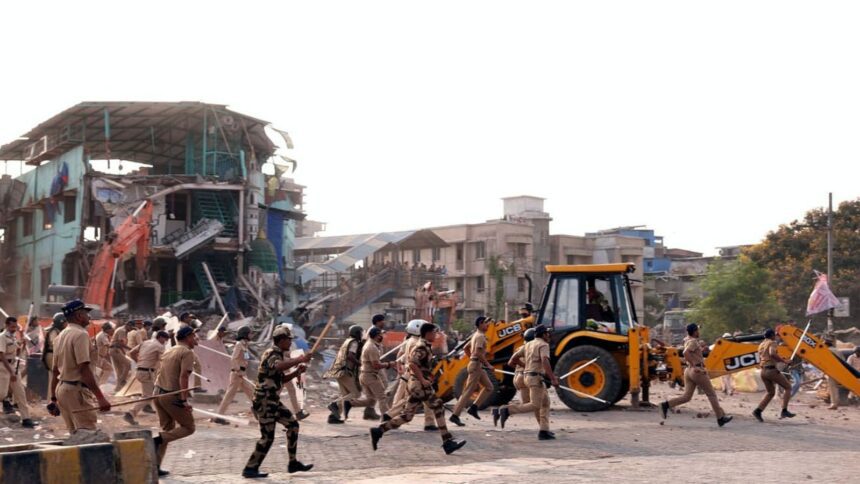

Recent clashes in Bandra East highlight ongoing tensions between local communities and governmental authorities amid an aggressive anti-encroachment drive by Western Railway. The demolition campaign, which began on May 19, aims to clear approximately 5,200 square metres of railway land, resulting in significant unrest, injuries, and allegations of police brutality.
The Context of the Demolition Drive
In Bandra East, a drive targeting illegal encroachments led to the demolition of two mosques and numerous residences. Viewed by many residents as an unjust act, the authorities’ actions provoked a series of protests. The situation escalated dramatically on the second day of the drive, as hundreds of residents gathered to oppose the demolition, asserting their rights to homes and places of worship that they claim are integral to their community.
Witnesses reported that the protests intensified when water and pillows were hurled at officials, prompting police to resort to lathi charges. As tensions flared, stone pelting ensued, leaving ten individuals injured, including both police officers and protesters. Among those injured was a 49-year-old protester who remains hospitalized. This atmosphere of conflict reflects broader issues of social and religious displacement experienced by minorities in India.
Government Response and Policies
The authorities mobilized over 1,200 personnel, comprising Mumbai Police, Government Railway Police, and Railway Protection Force members, along with heavy machinery, to facilitate the demolition process. In a statement, railway officials highlighted that they had taken necessary precautions and conducted extensive assessments before the operation, suggesting that they aimed to balance enforcement with humanitarian considerations.
However, many residents contest this narrative, describing the demolitions as a calculated effort to usurp land from marginalized communities. Allegations of excessive force have surfaced, with some residents claiming indiscriminate beatings by police. This dynamic raises pressing questions about the equitable treatment of India’s minority populations, particularly in urban development scenarios where minority voices are often marginalized.
Social and Economic Implications
The conflict in Garib Nagar and surrounding areas underscores significant implications for social cohesion and economic stability in urban India. The demolition of homes and mosques can provoke economic boycotts and foster an environment of social exclusion. Residents who have lost their homes face challenges in accessing resources and integrating back into society, posing long-term risks to community resilience and cohesion.
As urban spaces evolve, the complexities surrounding land rights, especially for marginalized groups, must be addressed thoughtfully to avert escalating tensions. The current situation not only exacerbates existing inequalities but also raises concerns about the treatment of minorities under the policies espoused by the ruling BJP and their affiliates.
Why It Matters
This incident is part of a larger narrative reflecting the challenges faced by minorities in India, particularly Muslims. With ongoing anti-encroachment drives and related policies often perceived as disproportionately targeting marginalized communities, understanding these dynamics is essential for anyone interested in social justice, community rights, and urban development. The implications extend beyond the immediate locality of Bandra East, concerning national discourse around inclusivity and governance.
Frequently Asked Questions
What triggered the clashes in Bandra East?
Clashes erupted during an anti-encroachment drive by Western Railway, aimed at demolishing illegal structures, including two mosques, which residents opposed vehemently.
How many people were injured during the protests?
A total of ten individuals, including six police officers and four protesters, sustained injuries during the stone-pelting incidents that followed the clashes.
What measures were taken by police during the protests?
Police employed lathi charges to disperse the crowd after protesters escalated their actions to stone pelting, resulting in multiple injuries on both sides.
What are the broader implications of these demolitions?
The demolitions reflect ongoing issues of discrimination and marginalization faced by minority communities in India, raising questions about land rights and the treatment of vulnerable populations under government policies.