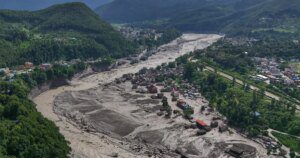
A devastating avalanche in Nepal’s Himalayan region has led to severe flash floods, resulting in the deaths of at least 95 individuals and leaving hundreds missing, including 291 foreign tourists. The disaster, occurring on Wednesday morning, has raised significant concerns about infrastructure safety as rescue efforts are underway, prompting calls for international assistance.
Impact on Communities and Infrastructure
The avalanche unleashed a torrent of ice and rock that swept through villages and vital infrastructure along the Bhotekoshi River, primarily affecting the Rasuwa district. According to local authorities, 384 tourists are unaccounted for, and among them are nationals from India, Malaysia, the UK, and the US. The calamity led to the destruction of roads and hydropower projects, vital for both local and national economies.
In addition to immediate loss of life, the ongoing situation poses a threat to food and water supplies, as transportation routes have been severely compromised. With international tourism being a significant contributor to Nepal’s economy, the impact may also extend to future travel plans of Indian and foreign tourists in the region, affecting local businesses reliant on tourism.
Rescue Efforts and Regional Cooperation
Government spokesperson Sasmit Pokharel has indicated that Nepal is reaching out to neighboring countries, including India and China, for assistance in rescue operations. Coordinated efforts will be essential considering the challenging topography and the scale of destruction caused by the floods.
Past incidents, such as the similar flash floods in August of last year, underline the need for improved disaster management strategies. That earlier disaster, linked to issues arising from glacial lake overflow in Tibet, underscored vulnerabilities in the region’s infrastructure, particularly the crucial cross-border bridge that connects Nepal and Tibet.
Climate Change and Future Risks
The International Centre for Integrated Mountain Development has pointed to climate change as a critical factor behind the recent calamity. An ice-rock avalanche in Nepal has been attributed to the rising temperatures, which have increased the risks associated with glacial lake outburst floods. Such incidents may not be isolated, as the Himalayan region faces heightened threats due to warming climates—impacting not just Nepal but also northern Indian states that share this mountain ecosystem.
The growing frequency of extreme weather events emphasizes an urgent need for regional cooperation in climate adaptation and mitigation strategies. This could significantly benefit flood-prone areas in northern India, particularly in states like Uttarakhand and Himachal Pradesh.
What This Means
For Indian readers, this disaster highlights the interconnectedness of Himalayan ecosystems and the urgent need for regional disaster preparedness. As climate change continues to pose risks, it’s crucial for both India and Nepal to share resources and knowledge for effective emergency response. The present situation serves as a reminder of vulnerability in these regions, stressing the importance of collaborative strategies that can mitigate future risks and safeguard lives.
Frequently Asked Questions
What caused the flash floods in Nepal?
The flash floods were triggered by an ice-rock avalanche on the Nepal side of the Himalayas, which blocked a tributary called Lhende Khola and subsequently released a sudden surge downstream, impacting the surrounding areas.
How many tourists are missing in Nepal?
Authorities report that 384 tourists are currently unaccounted for, including 291 foreigners from various countries such as India, Malaysia, the UK, and the US.
What assistance is Nepal seeking from other countries?
Nepal has requested help from neighboring countries, particularly India and China, to assist with the ongoing rescue efforts and to manage the situation effectively.
What can be done to prevent such disasters in the future?
Improvement in disaster management strategies, regional cooperation on climate adaptation, and more robust infrastructure are essential to mitigate the risks of future disasters linked to climate change in mountainous regions.