
Summary of a Discriminatory Incident
In a disturbing incident in Bhubaneswar, Odisha, a Muslim couple was forced to kneel and chant Hindu slogans after being accused by self-proclaimed cow vigilantes of carrying beef. This event highlights a growing culture of intolerance and discrimination against marginalized communities in India under the current political climate, raising questions about the role of authorities in protecting citizens’ rights.
The Incident Details
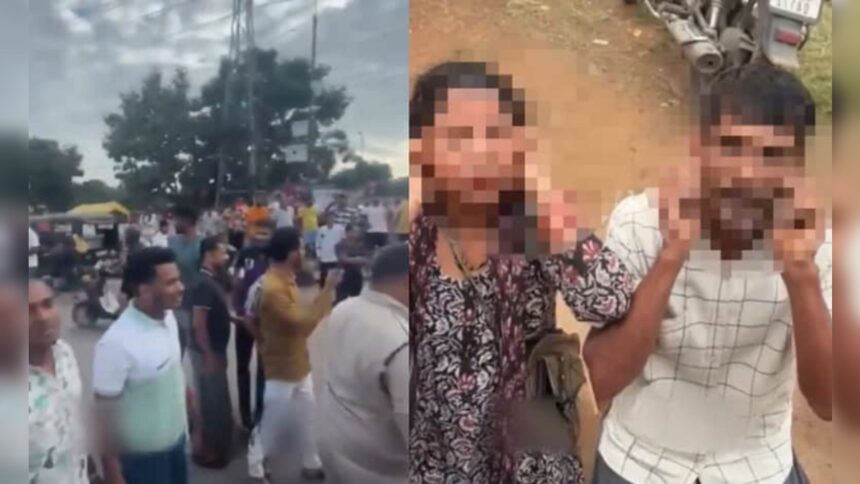
On August 19, a Muslim couple found themselves in a harrowing situation when they were confronted by a group of cow vigilantes who accused them of carrying beef. Video footage of the incident emerged on social media on August 23, showing the couple being harassed, forced to kneel, and coerced into chanting slogans such as “Jai Shri Ram” and “Jai Gau Mata.” The vigilantes filmed the humiliating scene, and one of them was recorded saying, “Bol Jai Shri Ram, bol Jai Gau Mata,” while pressuring the couple to comply.
As the couple knelt, locals joined in the chants, demonstrating how social pressure can compound the trauma faced by marginalized groups. The police eventually arrived at the scene to control the escalating situation. However, the presence of law enforcement raises further questions about their role—were they there to protect the couple or merely to restore order? The incident underscores an unsettling trend where public spaces become sites for communal violence fueled by religious intolerance.
The Legal Framework and Political Context
India’s legal landscape surrounding cow protection is complex and varies by state. In Odisha, the Odisha Prevention of Cow Slaughter Act of 1960 imposes restrictions on cow slaughter. Recently, the BJP-led state government has announced intentions to revise this legislation to create a stricter legal framework. Such moves indicate a growing emphasis on cow protection that often disproportionately impacts Muslim communities, leading to fears of increased persecution under the guise of animal welfare.
This legal framework not only legitimizes the actions of vigilante groups but also creates an atmosphere where discrimination becomes normalized. Cow protection laws have become a tool for mobilizing groups that seek to impose their ideological beliefs on minority communities. The implications of this trend extend beyond individual incidents; they impact the social fabric of Indian society, perpetuating division and hostility among communities.
Significance for Global Observers
The events in Bhubaneswar resonate far beyond the borders of India, serving as a rallying point for discussions on human rights and religious freedoms. For global audiences, especially those engaged in social justice, these incidents reflect a broader pattern of discrimination faced by minorities under right-wing governance. The situation can serve as a case study for examining how political power can shift societal norms toward exclusionary practices.
Understanding the dynamics at play helps inform international policy and humanitarian efforts aimed at supporting marginalized communities. For tech developers and AI practitioners, such instances raise questions about data bias, algorithmic discrimination, and the ethical use of technology in reporting social injustices.
Frequently Asked Questions
What happened to the Muslim couple in Bhubaneswar?
The couple was forced by cow vigilantes to kneel and chant Hindu religious slogans after being accused of carrying beef, leading to public humiliation and harassment.
How do cow protection laws affect Muslims in India?
Cow protection laws, while ostensibly aimed at animal welfare, disproportionately target Muslim communities, often leading to violence, intimidation, and social exclusion.
What is the role of the police in such incidents?
Although the police are expected to protect citizens’ rights, their presence during incidents of mob justice can be ambiguous, sometimes focusing more on restoring order than safeguarding vulnerable communities.
Why is this incident significant for international observers?
The unfolding situation reflects broader issues of religious intolerance and human rights violations, serving as a crucial point for global discussions on social justice and the protection of minority rights.