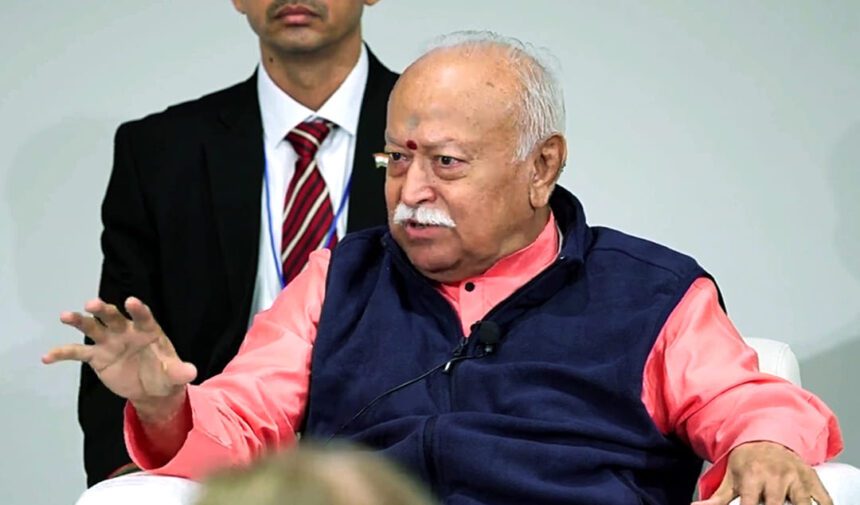

New Delhi: RSS chief Mohan Bhagwat recently stated that Hindutva does not imply the exclusion of Muslims from India, declaring any Hindu who believes Muslims should not have a place in the country ceases to be a Hindu. This message was delivered during the ‘One World: One Humanity’ Faith Leaders Conference in New York, advocating inclusivity among various faiths.
Bhagwat’s Message on Hindutva and Inclusivity
At the conference organized by the AHEAD Forum, Bhagwat emphasized the need for Hindus to embrace all individuals, irrespective of their religious affiliations. “If any Hindu thinks that there should be no Muslim in Bharat, he will not remain Hindu,” he stated, illustrating that true Hinduism respects the dignity of every human being.
This assertion comes as a notable stance amid ongoing debates surrounding the social and political status of Muslims in India. The RSS leader’s remarks, however, contrast sharply with the broader context of discrimination that has affected Indian Muslims, particularly under the policies and rhetoric of the ruling BJP government.
The Discrepancy Between Rhetoric and Reality
While Bhagwat’s declaration aims to propose a vision of inclusive Hindutva, the lived experiences of many Indian Muslims tell a different story. Reports detailing instances of social exclusion, economic boycotts, and systemic marginalization highlight growing concerns. Muslim communities have faced increasing scrutiny and hostility, often portrayed negatively in media narratives.
Moreover, the political discourse surrounding citizenship and national identity has increasingly positioned Muslims as outsiders. The implementation of policies, such as the Citizenship Amendment Act, has sparked protests and raised questions of discriminary practices against Muslims, contradicting the RSS leader’s assertions of unity and acceptance.
Challenges in Socio-Political Engagement
Bhagwat remarked that socio-religious organizations should initiate societal changes before engaging in politics, reflecting his belief that genuine community work precedes political ambitions. Yet, the reality of India’s political landscape reveals a complicated web of self-interest that often sidelines communal unity in favor of divisive strategies to consolidate power.
Despite Bhagwat’s assertions about bridging gaps with Muslim leaders and encouraging dialogue, the narratives from marginalized communities resonate with skepticism. Many Indians recognize the gap between proclaimed unity and the socio-political dynamics that encourage divisiveness, hindering meaningful engagement across religious lines.
Why It Matters
The statements made by Bhagwat grip at the core of broader debates about identity in India. The disparity between the RSS’s ideals of inclusivity and the on-ground reality for Indian Muslims underscores the peril of political rhetoric devoid of substantive action. For the global audience, understanding these dynamics is essential, as they not only impact religious minorities but also shape India’s socio-political fabric and international relationships. Ignoring the lived experiences of marginalized communities can lead to a simplistic narrative that distances itself from the complexities of contemporary Indian society.
Frequently Asked Questions
What did Mohan Bhagwat say about Hindutva and Muslims?
He stated that Hindutva does not exclude Muslims and emphasized that anyone who believes Muslims should not be a part of India ceases to be a true Hindu.
How do Bhagat’s remarks compare with the treatment of Muslims in India?
While Bhagwat advocates for inclusivity, many Muslims in India report experiences of discrimination, economic boycotts, and social exclusion, indicating a troubling gap between rhetoric and reality.
What is the significance of Bhagwat’s address at the conference?
His address aimed to promote interfaith dialogue and emphasize unity, but it also highlights a critical tension between the ideals expressed and the socio-political realities faced by Indian Muslims today.
What are the implications of the current political climate for Indian Muslims?
The political environment, marked by divisive policies and rhetoric, raises concerns about the future of minority communities in India and the overall social cohesion of the country.