
Concerns Rise Over Mosque Demolitions in India Amidst Claims of Discrimination Against Muslims
The Association for Protection of Civil Rights (APCR) has raised alarms regarding the increasing number of mosque demolitions across India, calling for legal actions against officials implicated in unlawful activities and emphasizing the need to uphold constitutional rights, religious freedom, and community support.
A Growing Pattern of Mosque Demolitions
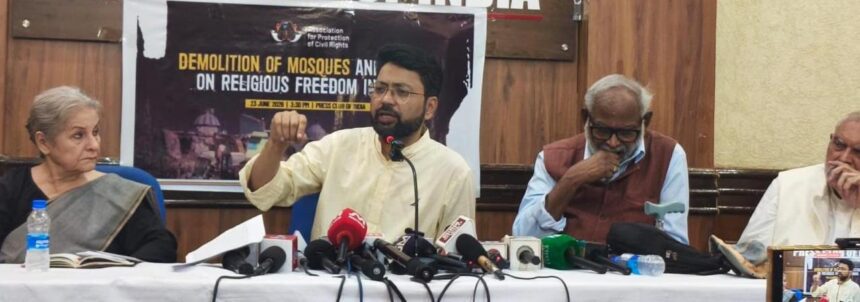
At a press conference organized by APCR at the Press Club of India in New Delhi under the theme “Demolition of Mosques and Attack on Religious Freedom in India,” a coalition of lawyers, former lawmakers, activists, and affected community members highlighted what they described as a disturbing trend of targeting Muslim places of worship. Prominent attendees included senior advocate Salman Khurshid, former MP Mohammad Adeeb, and a variety of civil society leaders.
Khurshid characterized the struggle to protect mosques as a lengthy legal journey, urging impacted communities to explore all legal avenues available to them. Adeeb emphasized the need for accountability and the necessity to hold police and administrative officials responsible for alleged illegal demolitions. He warned that overlooking these critical issues could have severe political implications for secular parties.
Allegations of Discrimination in Demolition Practices
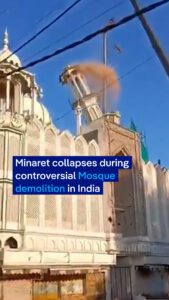
APCR’s national secretary, Nadeem Khan, reported that at least 20 mosques were demolished in just 15 days across Uttarakhand, Uttar Pradesh, and Rajasthan, suggesting that these incidents reflect a systemic issue rather than isolated events. He compared the demolitions to past episodes of mob violence, arguing that the actions have a psychological effect on the Muslim community.
Specific cases were brought forth by advocates and community representatives, highlighting not only the demolitions but also the lacking transparency and consultation from authorities. One notable example discussed was the Noorani Mosque in Nandpuri, Jaipur, which had been constructed in 1981 and was included in a government survey in 2003. Despite these records, the mosque was reportedly demolished without any prior notice, sparking outrage among the community.
Impact on Communities and the Call for Accountability
Community representatives voiced their apprehensions regarding the broader social, cultural, and religious repercussions stemming from these demolitions. They emphasized the importance of safeguarding places of worship as a means of preserving India’s pluralistic identity. The consensus among speakers was that actions taken against mosques required heightened accountability and adherence to legal norms.
Participants urged authorities to ensure that demolitions, if deemed necessary, must be executed with fairness and transparency, without discrimination against any religious community. The emphasis on constitutional protections for religious practices was a common theme, reflecting the urgent need for comprehensive reforms to protect religious freedom in India.
Why It Matters
The rising trend of mosque demolitions in India not only affects the Muslim community but also raises critical questions about the state’s commitment to religious freedom and constitutional protections. For developers and policymakers, it underscores the urgency of creating inclusive frameworks that safeguard religious minorities from potential governmental overreach. The situation necessitates the development of legal standards that protect places of worship, ensuring the rule of law prevails over arbitrary actions that could exacerbate social divisions.
Frequently Asked Questions
What are the concerns raised by the APCR regarding mosque demolitions?
The APCR has expressed alarm over the increasing frequency of mosque demolitions across India and has called for legal actions against officials involved in these unlawful activities, emphasizing the need for protecting constitutional guarantees and religious freedom.
How many mosques have reportedly been affected by demolitions in recent weeks?
According to APCR, at least 20 mosques have been targeted in demolition drives within a 15-day period across three states: Uttarakhand, Uttar Pradesh, and Rajasthan.
What specific example of demolition was highlighted during the press conference?
The Noorani Mosque in Nandpuri, Jaipur, was highlighted as a significant case. Built in 1981 and listed on the Waqf portal, it was reportedly demolished without prior notice to its management committee, raising concerns about transparency and legality.
What do community representatives want from the government regarding these demolitions?
Community representatives are calling for accountability from officials, greater consultation, and transparency in administrative actions concerning religious structures, as well as respect for constitutional rights and religious freedoms.