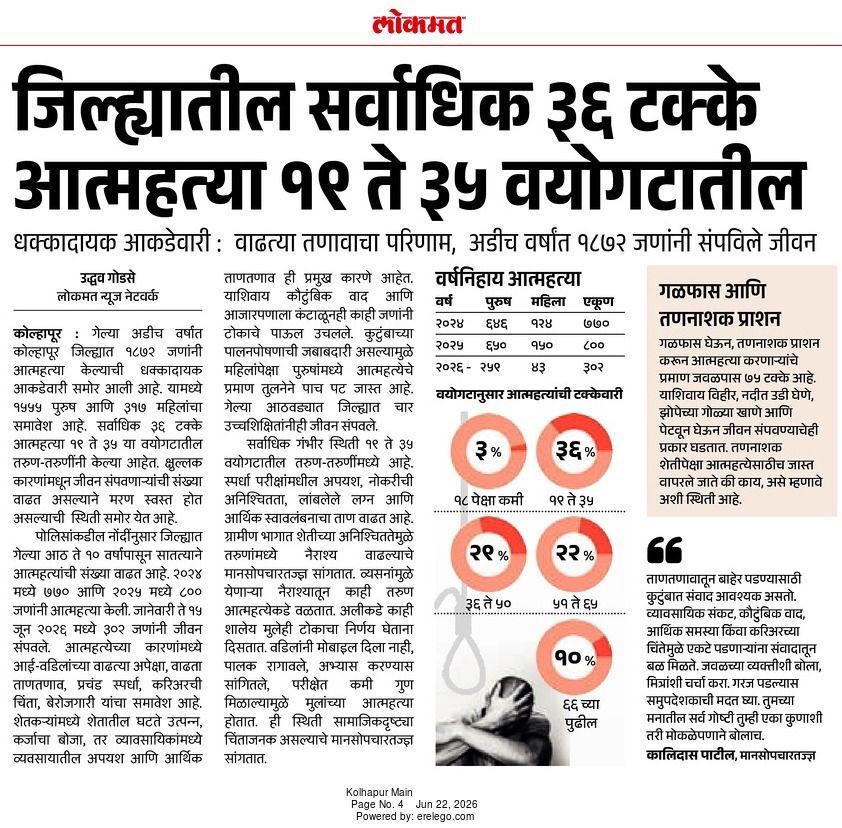

In a startling revelation, recent data indicates that 1,872 individuals have died by suicide in the Kolhapur district of Maharashtra over the past two and a half years. This equates to more than 60 suicides each month, with a significant portion of victims—36%—aged between 19 and 35, pointing towards pressing economic and employment challenges.
Context of the Crisis
Historically, the regions of Marathwada and Vidarbha have garnered more attention in discussions on farmer suicides and economic distress. Kolhapur, however, was not typically associated with such tragic reports until now. The district has been known for its relatively prosperous agricultural backdrop. Nonetheless, the recent statistics have revealed an alarming trend of distress, raising critical questions about the underlying factors contributing to this surge in suicides.
Demographics of Suicide Victims
The demographic data concerning these suicide victims is particularly troubling. With 36% of those who lost their lives in the age group of 19 to 35, it brings to the forefront the growing economic anxiety faced by the youth. This demographic is often perceived as the backbone of India’s future, steeped in potential yet marred by unemployment and financial instability. The overwhelming statistics have sparked concern about mental health support and economic opportunities available to young adults in the region.
Societal Implications
The social fabric of Kolhapur is undergoing a palpable stress test, as communities grapple with the impact of economic downturns and the stigma that accompanies mental health issues. The general reluctance to openly discuss mental health matters exacerbates the situation, rendering many individuals unable or unwilling to seek help. This discomfort contributes to a vicious cycle of despair. As awareness towards mental health issues expands, the urgent need for proactive initiatives and support systems becomes more pronounced.
Why This Matters
The escalation of suicides in Kolhapur brings political significance to the forefront of Maharashtra’s socio-economic dialogue. The data underscores a worrying trend that transcends regional boundaries, plunging a traditionally stable district into distress. It compels policymakers and political leaders to rethink strategies aimed at economic support, mental health resources, and youth empowerment. As the situation unfolds, the response from the state and national leaders will be decisive in shaping future policies and addressing systemic issues that contribute to such tragedies.
Frequently Asked Questions
What has caused the rise in suicide rates in Kolhapur?
The rise in suicide rates in Kolhapur appears to correlate with increasing economic and employment pressures, particularly affecting the youth demographic aged 19 to 35.
How does Kolhapur compare to other districts in Maharashtra regarding suicide rates?
Traditionally, districts like Marathwada and Vidarbha have been more frequently highlighted for high suicide rates, making Kolhapur’s situation particularly alarming given its historical economic stability.
What measures are being taken to address mental health in Kolhapur?
While there is a growing acknowledgment of the mental health crisis, specific initiatives and support systems to provide aid in Kolhapur are still developing and require greater attention from policymakers.
Is there any ongoing dialogue about these alarming statistics?
Yes, there is an increasing dialogue among political commentators, social activists, and community leaders addressing the issue, advocating for comprehensive economic and mental health policies to tackle this crisis.