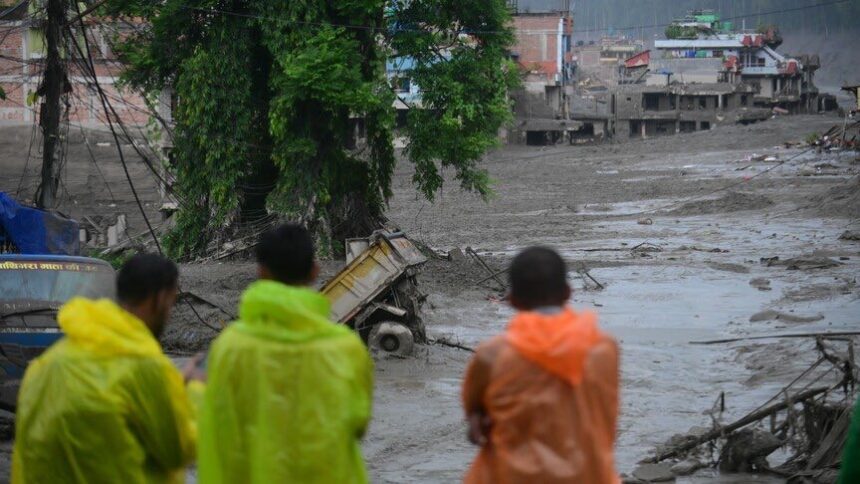

The recent flash floods along the Nepal-China border have resulted in a humanitarian crisis, with a death toll rising to 292 and over 1,300 individuals reported missing. Rescue operations are underway, but the scale of the disaster and the complications arising from the floods are prompting urgent regional and international responses.
Current Situation Overview
As of Thursday, Nepalese police have confirmed 289 deaths attributed to the floods, with 826 individuals still missing. Included in this figure are tourists and foreign nationals, highlighting the international implications of the disaster. Prime Minister Balen Shah has been proactive, visiting Bidur in the Nuwakot district to assess the damage and coordinate relief efforts. The Nepal Tourism Board reported that among the missing are 644 tourists, consisting of various nationalities, including Indians and Americans, who were in the area for sightseeing or pilgrimage.
Humanitarian Response and Rescue Efforts
In reaction to the floods, the Nepalese government has mobilized the army and private helicopter operators to conduct search and rescue missions. The Nepalese Army is deploying hundreds of soldiers and utilizing military assets to airlift individuals to safety. Chitwan district has suffered the highest fatalities, with 64 deaths recorded, compounded by the destruction of key infrastructure, complicating rescue missions. The National Disaster Risk Reduction and Management Authority is coordinating efforts and urging stranded individuals to signal for help using smoke from fires.
Cross-Border Implications
The impact of the floods extends beyond Nepal, affecting regions in China. In the Tibet Autonomous Region, three deaths and 558 missing persons have been reported. Approximately 260 foreign nationals are included in that figure. The Chinese government has dispatched rescue personnel to the Gyirong County area, which serves as an important transit point between Nepal and Tibet. This highlights not only the regional complexity of the disaster but also the interconnectedness of local communities and the necessity for cross-border cooperation during times of crisis.
Why It Matters
The significance of this disaster extends beyond immediate humanitarian concerns. It emphasizes the vulnerability of mountainous regions to climate-related events, which are becoming increasingly frequent due to environmental shifts. The international response, including aid from India and China, calls attention to the importance of collaboration in disaster management. Furthermore, the floods disrupt local economies, tourism, and agriculture, potentially exacerbating issues of poverty and social exclusion in already vulnerable communities.
Frequently Asked Questions
What caused the flash floods in Nepal?
The floods were likely triggered by a large chunk of ice breaking off a Himalayan glacier northeast of the Rasuwa-Rasuwagadhi border crossing, sending enormous amounts of ice and rock into the Bhotekoshi River.
How is the Nepalese government responding to the disaster?
The government is relocating displaced residents and has deployed military assets for rescue efforts. Coordination is underway with the National Disaster Risk Reduction and Management Authority for efficient rescue operations.
What is the status of missing foreign nationals?
Among those missing, there are reports of 644 tourists, including 178 from India and numerous others from countries such as the US, Ukraine, and Australia. Efforts are being made to establish contact and facilitate their rescue.
What is the impact of the floods on infrastructure?
Initial reports indicate that the floods have destroyed 19 bridges and injured a key 40-kilometer stretch of highway, significantly hindering rescue efforts and disrupting transport and communication routes.