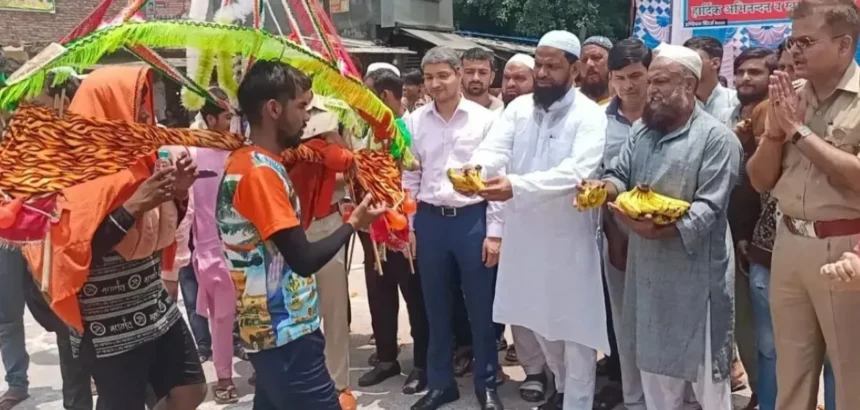

Unity in Diversity: The Kanwar Yatra
The Kanwar Yatra is an annual Hindu pilgrimage during which devotees walk to Haridwar to collect holy water from the Ganga River. Interestingly, the event has become a platform showcasing the profound unity among different religious communities in India, particularly between Hindus and Muslims, as they come together in service and respect for one another.
Acts of Kindness: Muslims Supporting Pilgrims
During the Kanwar Yatra, many Muslims in the Delhi NCR region have established camps offering food, rest areas, and medical assistance to the pilgrims. These camps serve a critical purpose: they provide a safe place for the pilgrims to rest and ensure that their ‘kanwars’ do not touch the ground, which is considered disrespectful. This gesture signifies a strong community spirit that transcends religious boundaries.
Muslims can be seen showering pilgrims with flower petals and offering refreshments like bananas for those who’ve walked long distances. This shared humanity is palpable, with many residents taking part voluntarily, reflecting a broader ethos of interfaith respect and community support.
Moments of Mutual Respect and Humanity
Several heartwarming incidents have surfaced on social media demonstrating mutual respect between communities. For instance, during a passing funeral procession for a deceased Muslim, Kanwariyas paused to allow the procession to continue without interruption. Such acts of compassion highlight a mutual recognition of shared values, irrespective of religious identity.
In another instance, a conversation between a pilgrim and a Muslim volunteer underscored the importance of unity. The pilgrim, who had been walking for days, was offered water and assistance. He emphasized the need to combat hatred by affirming that understanding and respect are foundational to societal harmony. This sentiment reflects a desire for communal solidarity in the ongoing struggle against discrimination and division.
Fostering Community Spirit Through Kindness
In a remarkable demonstration of integrity, a Muslim child returned a lost wallet belonging to a pilgrim, containing valuable documents and cash. The child’s determination to trace the wallet’s owner and ensure its safe return reinforced the idea that trust and integrity are crucial values within communities. These incidents not only foster feelings of gratitude but also help to humanize interactions across religious divides.
In one more uplifting instance, another pilgrim thanked a young Muslim man for returning his important documents. The pilgrim offered the youth a small token of appreciation, further symbolizing the interconnectedness that can flourish when people choose empathy over animosity.
Why It Matters
The intertwining of Hindu and Muslim communities during the Kanwar Yatra stands as a powerful counter-narrative to the discrimination and social exclusion faced by Indian Muslims in contemporary society. It highlights the importance of solidarity in fostering a diverse and inclusive society where compassion and respect outweigh division. Recognizing and amplifying these moments can pave the way for improved interfaith relations and challenge existing stereotypes that contribute to social unrest and discrimination.
Frequently Asked Questions
What is the significance of the Kanwar Yatra?
The Kanwar Yatra is a significant Hindu pilgrimage during which devotees travel long distances to fetch holy water from the Ganga River for worship in their local temples, symbolizing devotion and spirituality.
How have Muslims contributed to the Kanwar Yatra?
Muslims have set up camps providing food, medical services, and rest areas for pilgrims, showcasing community spirit and interfaith respect during the pilgrimage.
What acts of kindness have been reported during the Yatra?
Instances of kindness include Muslims returning lost items to pilgrims and offering refreshments, signifying mutual respect and unity between communities.
Why is community solidarity important in contemporary India?
Community solidarity is crucial for combating social exclusion and discrimination. It fosters harmony, challenges stereotypes, and reinforces the importance of shared human values, contributing to a more inclusive society.