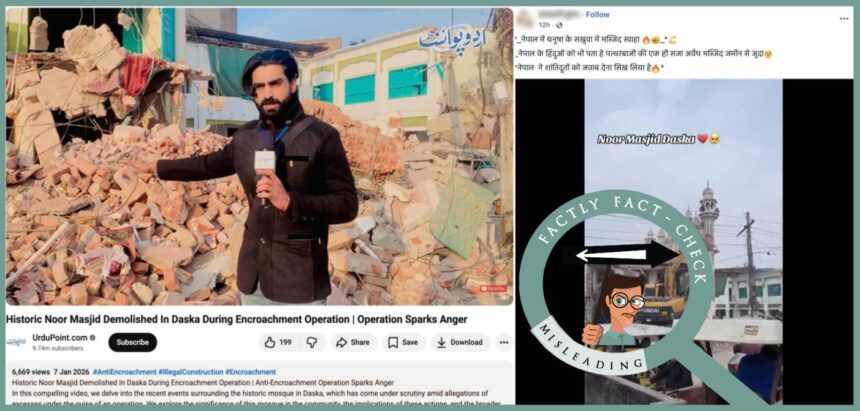

A recent viral video falsely claimed that it depicted Hindus demolishing a mosque in Nepal, allegedly in retaliation for a stone-pelting incident. In reality, the footage shows a demolition in Daska, Pakistan, during an anti-encroachment drive affecting the Noor Masjid, a well-known local mosque. This misinformation underscores the risks of social media in exacerbating communal tensions.
The Viral Claim and Its Misrepresentation
The video in question gained traction on various social media platforms, with posts stating it showcased Hindus tearing down an illegally constructed mosque in Nepal. This narrative suggests communal violence and heightened tensions following a reported stone-pelting incident. However, the claim has been debunked, as investigations reveal that the video originates from an incident in Pakistan, where authorities demolished the Noor Mosque in Daska for encroachment violations.
Context of the Demolition in Pakistan
The dismantling of the Noor Masjid occurred during an anti-encroachment operation led by the district administration in Sialkot. The local government under Assistant Commissioner Sadia Jaffer targeted multiple illegal structures, including around 60 shops and 16 houses. Despite the reality of the demolition being rooted in regulatory action, social media has manipulated the narrative, linking it to communal anything unrest in Nepal. Reports indicate that Sialkot police publicly refuted these claims, clarifying that the mosque was slated for reconstruction, urging citizens not to fall prey to rumors that could incite religious discord.
The Unrelated Tensions in Nepal
In early January 2026, genuine communal tensions erupted in southern Nepal following the vandalism of a mosque in Dhanusha district. Allegations arose that this incident was a retaliatory act sparked by a TikTok video featuring anti-Hindu remarks. Reports of broken windows and structural damage resulted in violent clashes, with curfews imposed and the Indian-Nepal border sealed. Nonetheless, this unrest remains distinct from the Pakistani demolition video, highlighting the complexity of communal relationships in the region.
Why It Matters
The dissemination of misleading information can have dire consequences for communal harmony in South Asia, particularly between Hindu and Muslim communities. Instances such as these can fuel existing tensions, exacerbating ethnic divides and leading to violence. In a world increasingly reliant on social media for information, irresponsible reporting or misrepresentation can stir mass panic and unrest. This emphasizes the need for critical media literacy and responsible sharing practices among users to mitigate the risks of misinformation.
Frequently Asked Questions
What does the viral video actually depict?
The video shows a mosque demolition in Daska, Pakistan, due to encroachment during an official operation, not an act of communal violence in Nepal.
What triggered the communal tensions in Nepal?
Communal tensions in Nepal were ignited by the vandalism of a mosque, reportedly in response to a TikTok video with anti-Hindu remarks, leading to violence and a curfew in the Birgunj area.
How did the authorities respond to the claims regarding the video?
Sialkot police clarified that the Noor Mosque in Pakistan is being reconstructed and urged the public to disregard any negative narratives that could incite religious tension.
Why is misinformation on social media significant?
Misinformation can escalate communal violence and exacerbate social tensions, highlighting the importance of critical thinking and responsible sharing practices in online discourse.